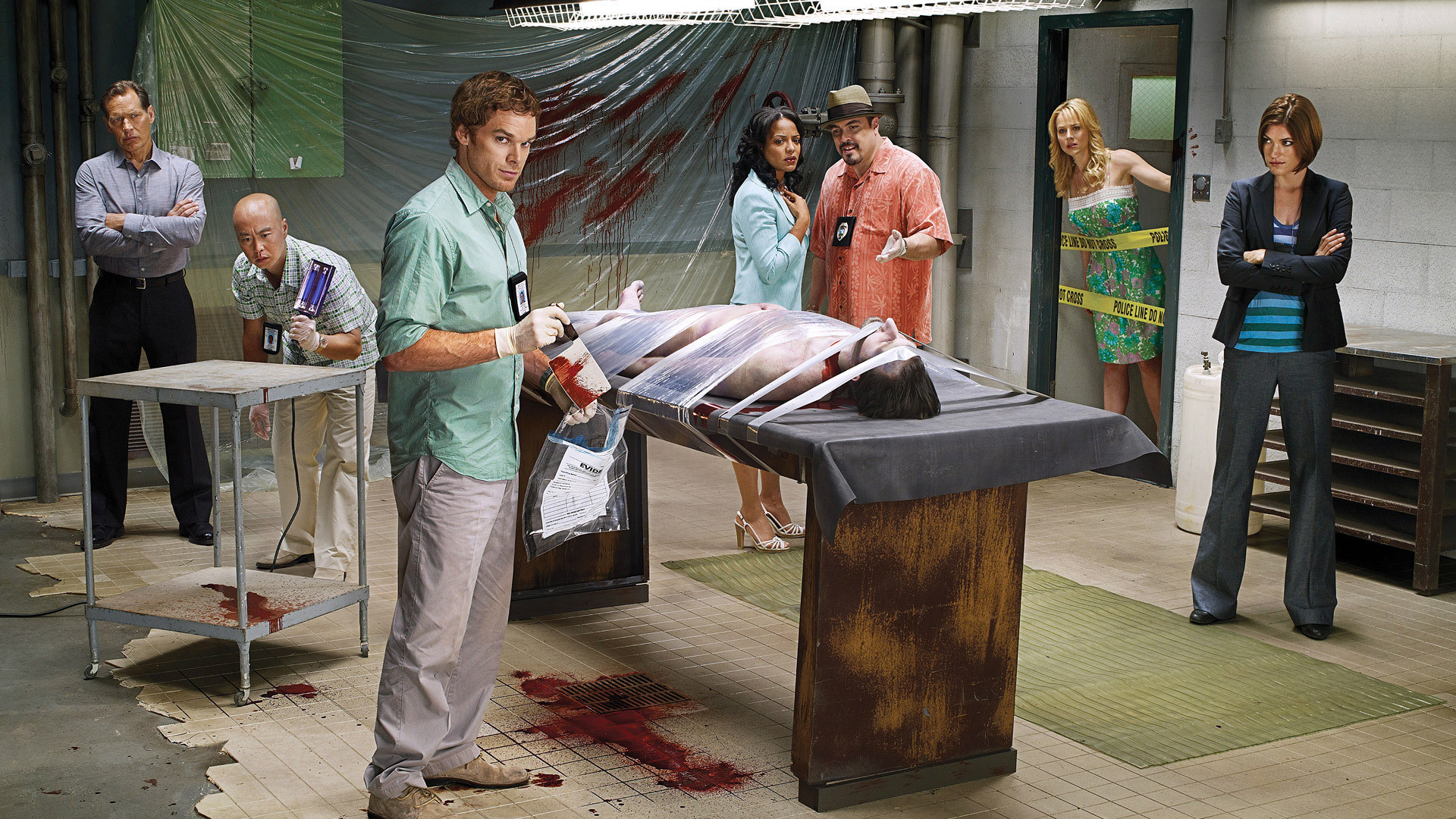
Michael C. Hall makes Dexter worth watching, finding uneasy humour in a killer who hunts the guilty. The crime plotting grips, though the writing explains him too often and makes liking him too easy.
James Manos Jr.’s Dexter earns a qualified recommendation by making a serial killer engaging company and then giving us reason to question our enjoyment. Dexter Morgan, played by Michael C. Hall, tracks criminals by day and kills people who have escaped justice. There is a useful nastiness in putting the hunter on both sides of a crime story. The difficulty is that the programme also wants to assure us that he has chosen suitable victims.
Hall is the reason that compromise remains interesting. His Dexter can be likeable without making the killing seem remotely ordinary, and the humour does not wipe out the threat. We can enjoy his company and still wonder what, exactly, we are enjoying. That is a difficult performance to sustain when so much of the writing is busy telling us what to think of him.
We found ourselves wanting Dexter to reach his next victim, and felt uneasy about how little persuasion it had taken. Hall’s charm does some of the work; choosing targets who have slipped through justice does the rest. That discomfort is worth having, but the programme sometimes makes the choice too comfortable. The guilty-only premise provides a ready excuse for our sympathy, so the nastier question of why we want to watch a killer gets partly answered for us.
The relative restraint with gore is a sensible decision. The cinematography, with Terry Stacey and Romeo Tirone among the credits, keeps the violence watchable without making it harmless. Daniel Licht’s music helps the humour and menace coexist, although Hall does much of that work himself. The images do not need to show every injury for the prospect of a killing to trouble us. This restraint makes the heavy verbal explanation elsewhere seem all the more unnecessary.
The writing, with James Manos Jr. and Melissa Rosenberg among the credits, has too little faith in our ability to read a face. Voiceover and flashbacks can deepen a character, but here they too often supply information before we have had time to become curious about it. Editors including Elena Maganini and Scott K. Wallace give the thriller plotting a firmer pace than these explanations. The interruptions are frustrating because Hall has already made Dexter interesting enough to follow without so much assistance.
Despite putting a serial killer at its centre, Dexter stays close to the workings of a conventional crime procedural. That familiarity provides solid entertainment: the pursuit of criminals is involving even before Dexter’s own activities complicate our loyalties. The clumsier dialogue can make the people around him sound as though they exist chiefly to keep the case moving. Still, the humour gives these investigations a welcome nastiness, and the thriller plotting supplies a reason to return beyond curiosity about the central character.
If the thought of spending an evening with a serial killer already feels like work, Hall’s charm will not remove the objection. Nor should it. The opening stretch is worth trying for crime-drama viewers who enjoy being made uncomfortable by their own loyalties. Just allow for a central character who explains himself more often than we need him to.