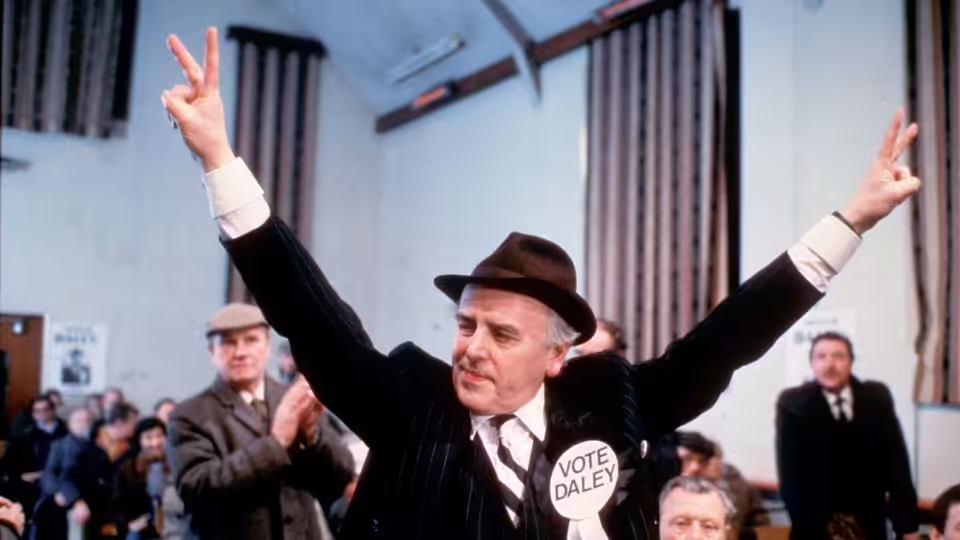
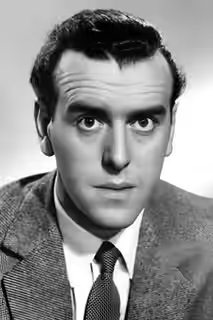
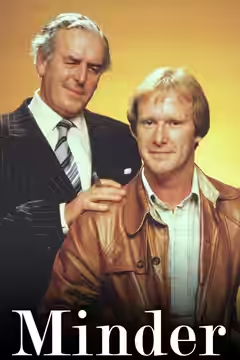
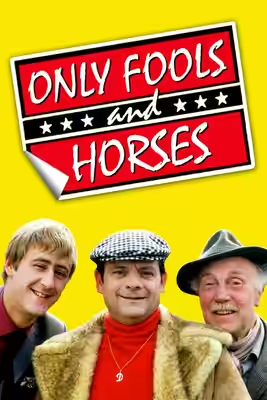
George Cole’s Arthur Daley is a great British comic creation, and Dennis Waterman gives him someone to take the punches for him. The scripts run to a formula and the later series without Waterman are thinner, but the years with him are a pleasure.
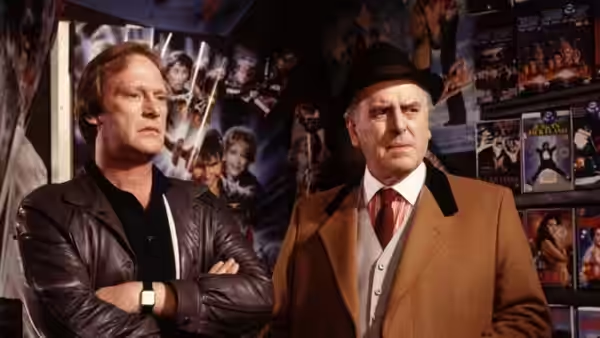
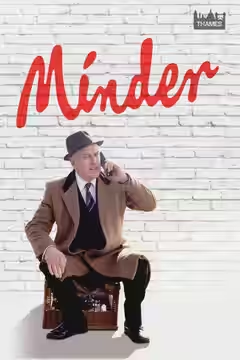
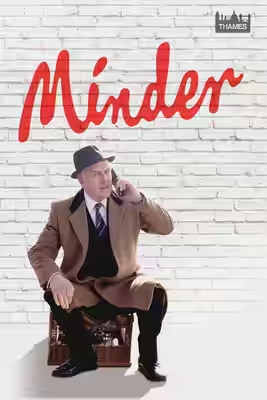
Leon Griffiths and Verity Lambert’s series is about a man who sells things and a man who gets hit for it. Arthur Daley (George Cole) deals in whatever happens to be in the lock-up; Terry McCann (Dennis Waterman) is the man he hires to stand beside him and look dangerous. That is the whole engine, and it ran for 108 episodes across ten series, from 29 October 1979 to the start of 1994. For the series with Waterman in the passenger seat, it is one of the most enjoyable things British television has made. After that it coasts. We recommend it, with that caveat attached.
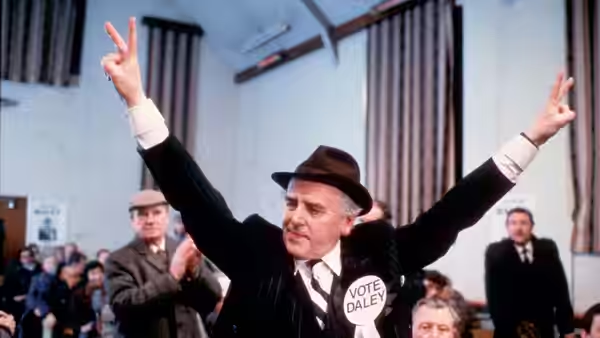
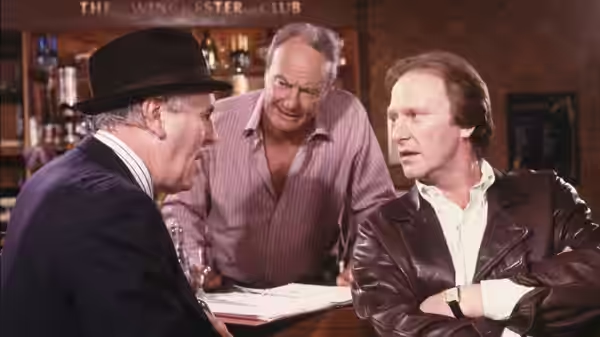
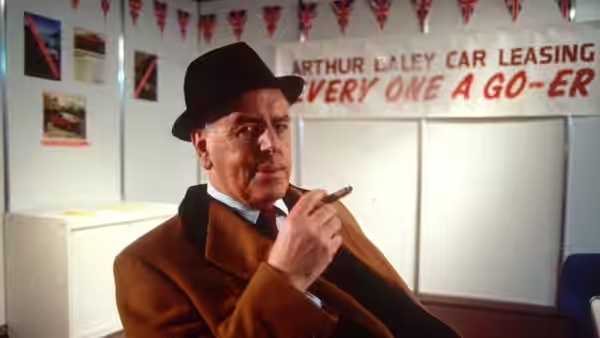
Cole is the reason. The coat, the hat, the cigar and the Jaguar are the costume, but the performance is in the certainty: Arthur believes every word he says at the precise moment he is saying it, and not a second longer. He calls a swindle a nice little earner and the world his lobster, and he is hurt, properly hurt, when a buyer walks away. We laughed more than once at nothing but Cole’s face as a deal fell through, and then felt a little sorry for him, because Arthur has no idea why people keep leaving. Cole never asks for the laugh. He waits, and it comes to him.
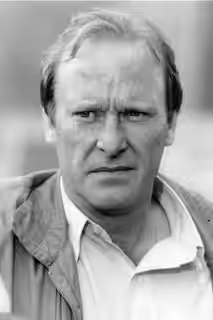
Waterman has the harder, less showy job. Terry wants a girl, a flat and a job that does not involve a cold warehouse at two in the morning, and every episode he gets the warehouse. Waterman plays him with a short fuse and a long patience, a man who knows he is being used and goes along with it because the alternative is being alone. The series is fond of these two, and expects you to be. The fights are staged plainly, in car parks and back rooms, and they look as though they hurt.
The camera crews, Chris Howard and Peter Bartlett among them, shoot it on real streets under a real grey sky: scrapyards, railway arches, pub car parks, a lot of wet tarmac. There is no studio gloss on any of it, and the series is better for looking cheap. Glynn Edwards’s Dave stands behind the bar and listens to Arthur’s plans with the face of a man who has heard them all before, and Patrick Malahide’s Chisholm turns up with a warrant and leaves without a result. Barry Peters and Nick McPhee, among the editors, let hour-long episodes breathe; a scene is allowed to end on Arthur’s expression rather than Arthur’s line.
The list of directors reads like a roll call of British film and television of the period: Roy Ward Baker, Peter Sasdy, Tom Clegg, Martin Campbell. The writers, Griffiths first, then Tony Hoare, Andrew Payne, Paul Wheeler and others, keep the voice steady across all of them. The result is a run of small, scruffy films with the same two men at the centre, which is rarer than it sounds.
The flaws are the ones you would expect of 108 episodes. The formula is visible by the fourth: scheme, complication, Terry gets hit, Arthur is out of pocket, back to the bar. The women are girlfriends and barmaids, which is an admission of what the writers were interested in. The villains are broad. And from Series 7, which began on 2 January 1989, Waterman is gone and Gary Webster’s Ray takes the job. Webster is likeable and the stories are the same, and that is the trouble. Arthur without Terry’s disapproval is only a man telling lies.
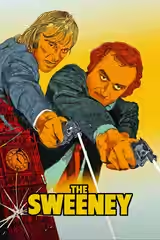
Set against the police series of its decade, this is the gentler cousin: fewer guns, more receipts, and a view of London crime as a trade with its own etiquette. It has lasted because it is kind to its crooks without pretending they are anything else.
Start at the beginning, stop when Waterman does, and do not lend Arthur money.