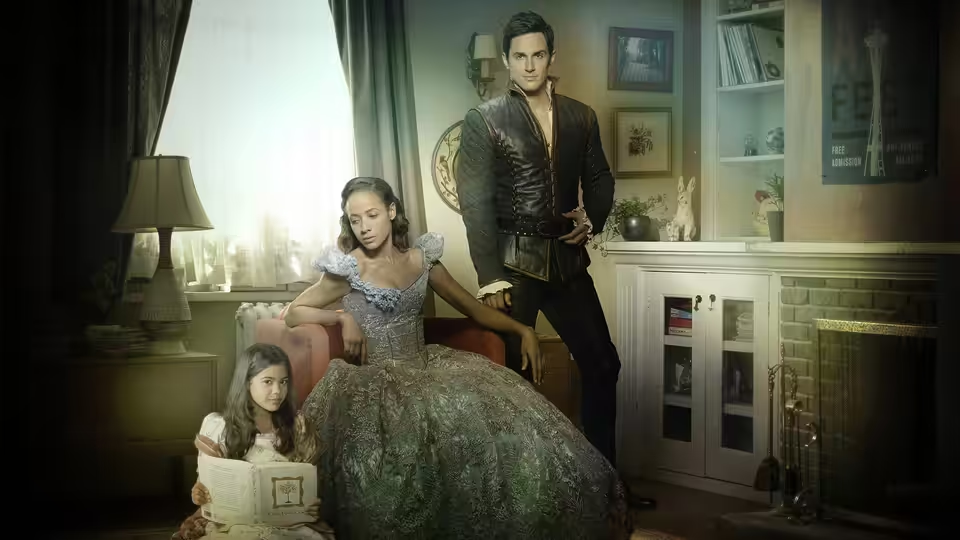
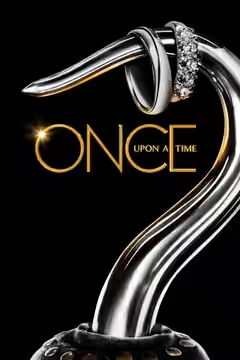
Once Upon a Time has an inviting premise and a cast able to make its sillier moments enjoyable. The tangled plotting and solemn fairy-tale flashbacks make this a qualified recommendation for fantasy enthusiasts.
Once Upon a Time is a warm, uneven fantasy series for viewers who can forgive tangled plotting. Edward Kitsis and Adam Horowitz take familiar fairy-tale figures and give them lives that must continue beyond a single story. The attraction is straightforward: we know something about these people before the programme begins, yet there is room for them to surprise us. The difficulty comes when keeping all those stories connected means stopping too often to explain them.
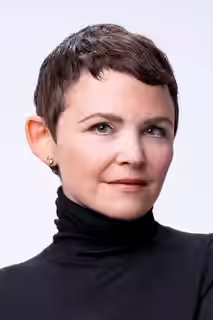
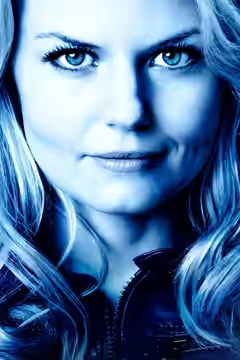
Jennifer Morrison gives Emma Swan a useful toughness, holding the modern sections steady when the fantasy threatens to become self-important. Ginnifer Goodwin makes Mary Margaret Blanchard and Snow White approachable, which matters in a series so ready to surround its characters with elaborate explanations. These women are interesting enough to carry a scene without another revelation arriving to assist them. The writing is less secure when it insists on spelling out feelings the performances have already made clear.
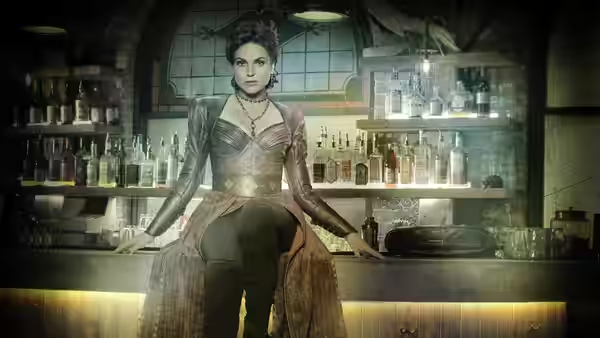
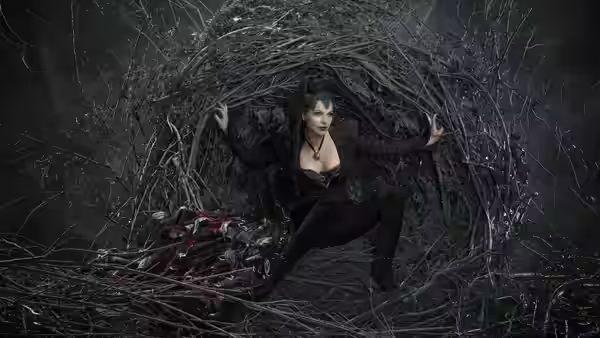
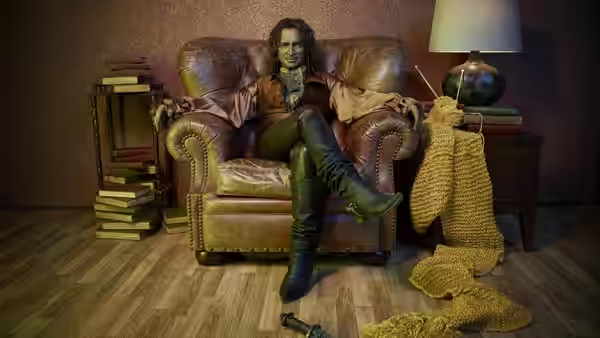
The more extravagant performances are often the more enjoyable ones. Lana Parrilla gives Regina Mills and the Evil Queen an authority that makes even the sillier material worth attending to. We laughed at Robert Carlyle’s Rumplestiltskin, whose exaggerated delivery gives the fairy-tale scenes a welcome hint of mischief. Both performances suggest that the programme could relax a little without sacrificing its characters. The other performers do not always look as comfortable with the fairy-tale dialogue.
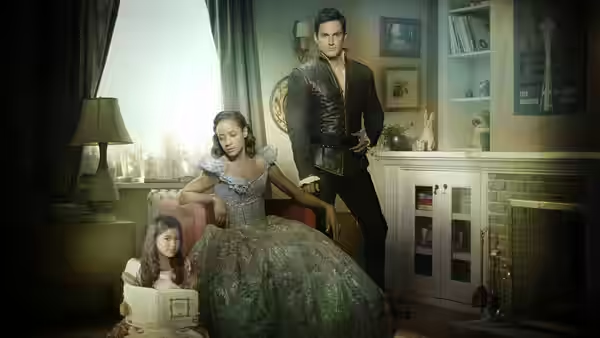
Steven Fierberg and Stephen Jackson’s cinematography keeps the changes between the contemporary setting and the fairy-tale flashbacks legible. The production design, credited to Steven Wolff, Mark Worthington and Michael Joy, gives the fairy-tale scenes enough grandeur to justify the actors’ extravagance. Some of the effects are less persuasive, and the elaborate settings make those weaknesses harder to ignore. Storybrooke is often easier to believe in, leaving us free to attend to the cast.
Henk van Eeghen, Julie Monroe and Geofrey Hildrew are among the editors managing the shifts between present-day scenes and fairy-tale flashbacks, and the comparisons remain clear. The cutting cannot disguise how often a new piece of information postpones the business already under way. Early episodes can feel crowded even when an individual scene is simple. Mark Isham’s music encourages the big feelings, sometimes more firmly than the scene requires. There are moments when leaving the actors to supply the emotion would be enough.
The useful comparison is with a continuing family drama: the cast has to make another encounter worth watching after the novelty of the premise has worn off. Here, the acting is more dependable than the plotting. The early episodes offer enough human interest to justify some patience, though the solemnity will try anyone hoping for a brisk, mischievous fantasy. Start for the actors and the chance to see familiar storybook figures share a programme. If the explanations already tire you, we would not advise making a long commitment.