Roger Moore’s first turn as Bond is smooth, cheerful and light on menace, and Guy Hamilton hangs it on three or four set pieces worth anyone’s evening. The villains deserved a better film around them, and the last half hour is a shrug.
Sean Connery has gone, and the producers Albert R. Broccoli and Harry Saltzman have replaced him with Roger Moore, first seen in a dressing gown, making coffee, faintly put out at being disturbed. It is a good first scene for a new Bond and a fair summary of the film: domestic, unhurried, amused. Live and Let Die is relaxed where the earlier films were tense, and it gets by on a handful of set pieces, one good villain it does not know what to do with, and a leading man who never looks as though anything could go wrong.
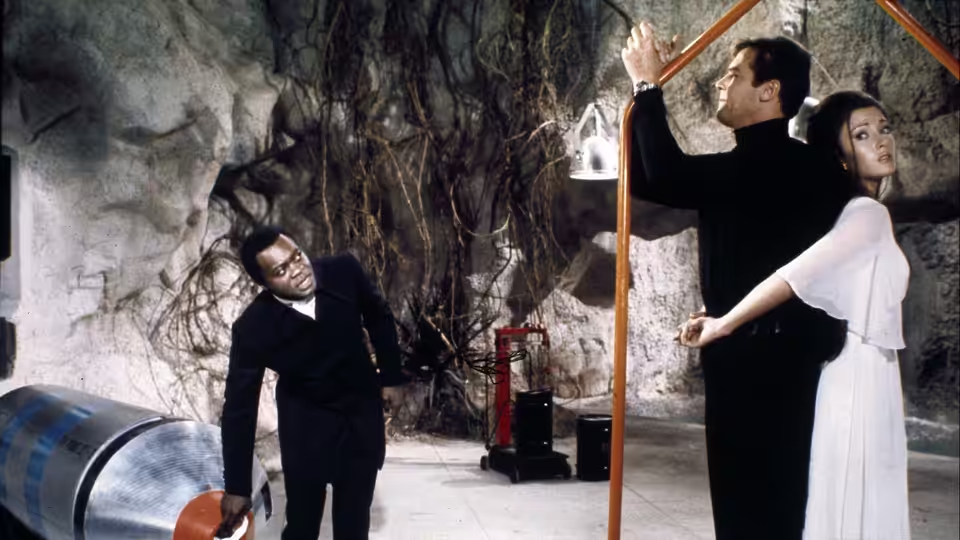
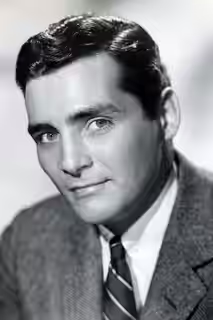
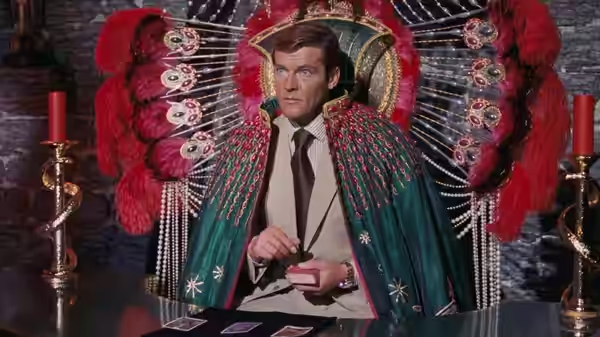
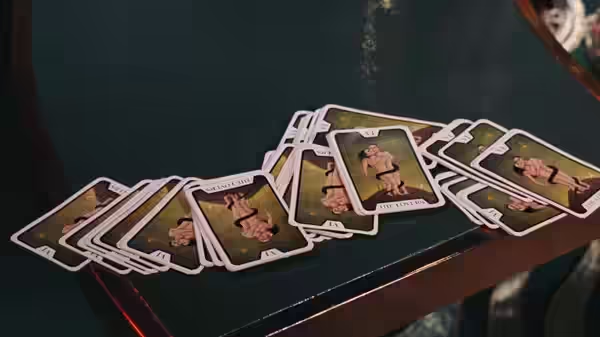
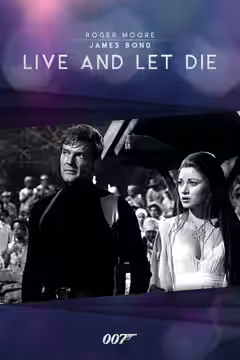
Moore plays Bond as a man who has already read the script. He gets Solitaire into bed by stacking her tarot deck with nothing but Lovers cards, and the film thinks this is charming and, mostly, so did we. What he does not do is frighten anyone. When Tee Hee bends his pistol into a hook, Moore looks mildly inconvenienced, as if a waiter had brought the wrong wine. Tom Mankiewicz’s screenplay is pitched there, one quip per exit, and Moore lands nearly all of them.
Guy Hamilton, who directed Goldfinger (1964), knows how to stage a thing so you can see it. The crocodile farm is the best of it: Bond stranded on a scrap of ground in a pool, the animals closing, the escape done in one long shot by what looks like a real man on real crocodiles. We held our breath and did not let it out until he reached the bank. Ted Moore shoots the Louisiana bayou in flat, bright afternoon light, so the speedboat chase has nowhere to hide; the boats leave the water, cross roads, land in a wedding and a swimming pool. The editors, Bert Bates, Raymond Poulton and John Shirley, keep the first stretch tight. Then Clifton James’s Sheriff J.W. Pepper takes it over, and it runs five minutes past the point where we stopped laughing at him.
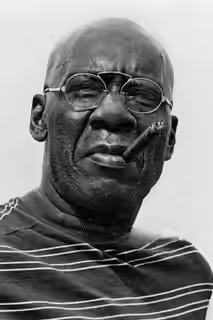
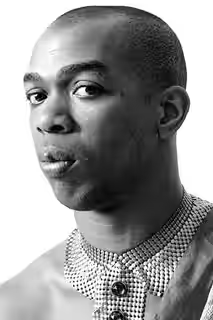
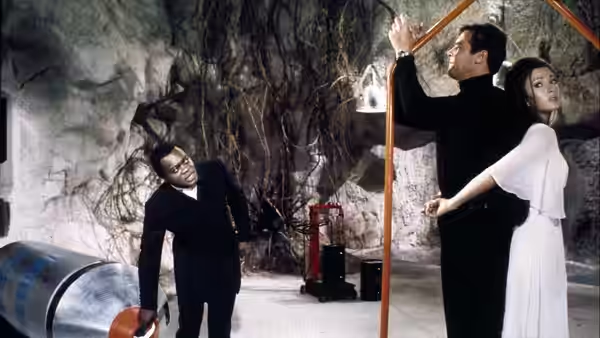
Yaphet Kotto is the film’s real find and its real waste. His Kananga is soft-spoken, and Kotto gives him a stillness that makes everyone else on screen look busy. Around him: Julius Harris’s Tee Hee, all teeth and a steel claw; Earl Jolly Brown’s Whisper, who does what his name says; Geoffrey Holder’s Baron Samedi, who laughs from the bottom of his lungs and is the one person Bond cannot explain away. The film uses them as obstacles, one per location, and then puts them back in the box. Kotto gets perhaps three real scenes in two hours.
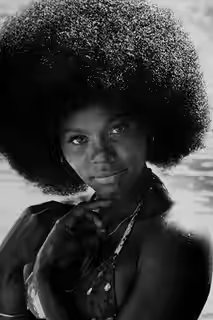
The film borrows from Shaft (1971), and what it borrows is mostly surface: the Harlem restaurant, the suits Julie Harris puts on the heavies. In its Harlem every doorman, cab driver and shoeshine man is on Kananga’s payroll. We winced at the voodoo ceremonies, which are staged as spectacle and filmed as savagery. Gloria Hendry’s Rosie Carver, a CIA agent who screams at snakes, is written as the butt of the joke; Hendry plays her with more warmth than the script gives her.
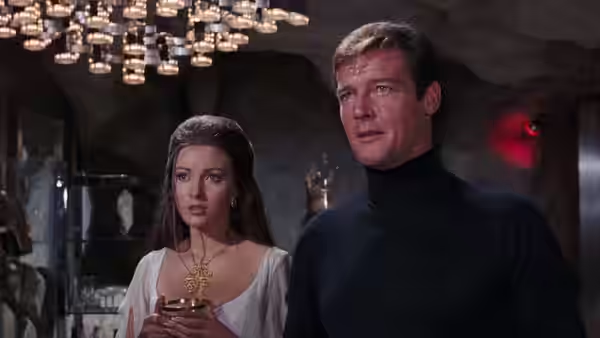
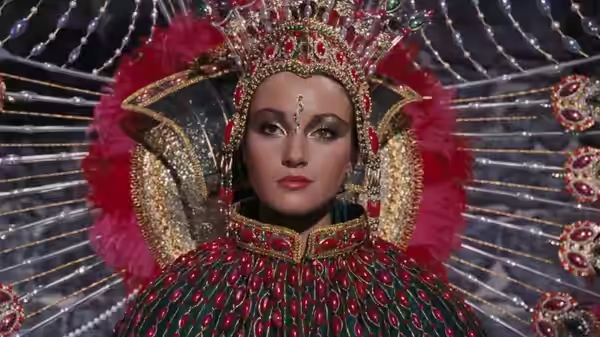
George Martin’s score is the freshest thing here. The title song, by Paul McCartney and Wings, is a proper rock single, and Martin threads its riff through the chases on brass and guitar, so the film sounds louder and younger than it looks. Jane Seymour’s Solitaire has a gift that depends on her virginity, which the film treats as a plot point, and once Bond has dealt with both she has nothing to play but fright. Julie Harris dresses her like a tarot card, in high collars and heavy embroidery, which is lovely and does not help.
Goldfinger built to a set piece inside a vault; this one builds to an ending we will not describe, except to say that Hamilton loses interest a reel before the credits, and the last half hour is the flattest in the film. It runs 121 minutes and carries a PG, which tells you how much of the menace is real. Watch it for the middle hour and forgive the rest.