Film review

Thunderball

1965 · Directed by Terence Young · 2h 10m · MPA PG

In a sentenceBeautiful blue water, and every man in it swimming slowly towards someone else with a speargun

AdventureActionThriller

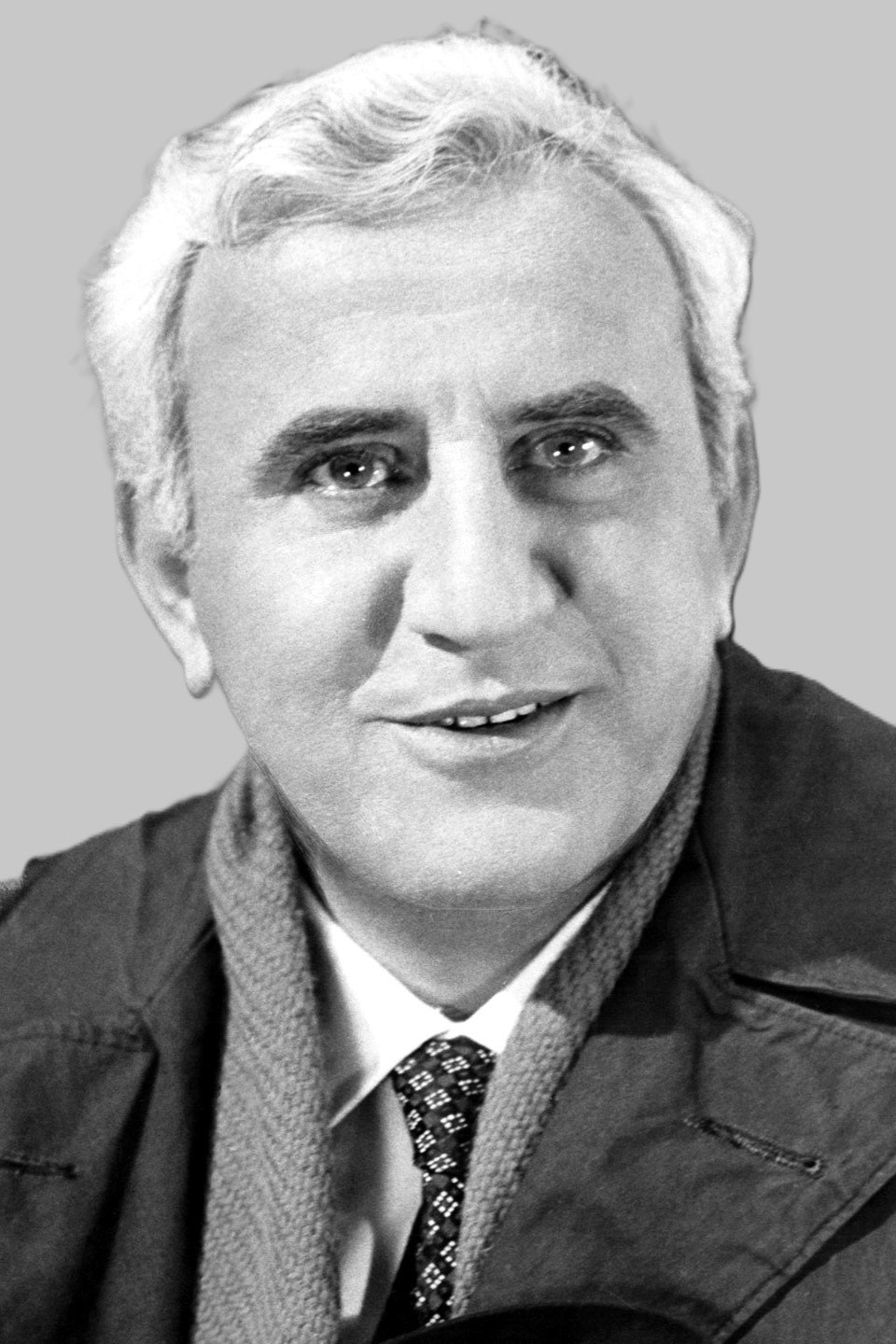
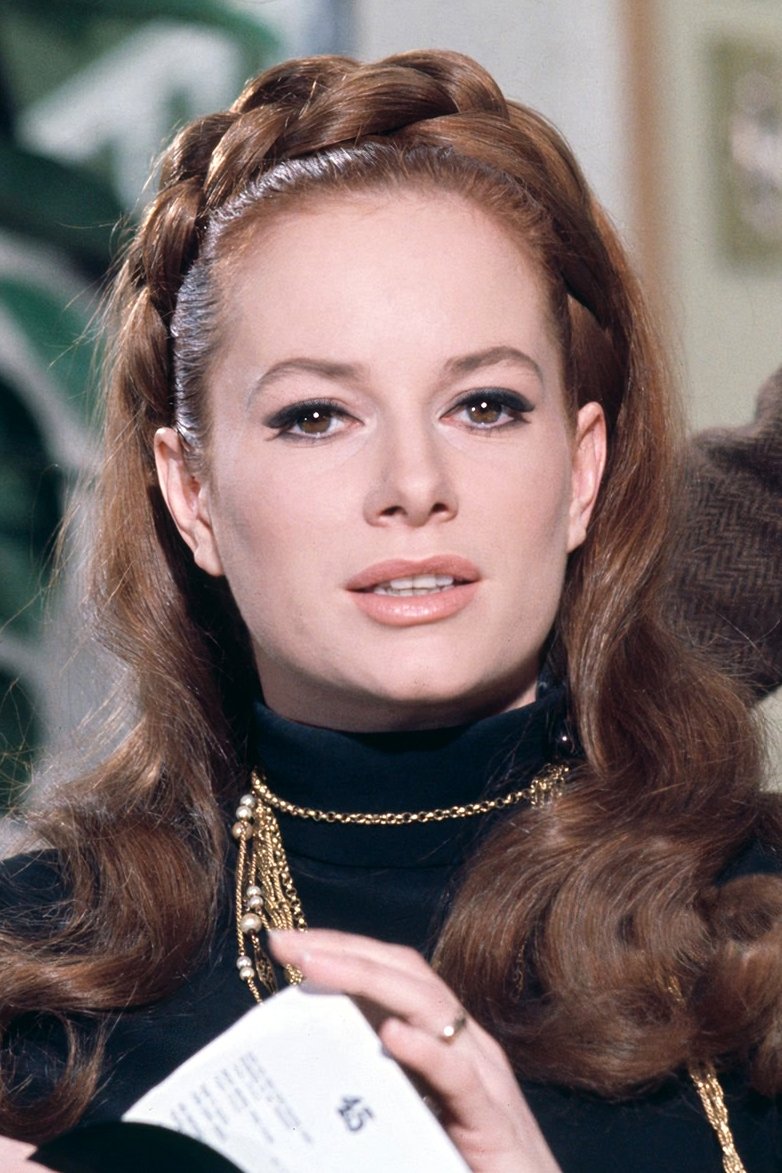
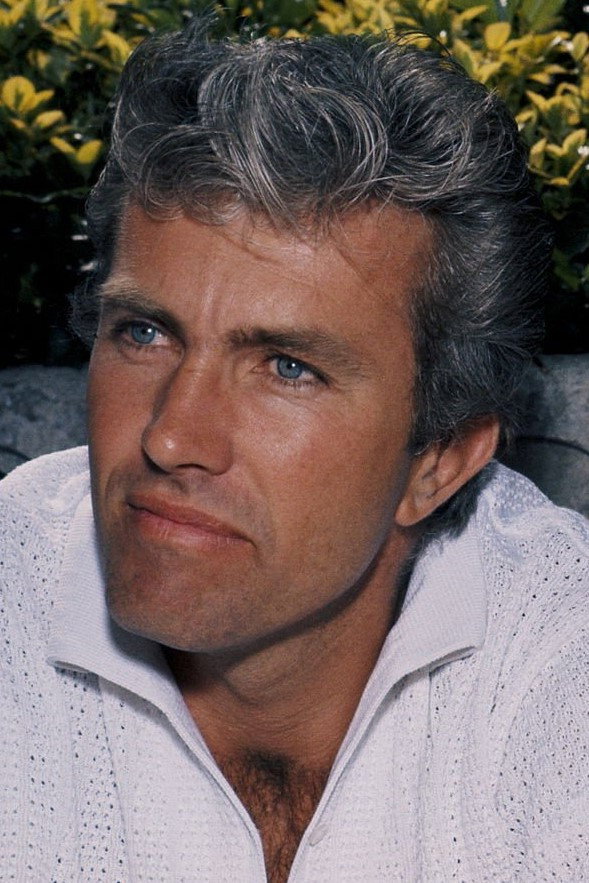
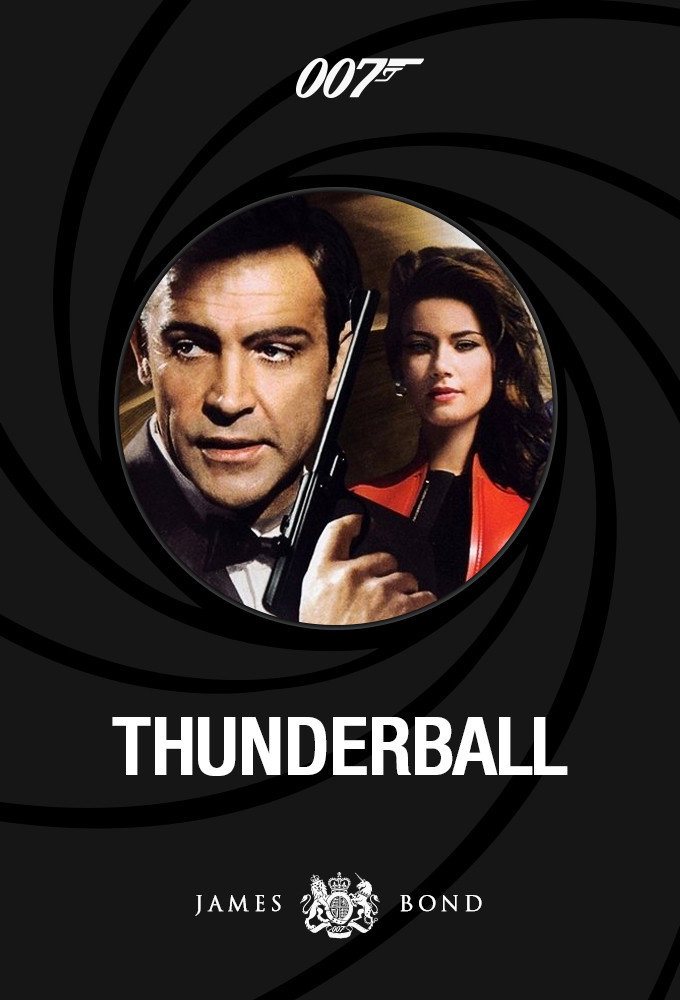
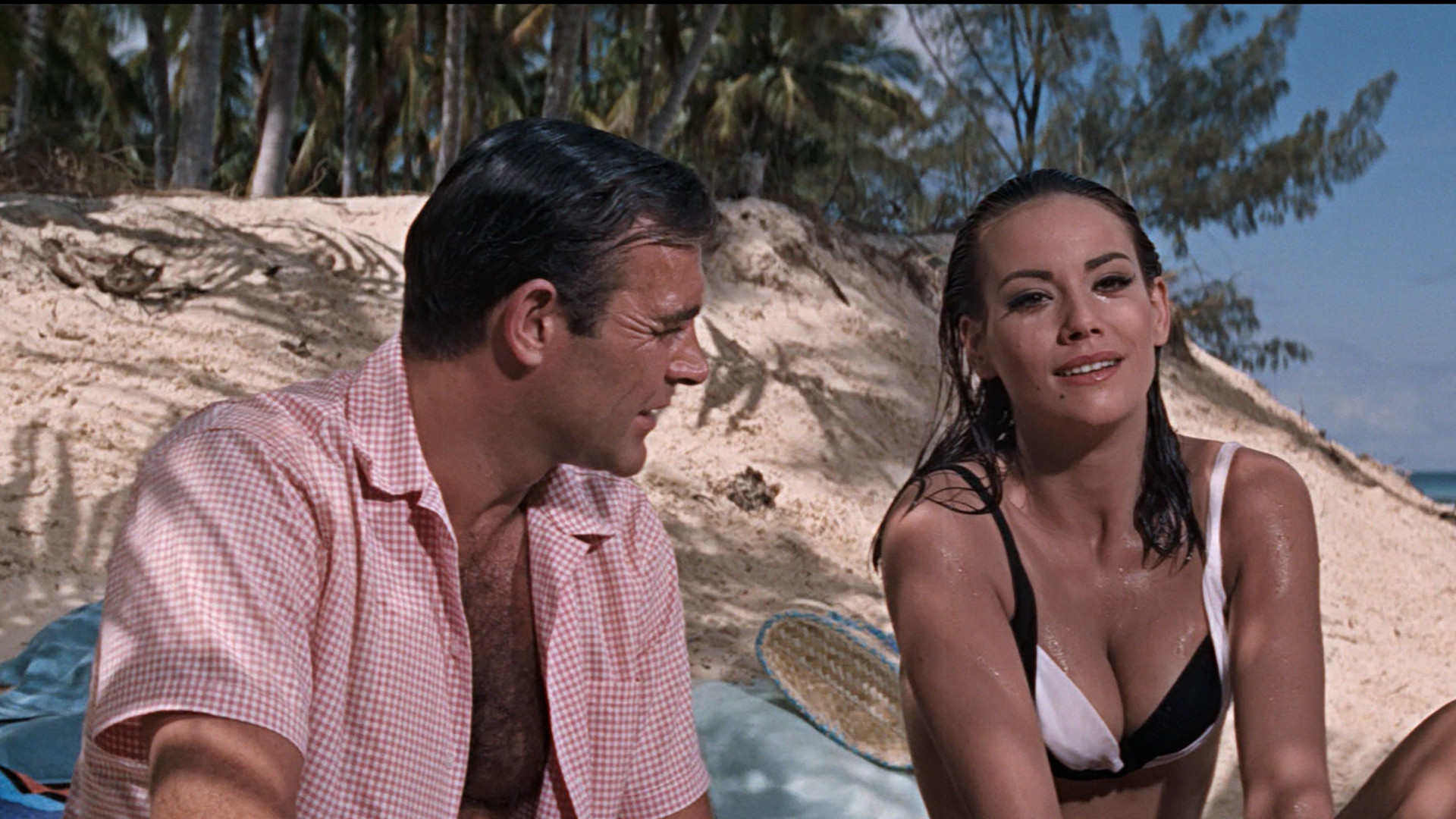
SPECTRE, the criminal organisation Bond has crossed before, steals two atomic bombs from a NATO bomber and sinks the aircraft in the sea off Nassau, then demands a ransom from Britain and America. James Bond (Sean Connery), fresh from a health clinic where a stranger has tried to kill him on a traction table, recognises the dead pilot’s photograph at M’s briefing and is sent to the Bahamas. There he finds the pilot’s sister, Domino Derval (Claudine Auger), kept woman of Emilio Largo (Adolfo Celi), SPECTRE’s Number Two, who owns a hydrofoil yacht called the Disco Volante and a house with sharks in the swimming pool. Fiona Volpe (Luciana Paluzzi), a SPECTRE assassin who rides a motorbike, is already in town, and Felix Leiter (Rik Van Nutter) of the CIA arrives to help.

Fi1m review

The fourth Bond film is the grandest of Connery’s run and the first to feel padded. Ken Adam’s sets, John Barry’s brass and Luciana Paluzzi’s assassin are worth the evening; the underwater battle that closes it is not.

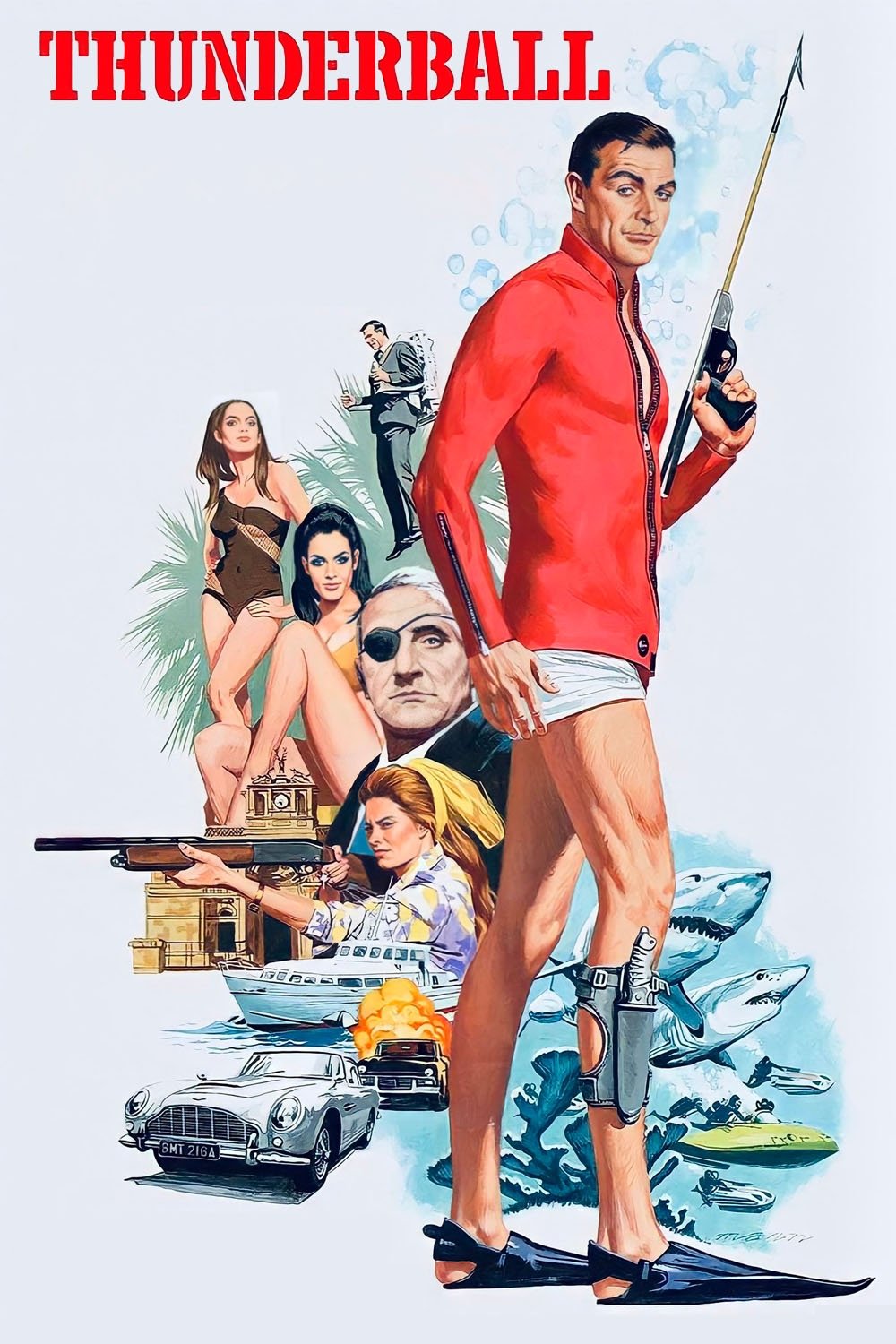
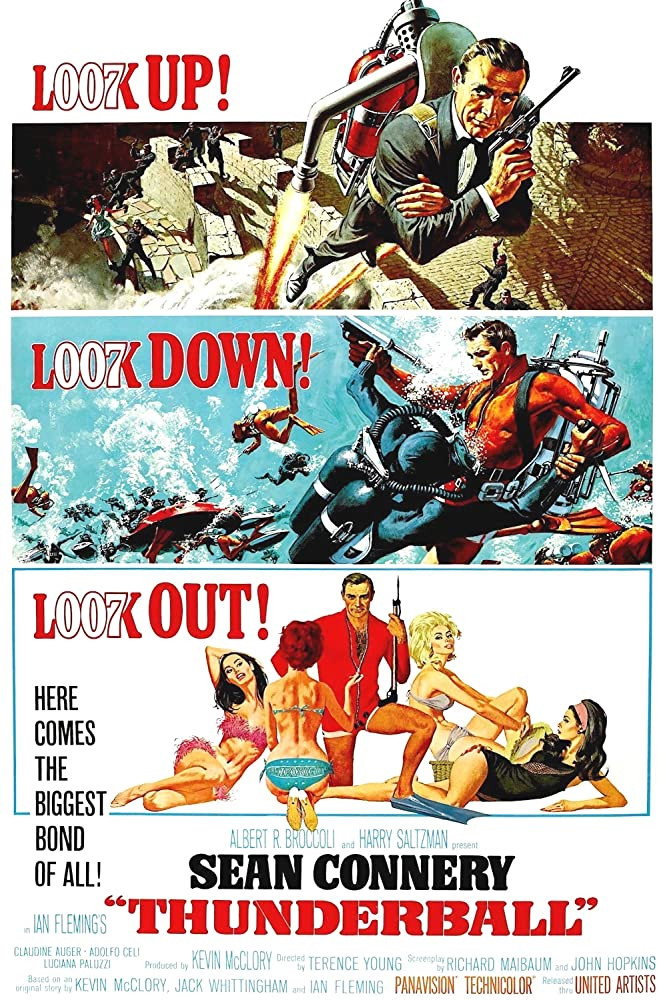
Thunderball is the fourth James Bond film and the one in which the series decides that bigger is the same as better. Terence Young, who directed Dr. No (1962) and From Russia with Love (1963), returns after sitting out Goldfinger (1964), and the poster promises the biggest Bond of all. The promise is kept. SPECTRE steals two atomic bombs, the world is held to ransom, and Bond is sent to the Bahamas to get them back. The film runs 130 minutes and has about a hundred minutes of story in it.

What it also has is Ken Adam. He gives SPECTRE a Paris boardroom with numbered chairs and a raised seat for the man at the top, and he gives Largo a house with a pool full of sharks and a hatch between the pool and the sea. Ted Moore shoots Nassau in colours so saturated the water looks dyed, and under the surface the light comes down in shafts and the divers cast shadows on white sand. John Barry’s score is the best thing in the film. On land the brass swaggers; when the divers go looking for the sunken bomber he slows everything to a swell that tells us this is grave business even when the pictures are only pretty.

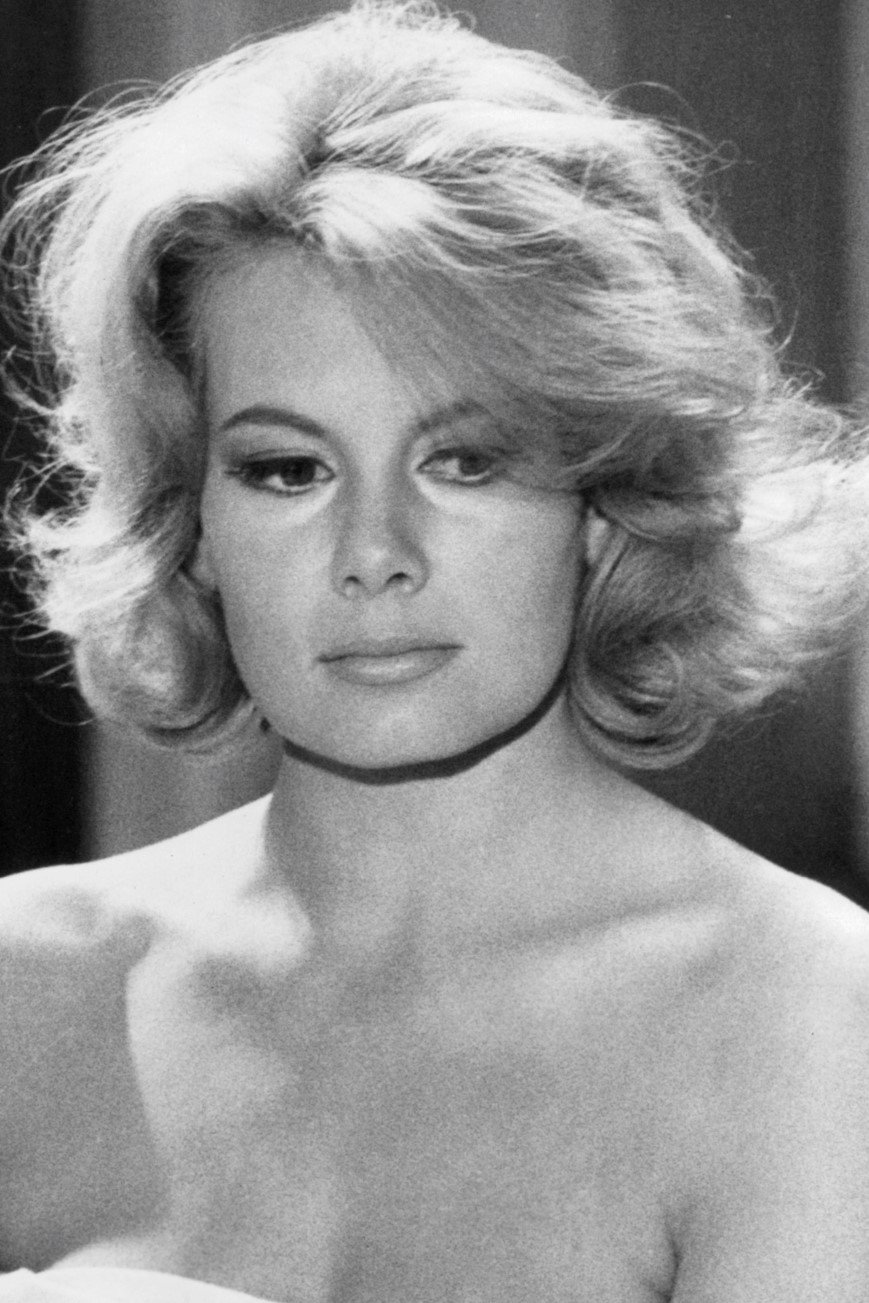
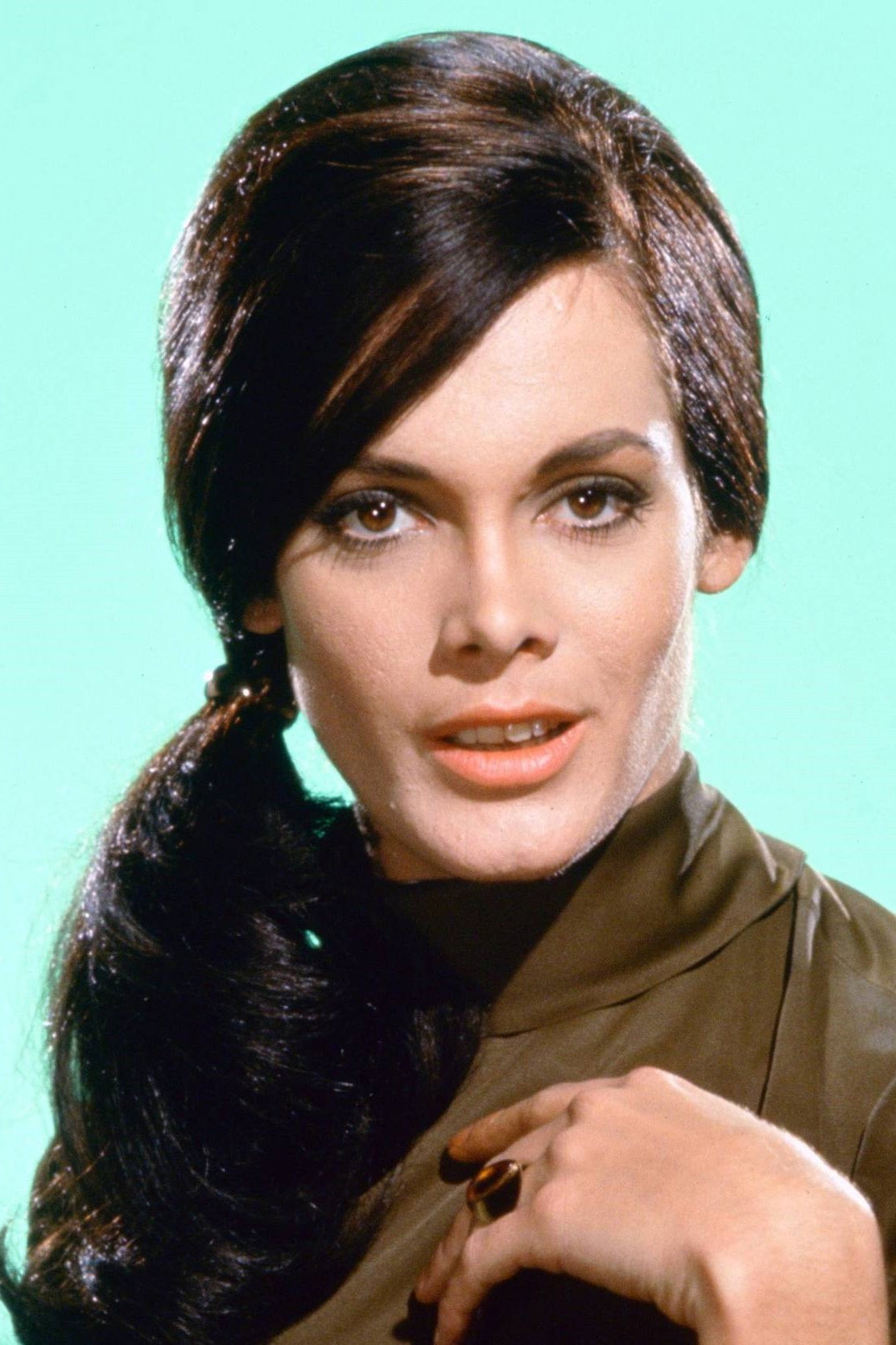
Adolfo Celi plays Largo with an eyepatch and a heavy stillness, a man who has people fed to sharks and then goes back to his lunch. Luciana Paluzzi’s Fiona Volpe is better still: red-haired, amused, the first woman in the series who sleeps with Bond and does not change sides, and she tells him so in a scene that is the sharpest writing Richard Maibaum and John Hopkins manage. Claudine Auger’s Domino is photographed rather than directed, and given very little to do until late. Connery is handsome, unhurried and, for long stretches, visibly bored. He wakes up whenever Paluzzi is on screen.

The trouble is the water. Every set piece that happens under it happens at the speed of a man in flippers, and there are a great many of them. The closing battle puts dozens of frogmen in orange and black against each other with spearguns, and it is impressive as an exercise in organisation and dull as drama. We could not tell who was winning, or often who was who, and after a few minutes we stopped trying. We were bored, and then cross about being bored by something this expensive and this carefully made. Peter R. Hunt and Ernest Hosler cut the land scenes with the snap Hunt brought to the earlier films; underwater they resort to speeding up the footage, and it shows, with fists arriving before the arms behind them.

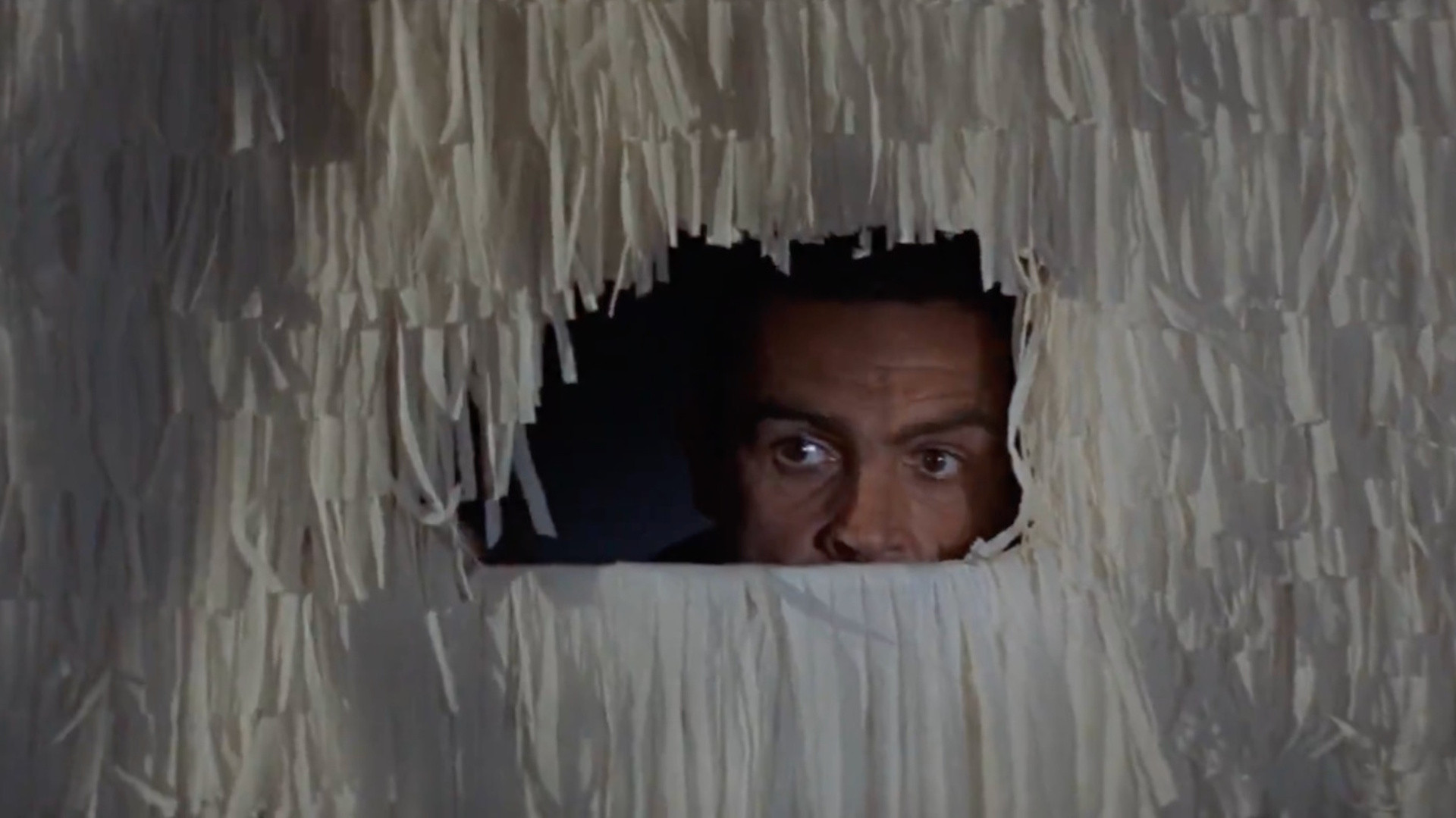
Then there is the shark pool. Bond is dropped into Largo’s pool and has to find the hatch before the sharks find him, and Young keeps the camera at the waterline so we see the fins above and the man below. The sharks are real, the cuts are quick, and for two minutes we forgot the film had been wasting our time. It is the one sequence where the water is a threat rather than a location.

Against the series’ own standard this is a step down. Goldfinger had one villain, one plan and no scene that did not push the story on; Thunderball has the plan and the hardware and then stops to admire itself. The health clinic opening, with Guy Doleman’s Count Lippe and Molly Peters’s nurse, is Young at his best, small and nasty and funny, and the film never quite finds that scale again. Anthony Mendleson dresses everyone beautifully, which is not nothing, but a well-cut dinner jacket is not a second act.

It carries a PG and it is a fine thing to have on in a warm room with a drink, where the colours look wonderful and nobody minds if you talk through the frogmen. Keep the remote to hand for the last half hour. Barry’s music will tell you when to look up again.
Critical consensus AI synthesised

66
Positive
4
Mixed
5
Negative
1

The reviews split by era more than by taste. The critics who saw it on release call it the best Bond yet, and most of the praise since clusters in the same places: Terence Young’s direction, which keeps the pace up, and Sean Connery, stylish and confident in the part even where one reviewer suspects he is bored by it. The underwater sequences are admired as spectacle almost everywhere, and the climactic battle is singled out more than once.

The later reviews are cooler. Most find it a step down from Goldfinger, recycling earlier plots and leaning on gadgets at the expense of story, and several find the underwater scenes too long and short on thrills, however handsome they look. Sight and Sound goes furthest, calling it a polished parody with little to remember afterwards. The spread is wide, from raves to one outright dismissal, with the modern consensus settling on decent but uneven.

The New Yorker
1 January 1966 · Brendan Gill
90*

The critic ranks Thunderball as the best James Bond film so far, praising its accomplished parody, direction by Terence Young, and Sean Connery's performance in the role.

Read the full review →
The New York Times
22 December 1965
90*

The critic calls Thunderball the best Bond film yet, crediting Sean Connery and Terence Young with giving the hero a stronger sense of humor and more gaiety.

Read the full review →
Variety
31 December 1964
90*

The review highlights the inventive screenplay, mechanical gimmicks, strong action sequences, and Terence Young's direction that keeps the pace at fever pitch, with Sean Connery stylish as Bond.

Read the full review →
Empire
3 March 2006 · Kim Newman
65*

The fourth 007 film is a slight step down from Goldfinger, recycling plot elements from earlier entries and featuring a standard nuclear extortion scheme, with Connery seeming more bored than cool. It still delivers the Bond formula effectively, highlighted by exciting underwater sequences and a stunning climactic battle.

Read the full review →
Radio Times
★★★ · David Parkinson
60

The Bond series goes fully comic-strip in this gadget-heavy extravaganza that sacrifices plot coherence for hardware. Connery remains engaging as 007 but shifts toward action-hero mode, while underwater pacing falters even as the Oscar-winning effects shine.

Read the full review →
The Guardian
23 October 2015 · ★★★★☆ · Peter Bradshaw
50*

Good stuff here, but the franchise faltered a bit with long underwater sequences.

Read the full review →

Cast

Awards

Academy Awards, 1966

Won
Best Visual Effects

If you liked this, try…

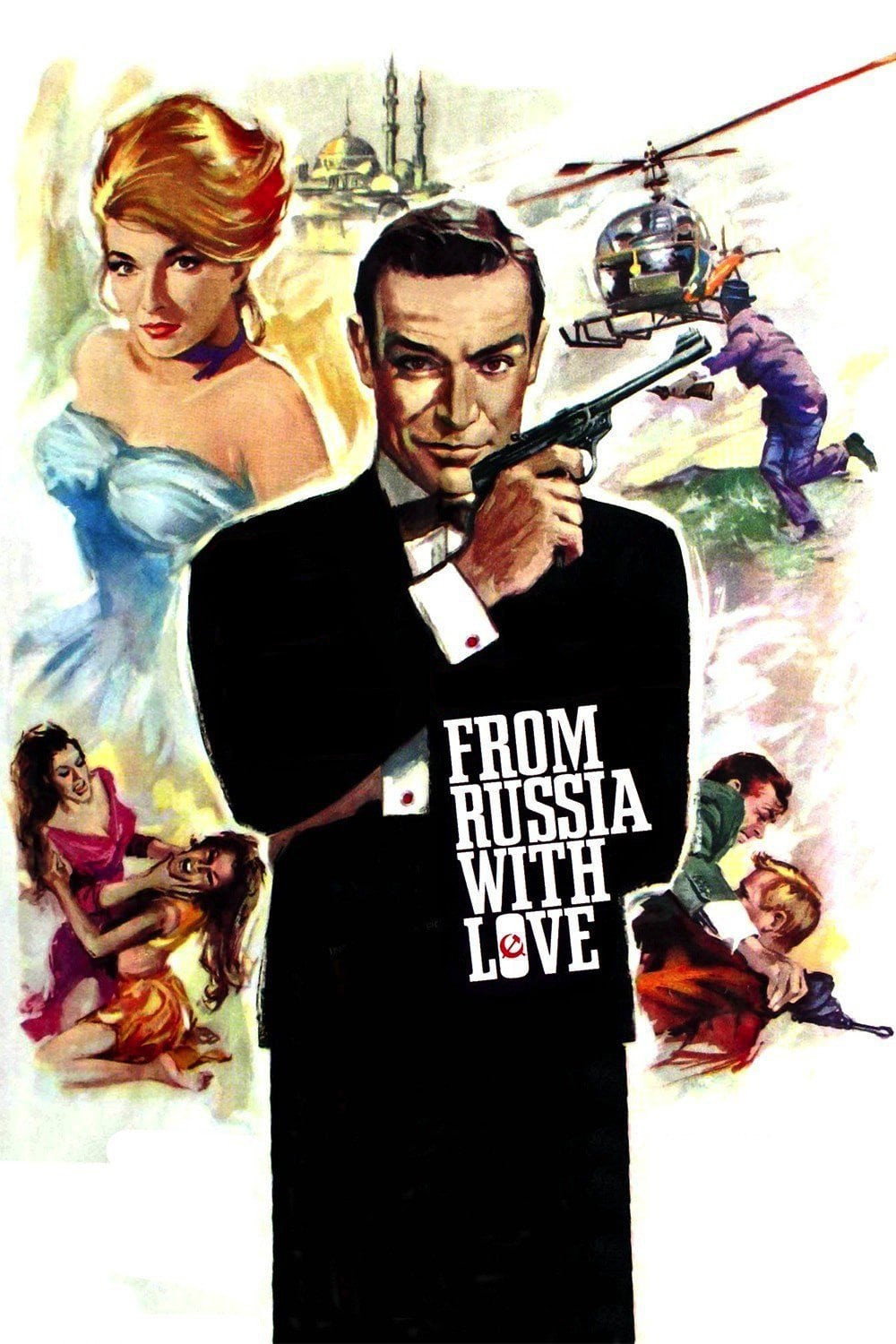
From Russia with Love poster84

From Russia with Love

1963 · Young’s earlier Bond: leaner, nastier, and a train fight that needs no water

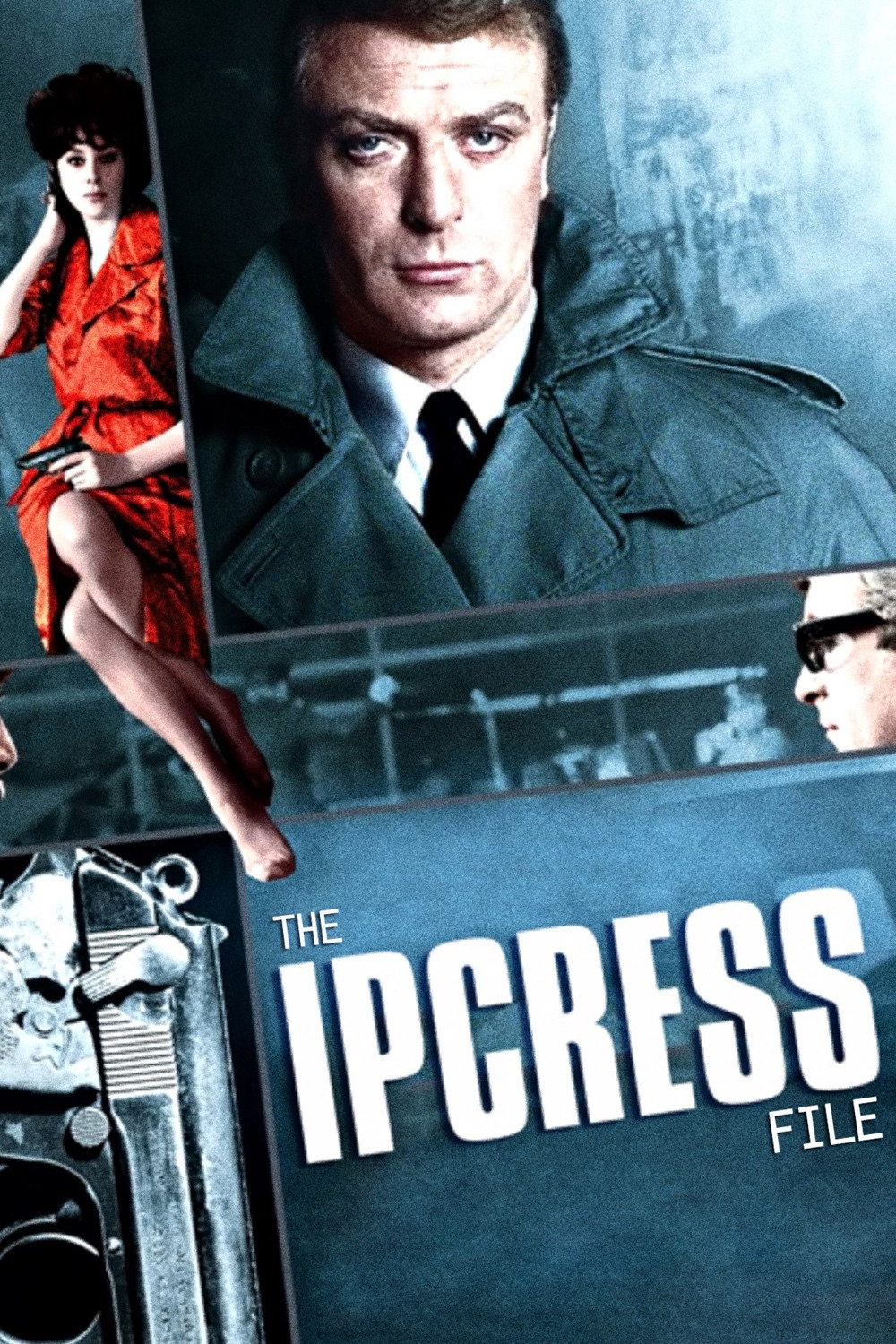
The Ipcress File poster

The Ipcress File

1965 · The same year’s spy film for people who found Bond a little too pleased with himself

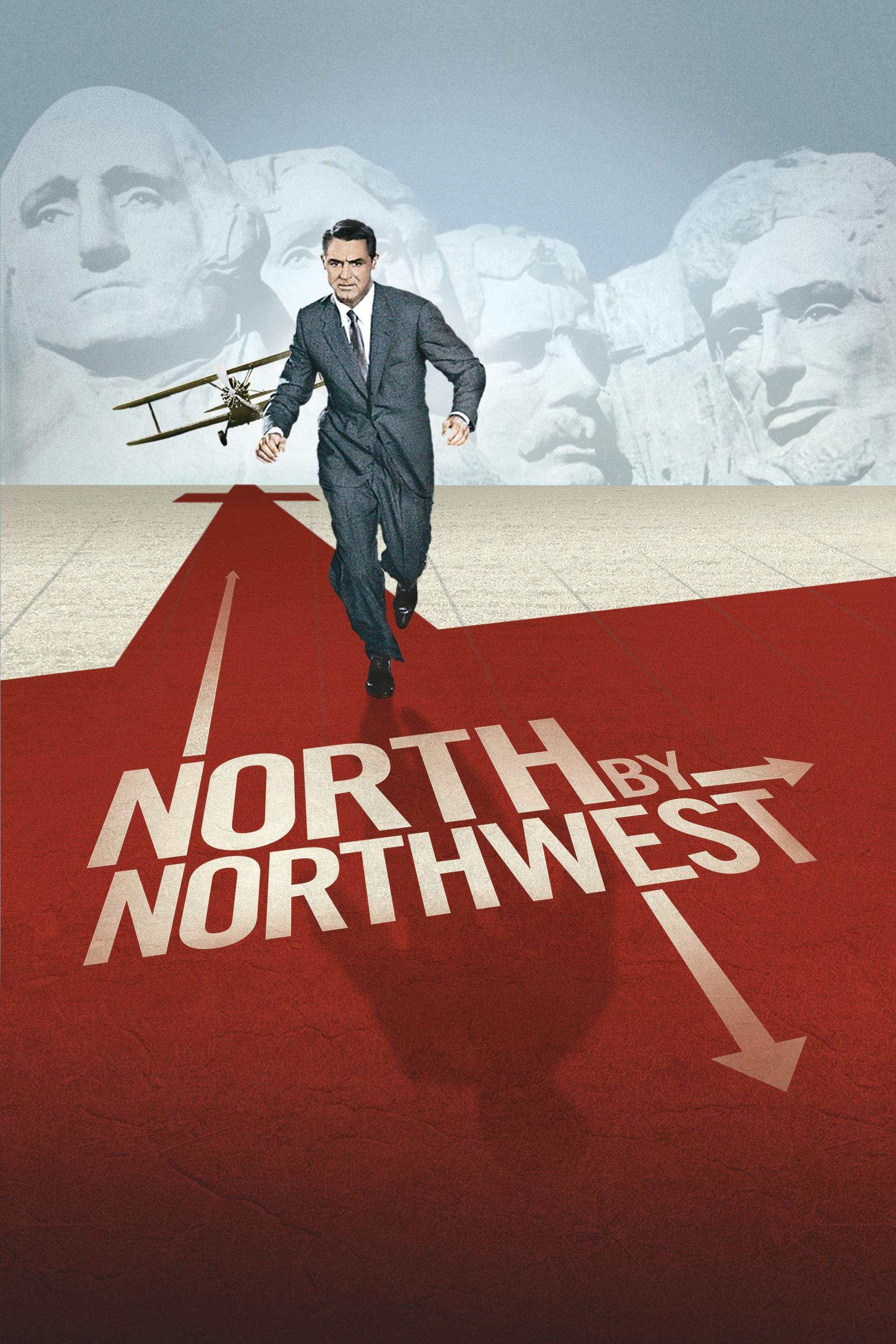
North by Northwest poster89

North by Northwest

1959 · Hitchcock’s suave man on the run; the template Bond kept borrowing from

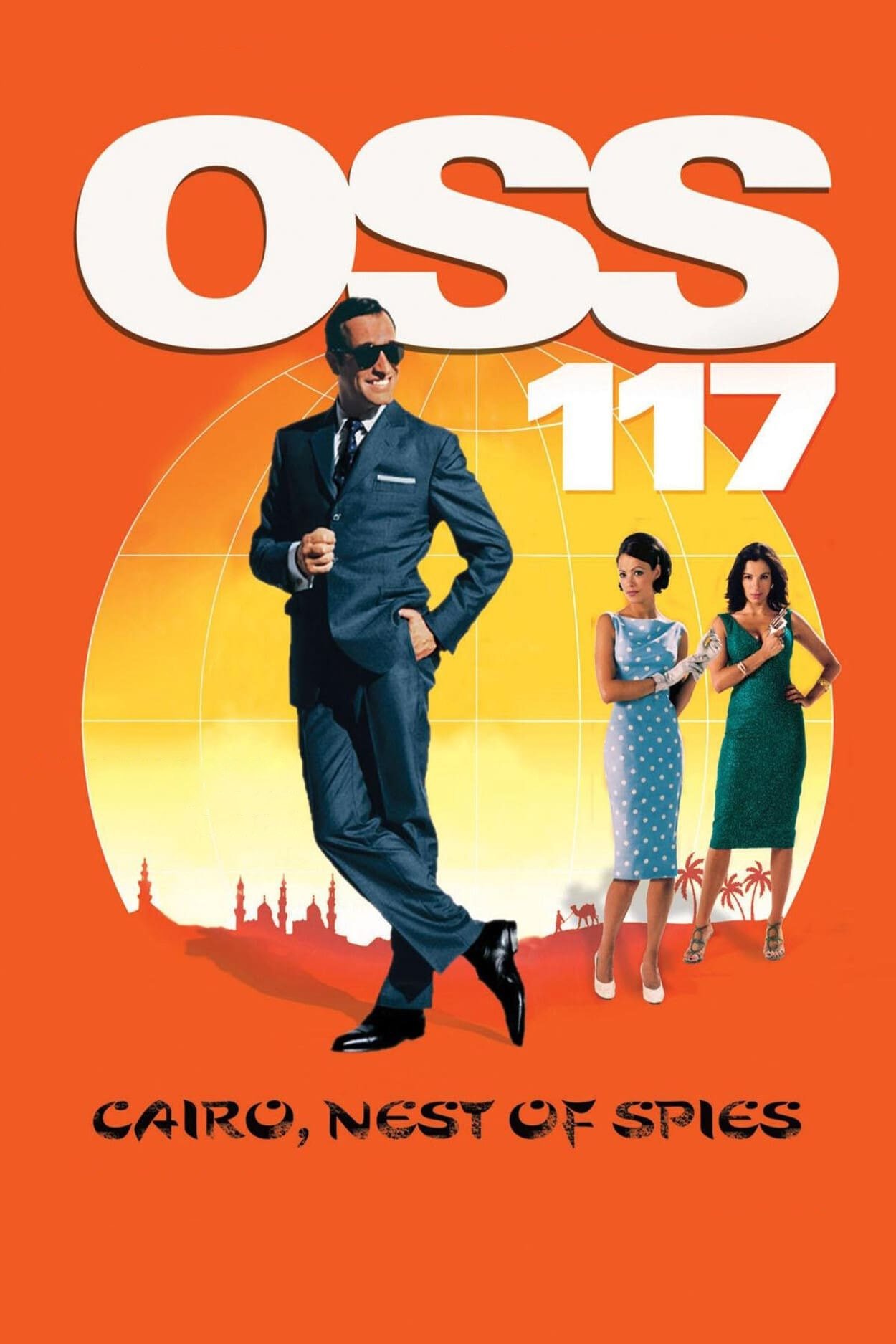
OSS 117: Cairo, Nest of Spies poster

OSS 117: Cairo, Nest of Spies

2006 · A French send-up of exactly this era, with the tans and the idiocy intact

The Silent World poster

The Silent World

1956 · Cousteau’s undersea documentary, for those who liked the diving more than the plot