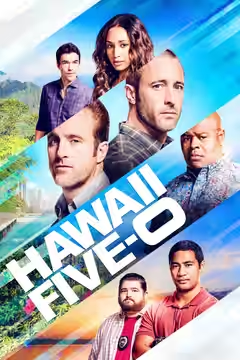
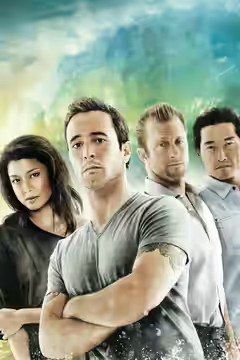
An agreeable cast and brisk action make Hawaii Five-0 decent, undemanding company. The caveat is the partnership at its centre: what begins as comic friction too often becomes two men refusing to stop talking.
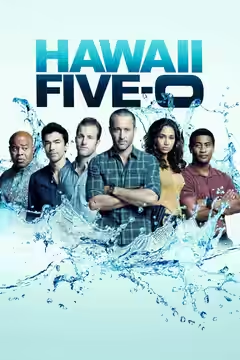
Hawaii Five-0 is a serviceable action procedural with an irritating habit of prolonging arguments we understood almost at once. Creators Peter M. Lenkov, Alex Kurtzman and Roberto Orci offer fast police work, an attractive setting and colleagues who are meant to become welcome company. The pleasure is supposed to come from knowing how these people will behave, then watching them do it under pressure. That is a sound basis for a series, provided the company stays welcome.
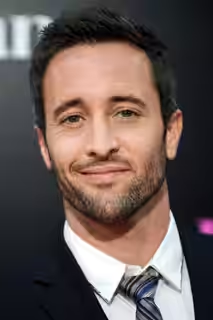
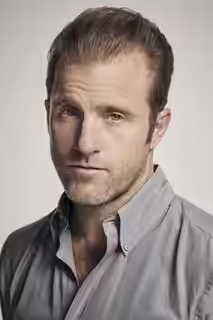
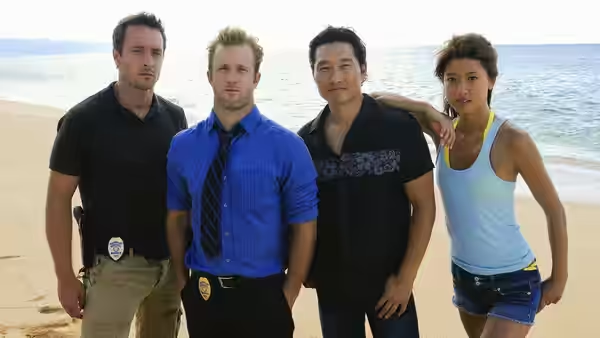
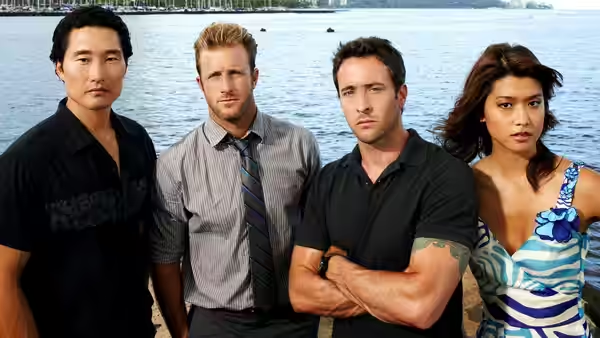
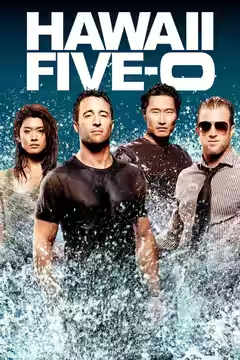
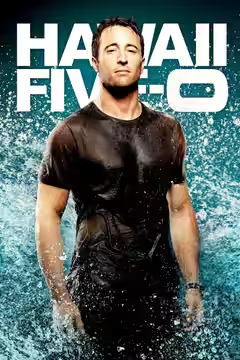
Scott Caan understands that requirement best as Danny ‘Danno’ Williams, whose irritation gives the partnership its liveliest moments. We laughed at his exasperation with Steve McGarrett because he makes an objection sound like something he has been holding in, rather than a joke prepared for delivery. Alex O’Loughlin gives Steve McGarrett enough brisk authority for the contrast to work. The trouble comes when their exchanges keep going: the teasing becomes repetitive, and both men begin to sound pleased with how much noise they are making.
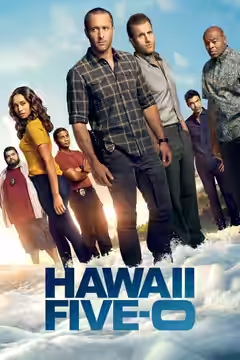
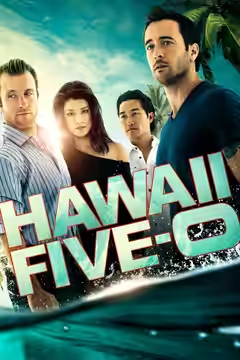
Daniel Dae Kim, as Chin Ho Kelly, and Grace Park, as Kono Kalakaua, make the wider team easier to like. Their presence matters because a programme built this heavily around a double act needs people who can interrupt it. The ensemble is more appealing when it has something to do together than when the script is waiting for another insult to land. We would happily spend more time with these colleagues and less time listening to the partners compete for the last word.
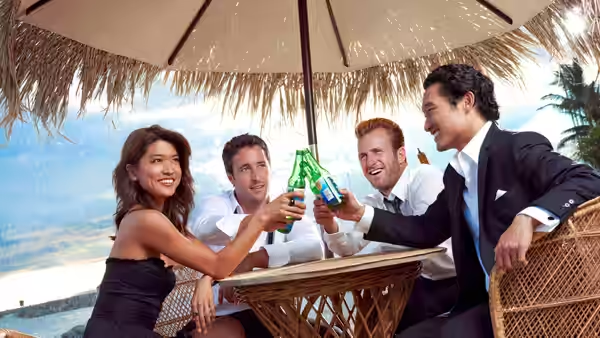
Cinematographers Michael Martinez and Gabriel Beristain give the Hawaiian setting the bright finish this sort of escapism needs. The scenery is inviting, but the series offers little sense of a community beyond the demands of the police story. Production designers Gary Frutkoff and Keith Neely contribute to that clean, readily readable look; it serves the action without making the surroundings particularly distinctive. The bikini shots are the least interesting use of the setting, and they do little to make Hawaii feel less like somewhere being advertised.
The action is a better reason to stay, particularly in the opening directed by Len Wiseman. It has a directness the conversations sometimes lack, and the pace gives the procedural material enough energy to remain watchable. Editors Nicolas De Toth and Johnathon Pensky help keep things moving, although speed cannot make an ordinary case more interesting. Keith Power and Brian Tyler’s music supports the bustle efficiently, with the returning theme doing much of the work of putting us in the mood.
Against the undemanding end of the police-drama genre, this is competent entertainment with a useful cast. It becomes less satisfying whenever it asks us to take its toughness seriously, since the characters are not developed enough to give that toughness much weight. The familiar format makes it easy to settle into, but repeated quarrels expose how little the dialogue has to offer beyond disagreement. Try a single episode if a brisk police procedural is what the evening needs; the banter is less wearing in small doses.