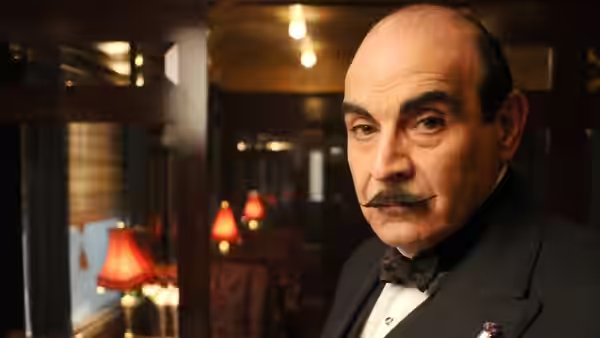
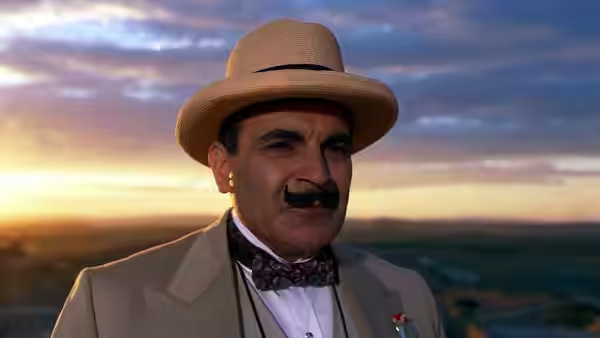
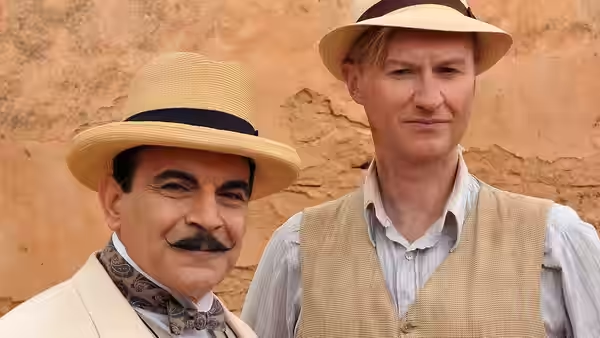
Twenty-four years, seventy murders and one performance holding it all up. David Suchet plays Poirot as a man whose fussiness is a kind of morality, and the series around him, uneven as it gets, never lets him down for long.
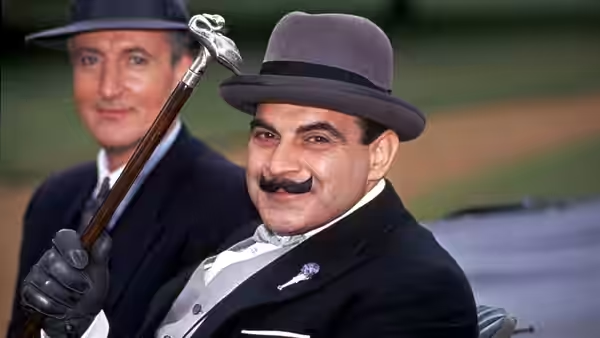
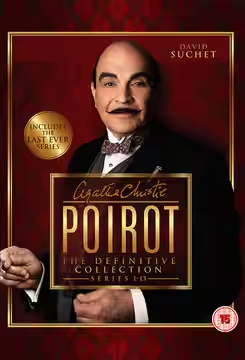
Agatha Christie’s Poirot began on 8 January 1989 and ended in 2013, after 13 series and 70 episodes, and David Suchet is in every one of them. That was the plan, and it is the achievement: one actor playing one detective through practically everything Christie wrote about him, over 24 years, while 27 directors, six cinematographers and more than twenty writers came and went. The 50-minute comedies of the first series and the long, dark films of the last are barely the same programme. Suchet is the reason they belong together.
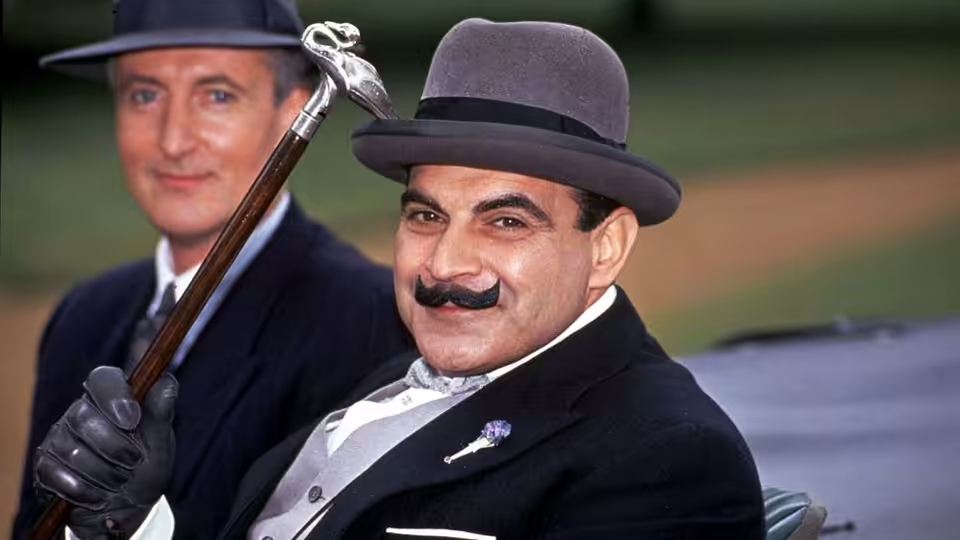
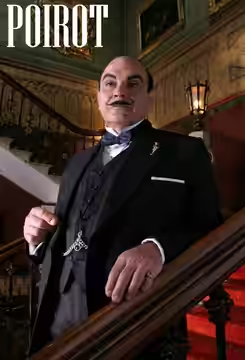
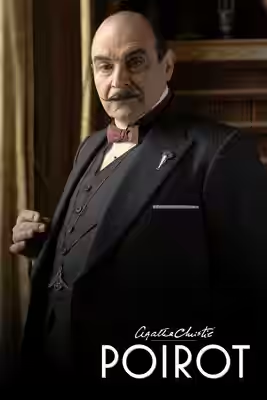
He plays Poirot as a man who believes the cutlery matters. The coat is brushed, the moustache waxed, the chairs squared to the table, because a world where those things are attended to is a world in which murder is an insult, and he takes it personally. The walk is short and quick, the head tilts to listen, and the voice sits higher than you expect and never hurries. In the early series this is played for laughs, and it is funny. Later, as Kevin Elyot and others took on the novels, the laughs thin out and the same habits read as a lonely, devout man holding himself in order.
We did not expect to be moved by a Sunday-evening detective programme, and we were. There is a scene late in the run in which Poirot kneels by a hotel bed with his rosary, alone, and says his prayers, and Suchet plays it with none of the comedy he has spent two decades earning. We were got at, properly, and the reason is simple: by then we had watched the man straighten a thousand things, and here was the one thing he could not.
Around him the early years give him a household. Hugh Fraser’s Captain Hastings is a decent, slow Englishman who likes a motor car and is always a page behind; Fraser never once plays him as a fool, which is harder than it looks. Pauline Moran’s Miss Lemon runs the filing with the seriousness Poirot brings to a corpse. Philip Jackson’s Japp arrives at every body a step late and knows it, and the pleasure is that he does not resent it. These three carry the 50-minute episodes, and the series is thinner when it does without them.
Christopher Gunning’s theme is a saxophone over strings, a cocktail-bar tune with something slightly wrong in it, and it tells you the period and the mood in eight bars. Mike Oxley and Rob Harris give Poirot a white flat with chrome rails and a London of posters and lidos, which is the 1930s as the decade liked to draw itself. The look changes hands often, with six cinematographers credited across the run, and you can see the joins: the early episodes are lit flat and bright, which suits the jokes, and the later films are shot in long shadows that suit the Elyot scripts. Clive Exton, who wrote much of the first run, gave it its jokes. Anthony Horowitz, Nick Dear and Mark Gatiss followed, and the guests get grander: Emily Blunt as Linnet Ridgeway, Aidan Gillen as Amyas Crale, Alex Jennings as Dr. Roberts.
It is not all of a piece. The short-story episodes can be slight, a body, four suspects, a drawing room and Poirot explaining, and 50 minutes is sometimes too long for the puzzle. The later novel adaptations have the opposite trouble, and some of them add misery that Christie did not write, as if the writers were embarrassed by her lightness. Watched in order, the jump in tone is a jolt. And Christie’s suspects are types; the actors give them faces, but the puzzle needs them interchangeable and the scripts cannot give them much inside.
Peter Ustinov played Poirot in the cinema as a comic turn, and Albert Finney before him as an impersonation. Suchet plays him as a person, and that is the difference between a programme you have on and one you watch. Start at the beginning, with Mrs. Todd and her missing cook. One episode a night, tea, and do not bother trying to guess the killer; you will not, and the programme does not mind.