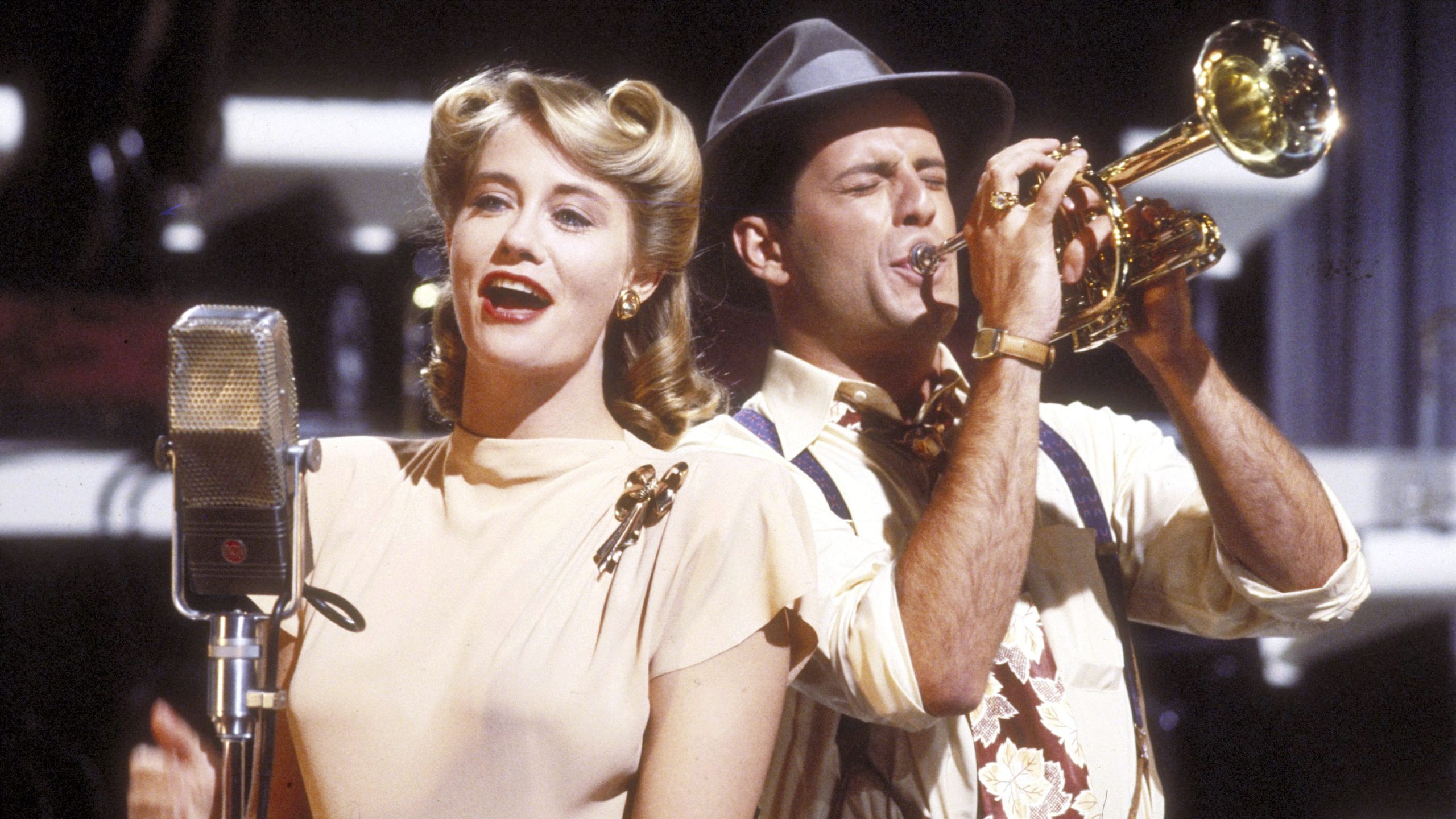
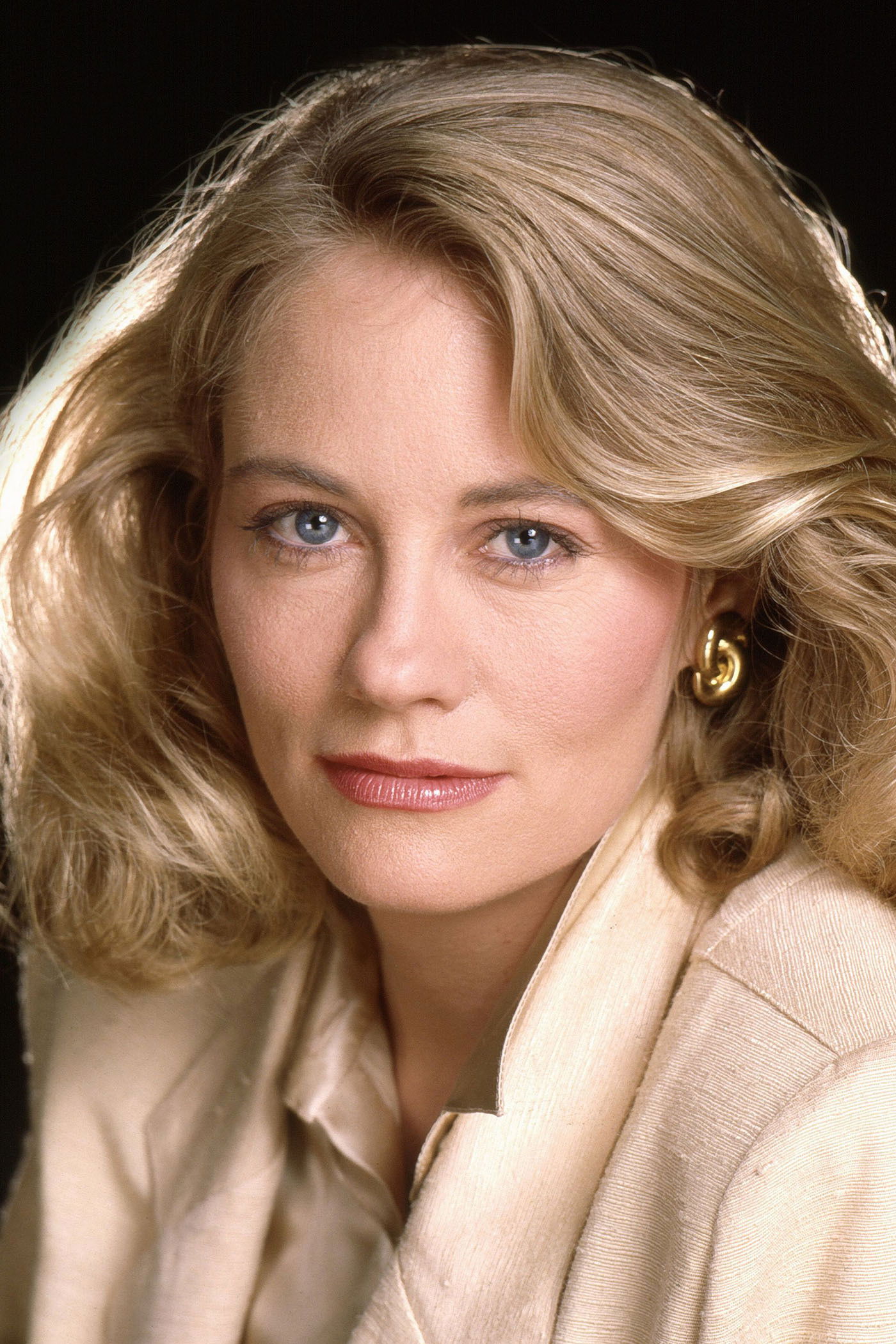
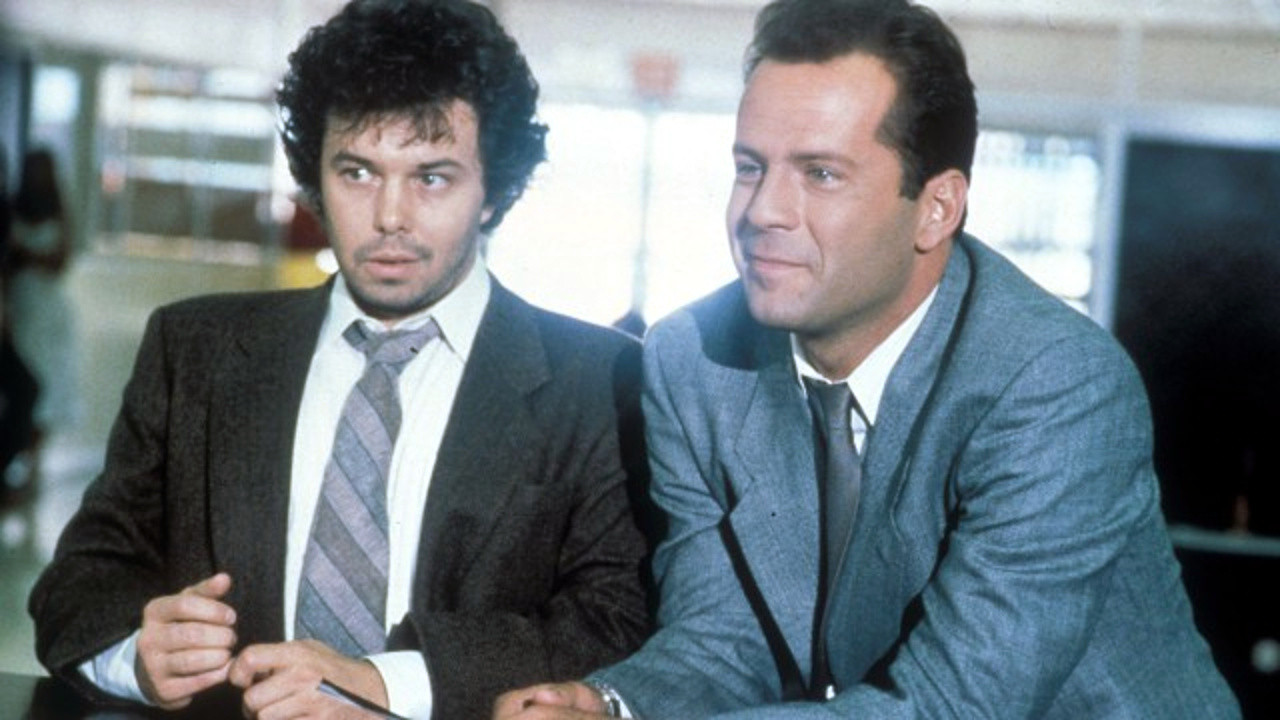
Glenn Gordon Caron’s detective comedy is funny, flirtatious and worth the occasional bout of self-indulgence. Cybill Shepherd and Bruce Willis make the quarrels count, though the programme sometimes seems more interested in congratulating itself than getting on with a scene.
Moonlighting is a detective comedy whose chief pleasure is watching Cybill Shepherd and Bruce Willis disagree. We recommend it warmly, provided the investigation is not the main reason for turning up. Creator Glenn Gordon Caron gives the pair enough freedom to make attraction funny and irritation appealing, then occasionally gives the programme rather too much freedom to admire its own cleverness. The cases bring Maddie Hayes and David Addison together; the pleasure comes from how reluctantly they appear to enjoy it. A lot depends on finding these two amusing, and we do.
Bruce Willis plays David Addison with an eagerness to amuse that could easily become exhausting. What saves him is the sense that David needs a response: the patter invites somebody to answer back. Cybill Shepherd, as Maddie Hayes, makes withholding that encouragement funny, letting his confidence do some of the work against him. We laughed, then found ourselves watching for her reaction rather than waiting for his next line. She has enough authority to make the irritation count, which keeps his charm from settling into a comfortable routine.
The series also makes room for a film-noir pastiche and a Shakespeare spoof, rather than sticking to one reliable detective-comedy routine. That willingness to change form is a substantial part of its appeal, and it suits a partnership already built on verbal games. The experiments work when they give the performers something fresh to play. The fourth-wall breaks are less dependable: acknowledging the audience does not automatically make an interruption funny. We would happily exchange some of those knowing nudges for another uninterrupted quarrel.
The cinematography, credited to Gerald Perry Finnerman and Howard Block, makes watching the actors’ reactions part of the pleasure. It gives the performances enough attention that the reply need not always be spoken. James J. Agazzi’s production design helps the detective setting remain credible while the comedy becomes fanciful. Both contributions are more restrained than the programme’s most insistent jokes, and we appreciate the steadiness.
The editing team includes Christopher T. Welch, and the comic timing depends as much on the space between lines as their speed. The exchanges need to feel quick without making the characters seem interchangeable, and usually they do. Richard Lewis Warren, Lee Holdridge and Alf Clausen are credited with the music, which helps the romantic passages sit comfortably alongside the comedy. It is useful work, though less likely to linger than the voices. The programme understands how much enjoyment there can be in anticipating somebody’s reply.
The caveat is that the detective stories do not always earn the time spent on them. When the verbal sparring pauses, the series can feel thinner than its busy presentation suggests. Anyone hoping to enjoy the comedy while also keeping track of a satisfying mystery may find the balance frustrating. Within detective comedy, though, this is an unusually rewarding partnership, and its uneven cases seldom make spending time with these people feel like a chore. Choose it when the conversation is what matters, and allow the detectives to get distracted.