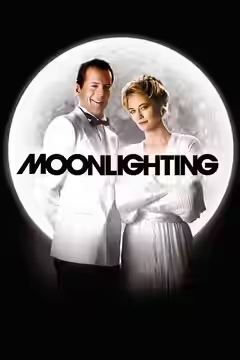
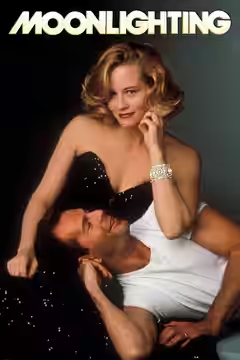
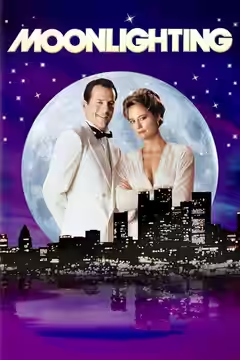
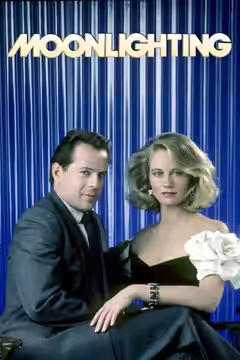
Blonde woman singing into vintage microphone as man plays trumpet
Series review

Moonlighting

1985 · Created by Glenn Gordon Caron · Series · 46m

In a sentenceCybill Shepherd and Bruce Willis make solving crimes look like an unreasonable interruption to an argument

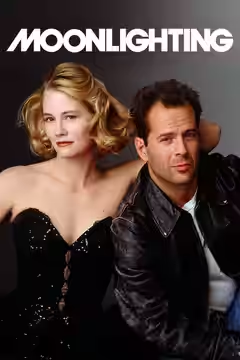
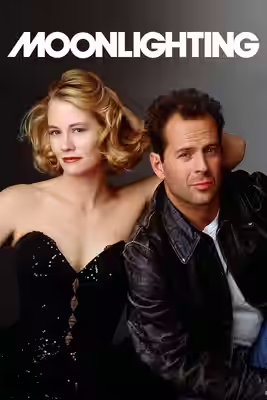
Maddie Hayes (Cybill Shepherd) and David Addison (Bruce Willis) are at the centre of a private-eye comedy in which attraction competes with the business of solving mysteries. Agnes DiPesto (Allyce Beasley) is part of the ensemble as cases become occasions for arguments, romance and action. Maddie and David have investigations to pursue, but their exchanges keep returning attention to the pair themselves. The programme draws on screwball comedy and film noir, mixing detective stories with a developing relationship and characters who are willing to acknowledge the audience watching them.

Plays from YouTube when you press play; nothing loads from them until then.

Fi1m review

Glenn Gordon Caron’s detective comedy is funny, flirtatious and worth the occasional bout of self-indulgence. Cybill Shepherd and Bruce Willis make the quarrels count, though the programme sometimes seems more interested in congratulating itself than getting on with a scene.

Moonlighting is a detective comedy whose chief pleasure is watching Cybill Shepherd and Bruce Willis disagree. We recommend it warmly, provided the investigation is not the main reason for turning up. Creator Glenn Gordon Caron gives the pair enough freedom to make attraction funny and irritation appealing, then occasionally gives the programme rather too much freedom to admire its own cleverness. The cases bring Maddie Hayes and David Addison together; the pleasure comes from how reluctantly they appear to enjoy it. A lot depends on finding these two amusing, and we do.

Bruce Willis plays David Addison with an eagerness to amuse that could easily become exhausting. What saves him is the sense that David needs a response: the patter invites somebody to answer back. Cybill Shepherd, as Maddie Hayes, makes withholding that encouragement funny, letting his confidence do some of the work against him. We laughed, then found ourselves watching for her reaction rather than waiting for his next line. She has enough authority to make the irritation count, which keeps his charm from settling into a comfortable routine.

The series also makes room for a film-noir pastiche and a Shakespeare spoof, rather than sticking to one reliable detective-comedy routine. That willingness to change form is a substantial part of its appeal, and it suits a partnership already built on verbal games. The experiments work when they give the performers something fresh to play. The fourth-wall breaks are less dependable: acknowledging the audience does not automatically make an interruption funny. We would happily exchange some of those knowing nudges for another uninterrupted quarrel.

The cinematography, credited to Gerald Perry Finnerman and Howard Block, makes watching the actors’ reactions part of the pleasure. It gives the performances enough attention that the reply need not always be spoken. James J. Agazzi’s production design helps the detective setting remain credible while the comedy becomes fanciful. Both contributions are more restrained than the programme’s most insistent jokes, and we appreciate the steadiness.

The editing team includes Christopher T. Welch, and the comic timing depends as much on the space between lines as their speed. The exchanges need to feel quick without making the characters seem interchangeable, and usually they do. Richard Lewis Warren, Lee Holdridge and Alf Clausen are credited with the music, which helps the romantic passages sit comfortably alongside the comedy. It is useful work, though less likely to linger than the voices. The programme understands how much enjoyment there can be in anticipating somebody’s reply.

The caveat is that the detective stories do not always earn the time spent on them. When the verbal sparring pauses, the series can feel thinner than its busy presentation suggests. Anyone hoping to enjoy the comedy while also keeping track of a satisfying mystery may find the balance frustrating. Within detective comedy, though, this is an unusually rewarding partnership, and its uneven cases seldom make spending time with these people feel like a chore. Choose it when the conversation is what matters, and allow the detectives to get distracted.


Critical consensus AI synthesised

82
Positive
4
Mixed
1
Negative
0
The Guardian
3 April 2014
90*

The critic praises Cybill Shepherd and Bruce Willis as a witty, sparky grown-up twosome in a sublimely funny private eye spoof that harks back to film noir and screwball comedy. The review highlights the show's groundbreaking self-referential style, memorable episodes like the noir pastiche and Shakespeare spoof, and its influence on later series, while noting it was always more comedy than drama.

Read the full review →
The Hollywood Reporter
2 September 2015 · THR Staff
90*

Welcomes the series as a satisfying blend of comedy, romance and action unique in primetime. Singles out Bruce Willis's performance as the key reason it works well.

Read the full review →
Variety
12 June 2005 · Josef Adalian
90*

Praises Glenn Gordon Caron's creation as the gold standard for sophisticated adult TV blending comedy and drama. Highlights the show's innovative departures from TV norms and the strong case made by the DVD set of the first two seasons.

Read the full review →
The AV Club
7 June 2005 · Nathan Rabin
65*

The DVD set of the first two seasons shows the pilot as weak with little chemistry between leads and thin mysteries, but the series improves markedly in season two with stronger performances and ambitious episodes. The show is a clever, briskly entertaining facsimile of screwball comedy rather than the real thing.

Read the full review →
Paste
10 October 2023 · Tara Bennett
70*

The critic finds Moonlighting a watchable hot mess with innovative storytelling that broke TV norms for dramedies and rom-coms. She singles out its meta fourth-wall breaks, experimental episodes, and the crackling chemistry between leads Cybill Shepherd and Bruce Willis for praise, while noting some dated elements.

Read the full review →

Straight answers AI written, from our review

Is Moonlighting worth watching?
Moonlighting is worth watching for anyone who enjoys a detective comedy where the arguing matters more than the case, and we scored it 82. Cybill Shepherd and Bruce Willis make attraction and irritation funny in equal measure. The mysteries themselves are often thin, and the programme's fondness for admiring its own cleverness can slow a scene.
How long is Moonlighting, and what is it rated?
Moonlighting has episodes of about 46m. It is a comedy and drama series.
Where can I watch Moonlighting in Belgium?
Moonlighting is not on any streaming or rental service in Belgium at the moment. It is available in 1 other country; change your country at the top of the page to see where. Availability is checked daily.
How violent or frightening is Moonlighting, and is it suitable for children?
Moonlighting is a light detective comedy rather than a violent or frightening one, carrying a TV-PG rating in the United States and no certificate in the UK. The cases exist mainly as excuses for arguments, romance and some action, so the squeamish have little to fear. Younger children may simply find the quarrelling adults tedious, though nothing in it should trouble a family sofa.
How does Moonlighting compare to The Thin Man?
Moonlighting shares with The Thin Man a detective pair whose bickering and flirtation matter far more than the mystery, and in both the crime is the weakest element. The earlier film is tighter and more assured, with William Powell and Myrna Loy playing a couple who plainly enjoy each other. Shepherd and Willis play reluctance instead, and the series is looser, more self-conscious and happier to break its own rules.
What should I watch after Moonlighting?
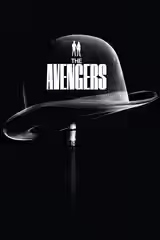
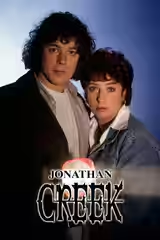
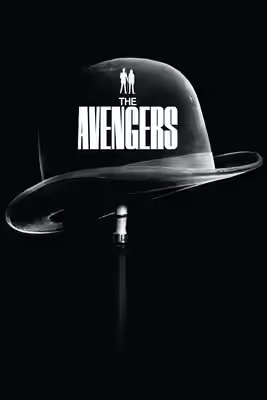
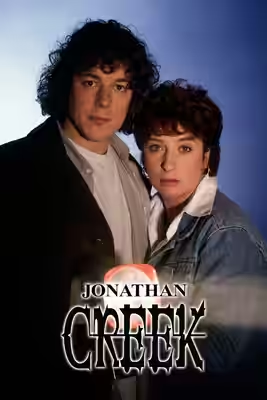
After Moonlighting, try The Thin Man (1934, Fi1m 84): A married detective pair make flirtation and bickering essential to the investigation. Then The Avengers (1961, Fi1m 83): Another partnership whose wit makes the business of catching villains look secondary; and Jonathan Creek (1997, Fi1m 78): Argumentative amateur sleuths, with puzzles that demand rather more of the evening’s attention.

Cast

If you liked this, try…

  1. The Thin Man (1934, Fi1m 84)A married detective pair make flirtation and bickering essential to the investigation.

  2. The Avengers (1961, Fi1m 83)Another partnership whose wit makes the business of catching villains look secondary.

  3. Jonathan Creek (1997, Fi1m 78)Argumentative amateur sleuths, with puzzles that demand rather more of the evening’s attention.

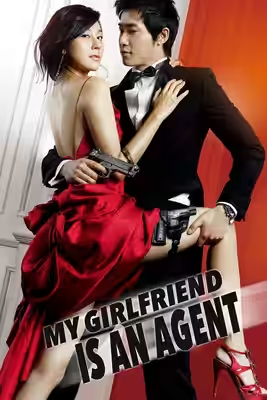
  4. My Girlfriend Is an Agent (2009) · not reviewed yetRomantic dishonesty and undercover work keep getting in each other’s way.

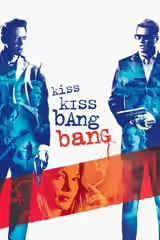
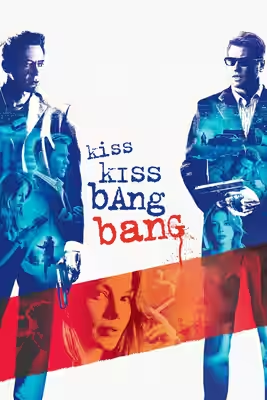
  5. Kiss Kiss Bang Bang (2005, Fi1m 79)For sharper language, scruffier detectives and jokes about how crime stories work.

Free account

Know what to watch tonight

Two lists that know where things are streaming, collections you can share, your own score beside ours, and Discover that remembers what you have seen.

  • Want to see, sorted by what is streaming now
  • Seen, with your score out of ten
  • No adverts, ever