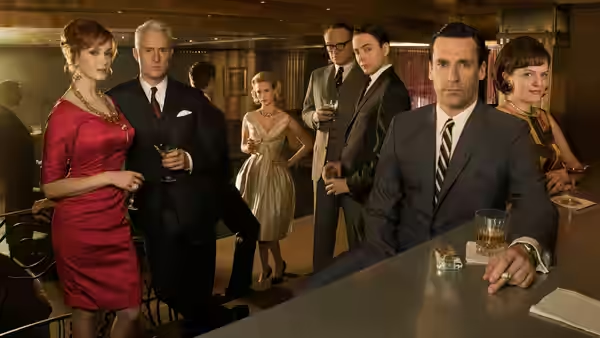
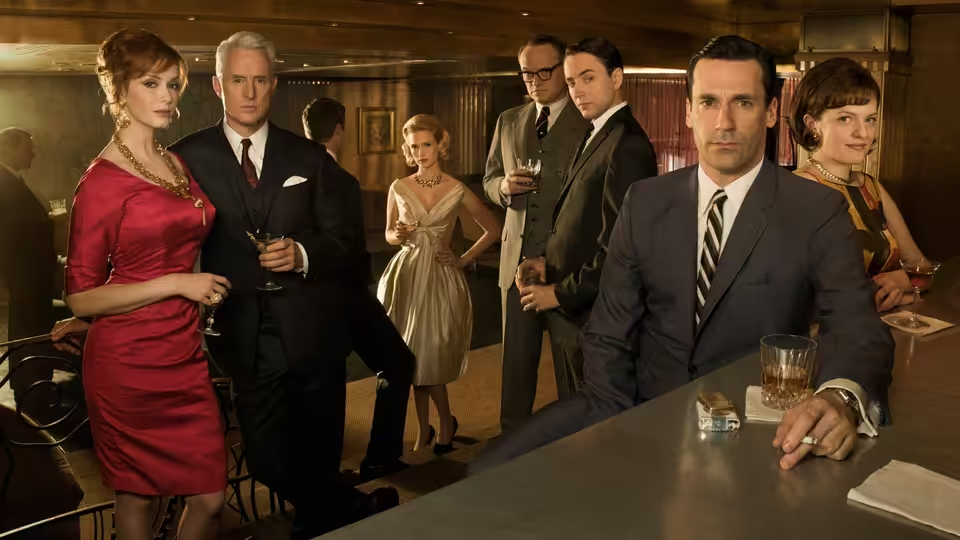
Don Draper (Jon Hamm) and Joan Holloway (Christina Hendricks) stand at a bar with other office workers
Series review

Mad Men

2007 · Created by Matthew Weiner · Series

In a sentenceEveryone in advertising has a pitch ready for their own bad behaviour

In the advertising world of 1960s New York, professional persuasion sits alongside private evasions and behaviour that passes without much challenge. Jon Hamm plays Don Draper, with Elisabeth Moss as Peggy Olson and Vincent Kartheiser as Pete Campbell. January Jones plays Betty Draper, while Christina Hendricks is Joan Holloway. The drama follows the people behind the salesmanship, looking at the social assumptions beneath an outwardly respectable America. Work, status and personal conduct become inseparable in a series where what people say often has little to do with what they want.

Fi1m review

Mad Men makes the advertising world of 1960s New York funny, ugly and absorbing through exact performances and patient storytelling. Its occasional smugness about the past is the price of an otherwise richly rewarding series.

Mad Men is excellent television, patient about people and exact about the ways they hurt one another. Its 1960s New York advertising setting gives Matthew Weiner and his fellow writers ample opportunity for period amusement, but the serious business is watching people make selfish conduct sound reasonable. The dialogue is funny enough to tempt us into accepting the excuse. We laughed, then felt unpleasantly complicit, because a cruel remark can arrive with all the ease of ordinary office conversation.

Jon Hamm’s Don Draper is worth watching even when he gives us little to like. Hamm’s measured delivery keeps us listening for what Don is trying to conceal, and the pauses suggest someone choosing a useful answer with care. It is an absorbing performance because the effort stays visible beneath the composure. The writing gives him plenty of opportunities to be impressive, but Hamm is equally good at making charm feel like hard work.

Elisabeth Moss’s Peggy Olson listens with a watchfulness that makes listening an active part of a scene; we can see her deciding what to say and what to keep back. Christina Hendricks’s Joan Holloway has a practised assurance, with a sharpness that prevents charm from softening everything she says. January Jones, as Betty Draper, is effective precisely where she can seem least inviting. Her stiffness makes unhappiness difficult to dismiss as merely bad temper.

Phil Abraham and Christopher Manley are among the cinematographers who give the series its controlled, carefully composed look. The frames make us notice how people occupy a room. Their confidence seems to depend on everyone else accepting their place in it. Production designers Dan Bishop, Christopher Brown and Bob Shaw make the surroundings persuasive without turning each scene into an inventory of period objects. John Dunn and Janie Bryant’s costumes help us judge how these people expect to be treated before they speak.

Editors including Christopher Nelson and Malcolm Jamieson give awkward exchanges room to develop rather than rushing towards the next disclosure. That patience matters when a response can tell us more than the speech that prompted it. David Carbonara’s music is most effective when it leaves the actors room, adding feeling without settling every uncertainty for us. The programme trusts a conversation to hold our attention, and the editing helps it do so.

The reservation is that Weiner and his fellow writers occasionally seem too pleased to know better than the people they have written. The period’s accepted prejudices can come with an implied invitation to congratulate ourselves for recognising them. That is the least interesting way to watch these characters, and the programme sometimes encourages it. The cast usually makes the invitation harder to accept, since the person being appalling is rarely left as a convenient example.

The temptation with a period drama is to admire the rooms and judge everyone inside them. We would suggest resisting both habits here, particularly when the characters seem most certain of themselves. The series needs close attention, and its measured pace will frustrate anyone who wants each exchange to announce its importance. Give it an evening when there is time for a conversation to become a problem.

Critical consensus AI synthesised

76
Positive
4
Mixed
1
Negative
0
Empire
24 June 2008 · William Thomas
90*

The critic praises the series as compulsive TV set in the unreconstructed world of 1960s New York advertising. They highlight the impeccable playing, immaculate craftsmanship, style supported by substance from Sopranos writer-producer Matthew Weiner, and its exposure of fractures in a picture-book America.

Read the full review →
Variety
17 August 2007
90*

The piece positions Mad Men as the standout series of the summer, a rare period piece that reveals more about the present than most contemporary shows. It praises its creative leap, frothy elements combined with skewering of myths about the Eisenhower era, and veiled social commentary.

Read the full review →
The AV Club
22 October 2007 · Noel Murray
80*

The critic views the first season as a strong start that blends classic TV drama with retro style and sophisticated, elliptical storytelling comparable to The Sopranos and The Wire. They single out Christina Hendricks' performance as Joan and the thematic resonance of Don Draper's character arc for particular praise.

Read the full review →
The Guardian
3 March 2008
70*

The critic finds the show immoral, offensive and rather entertaining as a portrait of 1960s Madison Avenue ad men. They praise the sharp writing, complex characters like Don Draper, and authentic period detail, calling it proper grown-up television.

Read the full review →
The Hollywood Reporter
19 July 2007 · Randee Dawn
50*

The review of the pilot finds much to admire in the crisp dialogue, beautiful camerawork, and transgressive vices, but notes the center feels hollow with competent but not standout acting and an insider's wink. It concludes there is much worth turning in for, but so far it is all soft sell.

Read the full review →

Straight answers AI written, from our review

Is Mad Men worth watching?
Mad Men is worth watching for anyone with the patience for a drama that lets a conversation slowly turn into a problem, and we scored it 88. Jon Hamm and Elisabeth Moss lead a cast exact about how people excuse their own bad behaviour. Its measured pace and occasional smugness about the 1960s are the reservations.
Where can I watch Mad Men in South Africa?
Mad Men is not on any streaming or rental service in South Africa at the moment. It is available in 39 other countries; change your country at the top of the page to see where. Availability is checked daily.
How violent or frightening is Mad Men, and is it suitable for children?
Mad Men is a 15 certificate in the UK and TV-14 in the US, so it is not for children, though its unpleasantness is social rather than violent. The series deals in adult behaviour, casual cruelty and the accepted prejudices of its period. Older teenagers who can follow patient dialogue will manage; nobody will be frightened.
How does Mad Men compare to The Apartment?
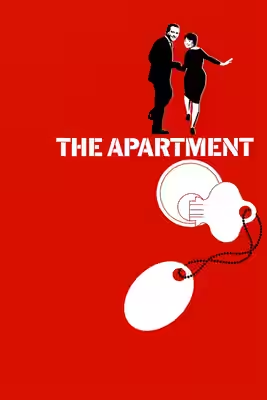
Mad Men and The Apartment both watch office advancement make a mess of private decency, but Billy Wilder's film does it in two hours where the series takes years. The film is the warmer and sadder of the two; the series is the more patient and the sharper about excuses. Watch Wilder first if you want to know how the setting ought to feel.
What should I watch after Mad Men?
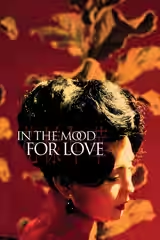
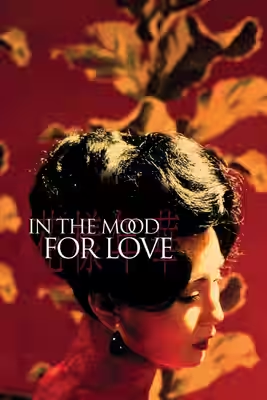
After Mad Men, try The Apartment (1960, Fi1m 91): For another workplace where professional advancement makes a mess of private decency. Then In the Mood for Love (2000, Fi1m 91): For the glances, immaculate clothes and feelings nobody can safely put into words; and Halt and Catch Fire (2014, Fi1m 84): Another patient series about ambition, working relationships and the cost of being difficult.

Cast

If you liked this, try…

  1. The Apartment (1960, Fi1m 91)For another workplace where professional advancement makes a mess of private decency.

  2. The Hour (2011) · not reviewed yetA period newsroom drama with sharp colleagues and compromises behind the professional composure.

  3. In the Mood for Love (2000, Fi1m 91)For the glances, immaculate clothes and feelings nobody can safely put into words.

  4. Halt and Catch Fire (2014, Fi1m 84)Another patient series about ambition, working relationships and the cost of being difficult.

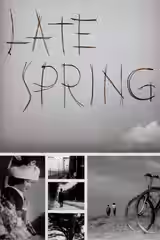
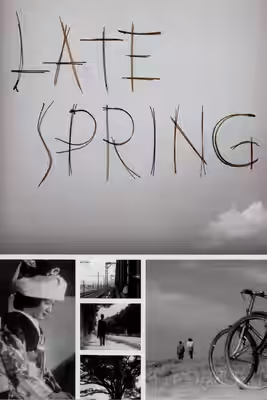
  5. Late Spring (1949, Fi1m 92)For family expectations enforced through politeness, and performances that make silence hurt.

Free account

Know what to watch tonight

Two lists that know where things are streaming, collections you can share, your own score beside ours, and Discover that remembers what you have seen.

  • Want to see, sorted by what is streaming now
  • Seen, with your score out of ten
  • No adverts, ever