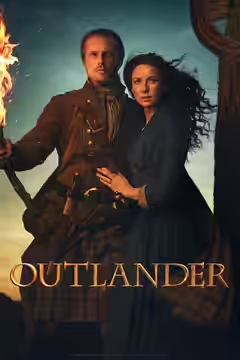
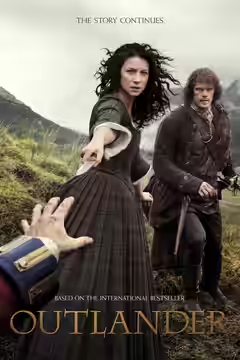
Outlander is worth settling into for Caitríona Balfe and Sam Heughan, and for a romance that takes its heroine seriously. The caveats are a slow start and narration that seldom knows when to stop.
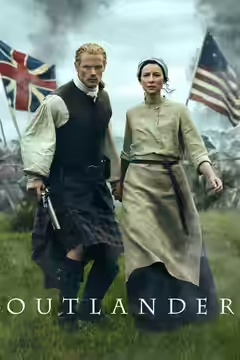
Ronald D. Moore’s Outlander asks us to accept time travel and then spend considerably longer watching people negotiate their differences. We recommend it as a patient romantic drama, though its slow opening is a real obstacle. It gives courtship time to become interesting, allowing differences in experience and expectation to complicate the attraction. The fantasy premise gets things moving, but the relationships give us a reason to stay, especially when the programme trusts its actors enough to stop explaining them.
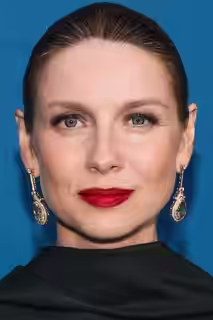
Caitríona Balfe, playing Claire Randall Fraser, holds our attention through passages that might otherwise feel uneventful. There is intelligence in her performance, and a firmness that makes Claire’s opinions matter even when the romance invites her to forget her reservations. She remains alert to what the people around her expect, and to whether she wants to comply. That watchfulness gives the historical setting a useful edge: the restrictions of this society register through someone who has reason to question them.
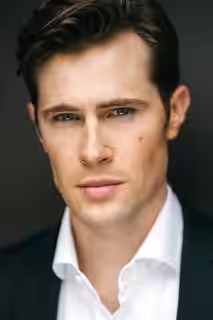
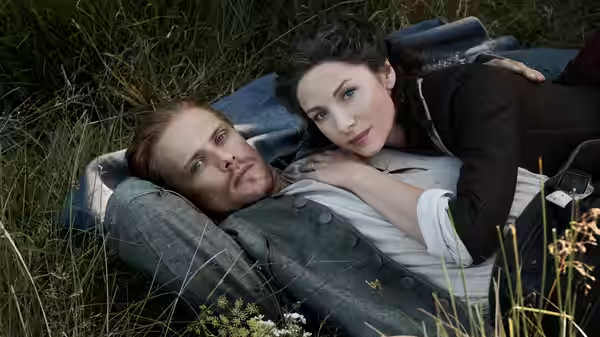
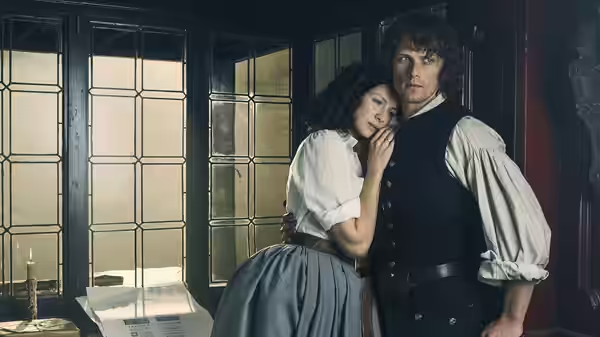
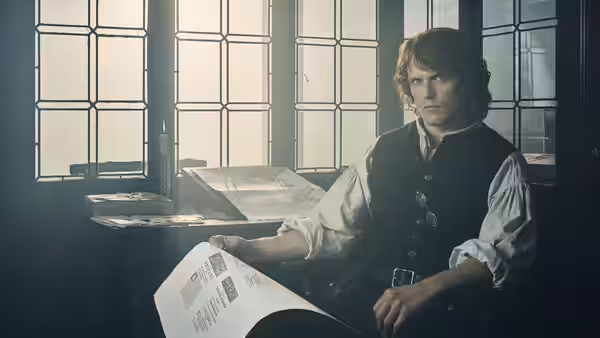
Sam Heughan’s Jamie Fraser supplies enough warmth to make the time spent on attraction worthwhile. The chemistry is persuasive, and the series understands that learning how another person thinks can sustain our interest without a fresh emergency every few minutes. Its frankness about sex belongs to that interest in relationships, with the female perspective shaping how intimacy is presented. The central performances make room for curiosity and uncertainty, which helps the romance feel less predetermined than its handsome leads might suggest.
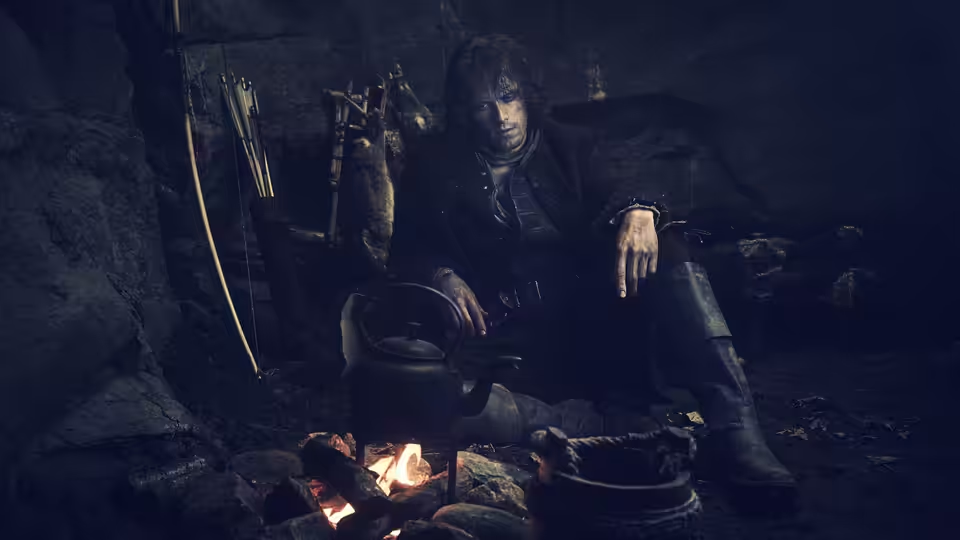
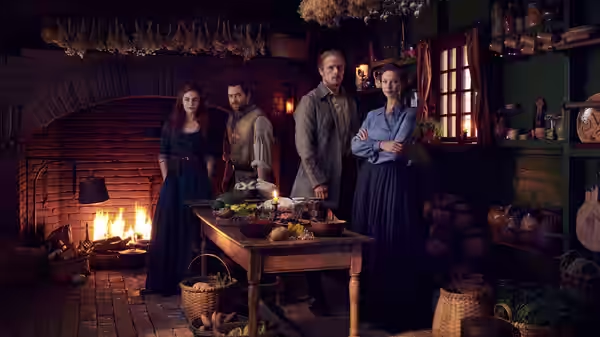
The cinematography teams include Nic Lawson and Neville Kidd, and the Highland views receive enough attention to become a pleasure in themselves. Production designers Mike Gunn and Jon Gary Steele contribute to settings that make the different periods feel distinct, giving the time travel a visible consequence. The surroundings help us understand why adjusting to another era would involve more than learning a few unfamiliar manners. There is a risk of admiring the scenery while waiting for something to happen, but the cast usually keeps the people interesting enough.
The editing is less consistently persuasive, with Michael O’Halloran and Tammis Chandler among the credited team. Early passages sometimes linger after their emotional point has become clear, and the resulting loss of urgency is difficult to ignore. Bear McCreary’s music suits a romance that takes its characters’ feelings seriously and has no wish to apologise for doing so. That sincerity is welcome, although the score cannot make every extended scene feel necessary.
The narration is the more persistent problem. We were irritated by the voice-over because it kept spelling out feelings that Caitríona Balfe’s performance had already made clear. Ronald D. Moore and the writing team seem anxious to ensure that nobody misses Claire’s thinking, but the extra guidance makes it harder to enjoy discovering her through her behaviour. It also interrupts the intimacy the series otherwise handles well, adding commentary when a look or an exchange has already done the work.
John Dahl’s direction helps establish a tone capable of accommodating tenderness and violence without making either seem imported from another programme. The violence can be graphic, so the scenic pleasures are a poor guide to how comfortable an evening this will provide. Among historical romances, its attention to a woman’s desire and judgement gives the familiar attractions a welcome seriousness. Try it for the central pair, but if the early pace wears you down, do not expect the Highlands alone to change your mind.