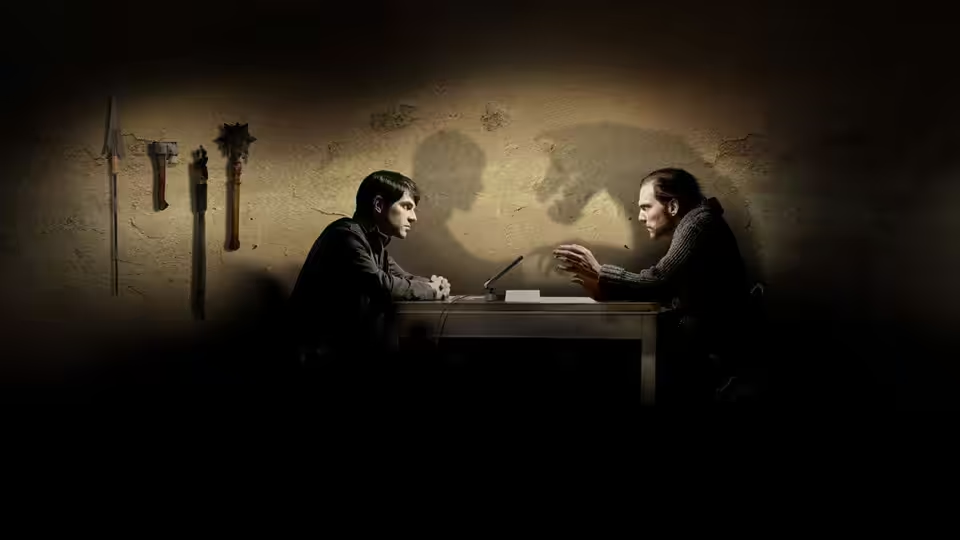
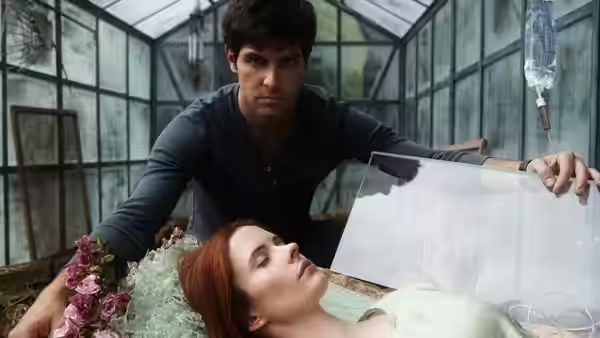
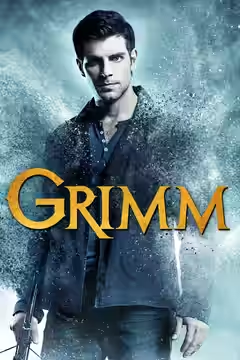
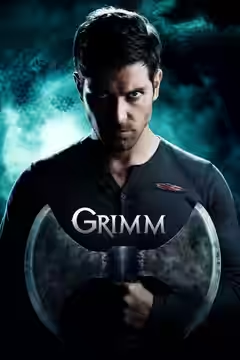
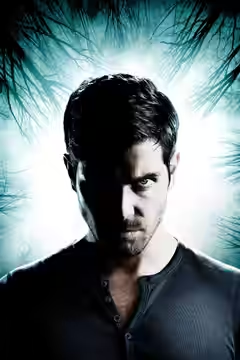
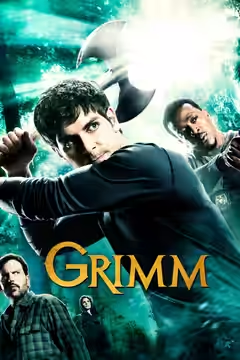
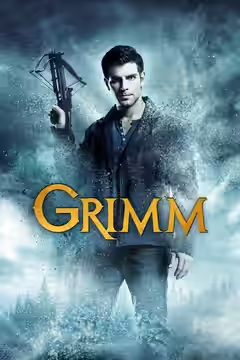
David Greenwalt, Stephen Carpenter and Jim Kouf’s fairy-tale procedural is an amiable monster-of-the-week show with a bland lead, rubbery effects and a mythology that outgrows it. Silas Weir Mitchell’s grumbling, reluctant Monroe makes it worth the evening.
David Greenwalt, Stephen Carpenter and Jim Kouf took a police procedural and sewed a fairy tale into every case. Nick Burkhardt (David Giuntoli), a detective, finds he can see what nobody else can: the man across the interview table has an animal’s face under his own, and the Brothers Grimm were writing case files. It is a good hook. It carried the show through six seasons and 122 episodes, from 28 October 2011 to a short final run in 2017, and for most of that stretch Grimm is pleasant, tidy and a little less than it might have been. Watch it for the company. Do not expect it to frighten you.
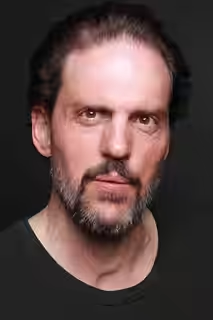
Silas Weir Mitchell is the company. Monroe is one of the creatures, a man who has gone straight and would like to be left alone, and who finds himself dragged into police work by a Grimm, the one kind of person his kind has learned to fear. Mitchell plays him as permanently put upon, and he delivers each objection as if he had rehearsed it in the car. We laughed more than we expected to at a network monster show, and nearly all of it was him, starting with the wince every time Nick turns up at his door. Bree Turner’s Rosalee Calvert gives him someone to be gentle with, and their scenes are the warmest in the series.
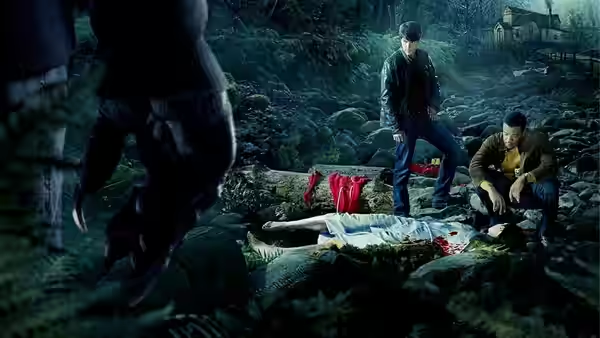
It looks like a place where it rains: water on windscreens, moss on the fences, grey afternoons that give up by four. Marshall Adams and Eliot Rockett, two of six cinematographers across the run, keep the interiors amber and the woods cold and blue, and the contrast does work the scripts leave undone. Michael Wylie, Craig Stearns, Steven Wolff and Paul Eads, who share the production design, are fondest of clutter, and the camera lingers longest wherever the shelves are fullest. The weak point is the transformation, the moment a human face turns animal. It is a digital ripple and a rubbery creature head, and in 2011 it passed; it does not improve much, and after a hundred episodes it looks like a filter. Richard Marvin’s score is sturdy procedural music, brass for the chases and a music-box tinkle for the fairy tale, and it rarely asks to be noticed.
Giuntoli is the soft centre. He is handsome, even-tempered and decent, and almost entirely without edges; Nick is a man to whom things happen. The scripts give him a girlfriend, Juliette Silverton (Elizabeth Tulloch), who spends the first season being lied to for her own protection, the oldest and dullest way television has of keeping a partner in the dark. Russell Hornsby makes Hank Griffin a better partner than the show has time for, and Reggie Lee’s Drew Wu gets the dry lines and, for a long while, none of the information.
The mythology is where it outgrows its clothes. What begins as one creature a week, each with a name in approximate German, acquires a police captain, Sean Renard (Sasha Roiz), with secrets of his own, a lawyer, Adalind Schade (Claire Coffee), who is more than a lawyer, and eventually a plot that keeps cutting away to Vienna, which we watched with the patience one gives a neighbour’s holiday photographs. We were bored, and then irritated at being bored by a show that had a joke landing two scenes earlier.
Greenwalt came from Buffy the Vampire Slayer and Angel, and it shows in the bickering and the found family round a kitchen table. What is missing is those shows’ willingness to hurt the people they liked. Grimm is fond of everyone, and the fondness keeps the stakes low.
Take it a couple of episodes at a time, at home, with something to eat. Twenty-two episodes a season is a great deal of woodland.