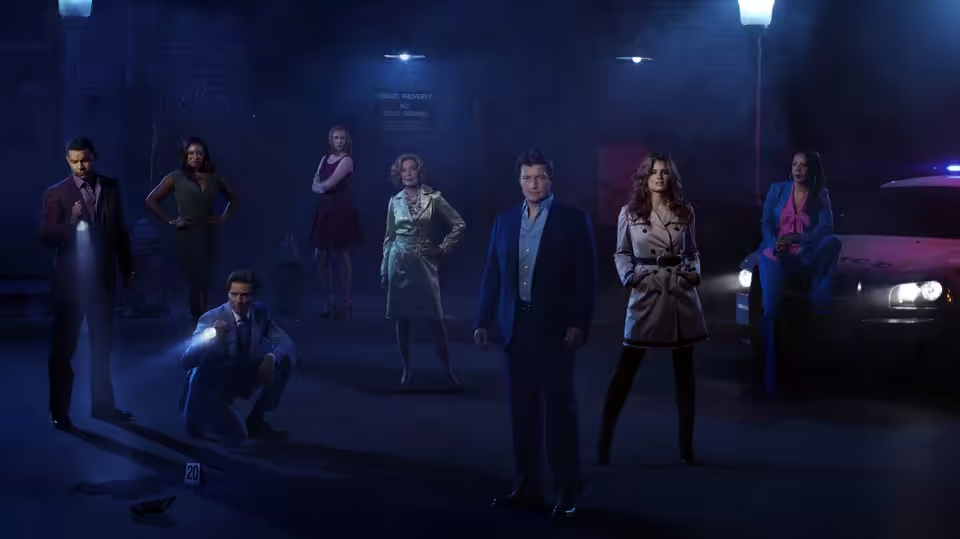
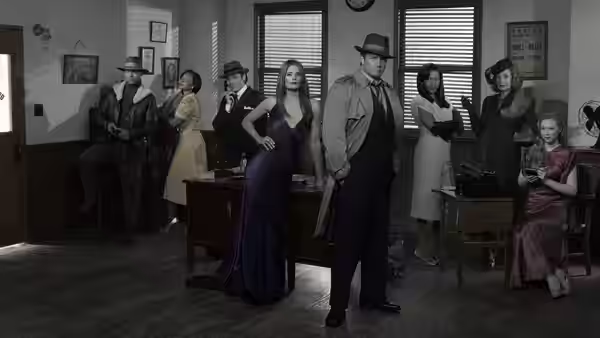
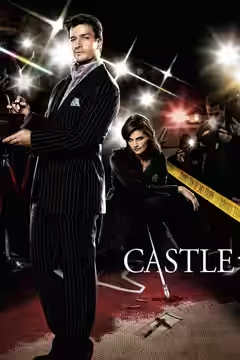
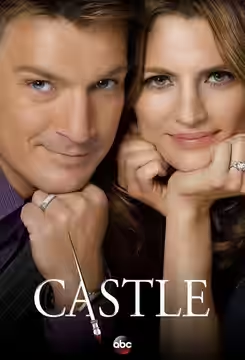
Nathan Fillion and Stana Katic make Castle an agreeable crime series, even when the cases are predictable and the plotting strains belief. We recommend it for the partnership, with modest expectations of the detective work.
Castle is good company, provided we do not ask its crimes to bear too much scrutiny. Creator Andrew W. Marlowe puts a mystery writer alongside a police officer and gives their differences as much attention as the investigation. The attraction is easy to understand: somebody gets to enjoy the puzzle while somebody else has to do the job. It is a familiar arrangement, but Nathan Fillion and Stana Katic give us enough reason to spend time with it.
Nathan Fillion makes Richard Castle’s amateur status a workable comic advantage, and his performance has the ease this sort of programme needs. He keeps us interested even when the case does little to deserve it, without seeming to demand applause for being charming. We warmed to the partnership more than we expected. His playful presence alongside Stana Katic gives their exchanges enough humour to make the routine investigations less of a drawback. There is a limit to what likeability can repair, but this casting buys the writing considerable goodwill.
Stana Katic’s Kate Beckett matters because a pairing like this becomes tiresome if the police officer exists merely to indulge the visitor. Her performance gives the partnership enough resistance for the humour to work, though some of the friction feels too carefully arranged. When the writing pushes their chemistry, we become aware of the effort. Their better exchanges are relaxed enough to let us enjoy the characters without feeling that every line has to persuade us how much we ought to like them together.
The cinematography credited to Daryn Okada, Michael Slovis and Bill Roe is serviceable, keeping the performers readable without giving us much reason to linger over the surroundings. That suits the modest pleasures here, although it contributes to the sense of a programme without much visual character. Editors including Sue Blainey and Marta Evry give the conversations an agreeable rhythm; the suspense is less consistently persuasive. The presentation does its job, but the acting is what makes another episode an inviting prospect, and the cases cannot always sustain that invitation on their own.
The weaker material is the detective work, which can feel contrived even within the generous allowances of a light crime series. A mystery writer assisting a police officer already asks us to accept an unlikely working arrangement; the cases need to earn a little trust in return. Too often, the pleasure of spending time with the leads has to compensate for a complication that feels engineered. A familiar mystery can still be satisfying, but its clues and deductions need to seem worth following, rather than merely providing something to discuss between jokes.
Against crime series that make ingenious detection their chief attraction, Castle offers fewer reasons to sit forward and study the evidence. Its humour and central partnership make it inviting nonetheless, and the familiar format gives both performers room to establish a comfortable rhythm. The danger is that comfort becomes a reason to forgive writing that should have been sharper, especially when a case asks for suspense it has not earned. Try it for the two leads; if the puzzle is your main interest, keep your expectations modest.