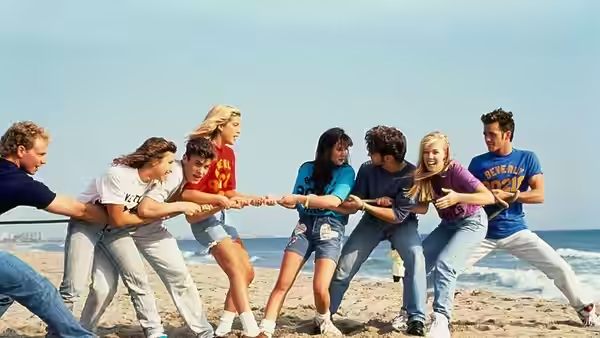
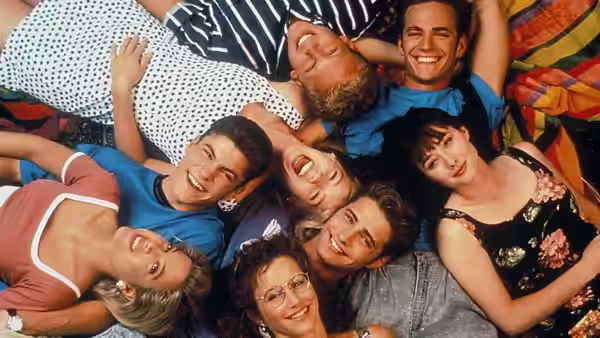
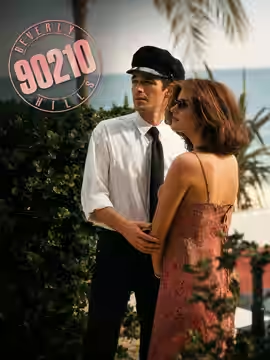
The Walsh family’s arrival in Beverly Hills makes for engaging, sometimes over-instructive television. Shannen Doherty and Jennie Garth give the drama enough prickliness to keep it interesting, even when the writing insists on explaining how everyone should behave.
Beverly Hills, 90210 is an engaging ensemble drama with an unfortunate urge to offer guidance. Created by Aaron Spelling and Darren Star, it begins with a Midwestern family’s move to Beverly Hills, making the audience as unsure of the social rules as the newcomers. The twins, Brandon Walsh and Brenda Walsh, give that opening different temperaments to work with. We recommend it to anyone who enjoys an earnest soap, though the programme can seem anxious to prove that it is also doing something worthy.
Jason Priestley makes Brandon easy company, although his steadiness can become a little too pleased with itself. Shannen Doherty gives Brenda more friction: her performance has the impatience of someone who wants acceptance without wanting to admit the need. We felt for Brenda, because the effort of entering this unfamiliar social world looks tiring. That irritability matters; it keeps her from becoming merely the person through whom the audience gets shown around.
Jennie Garth, as Kelly Taylor, is particularly good at suggesting how much attention goes into appearing at ease. She gives us a reason to keep looking at a character who might otherwise seem easy to read. The contrast with Brenda is more involving than the programme’s attempts to explain how people ought to behave. The cast make room for mixed feelings even when the writing would prefer a clear lesson.
With writers including Charles Rosin and Jessica Klein, the series takes its characters’ troubles seriously enough to risk being square. That sincerity helps: there is no suggestion that their need to belong is too trivial to deserve our attention. At weaker moments, however, a conversation keeps explaining itself after an actor has already made the point. We would happily lose some of the guidance and spend longer with the awkwardness, particularly when the cast are doing such persuasive work.
The editing, credited to Daniel A. Valverde, is clear enough to keep our attention on the actors. The music credited to Dennis McCarthy and John E. Davis feels more insistent than it needs to be. There is enough emphasis in the performances without further encouragement to know what we should feel. These are serviceable choices for a soap, though they can make an already emphatic exchange feel laboured.
The first season alone has 22 episodes, and there are ten seasons in all. That is a substantial commitment, so we would let the opening establish whether these are people whose company we want. By the standards of ensemble soaps, this one passes that test: the cast give us reasons to stay interested after the point of a conversation has become obvious. Try it if earnest drama suits the evening; a low tolerance for lectures is the chief reservation.