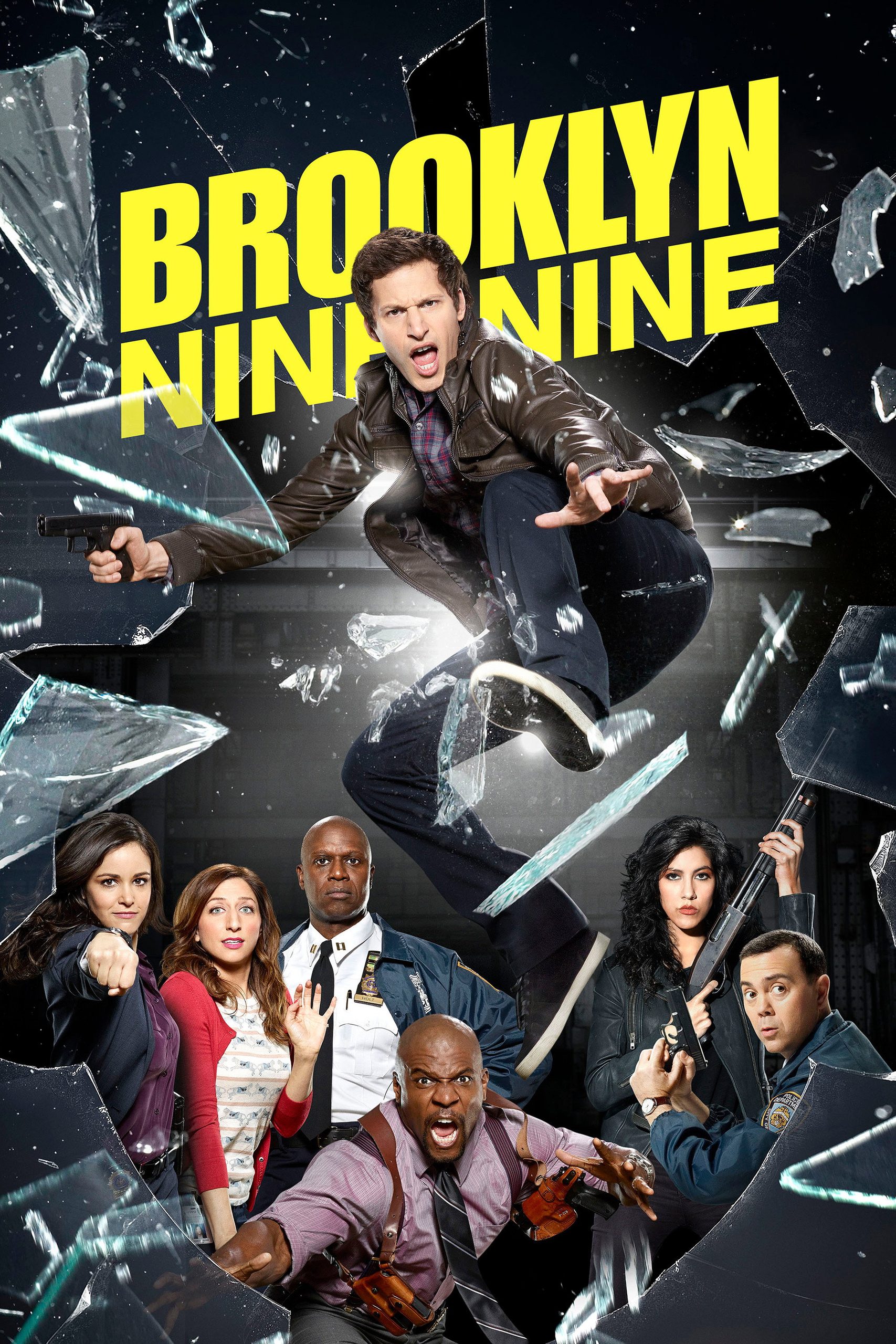
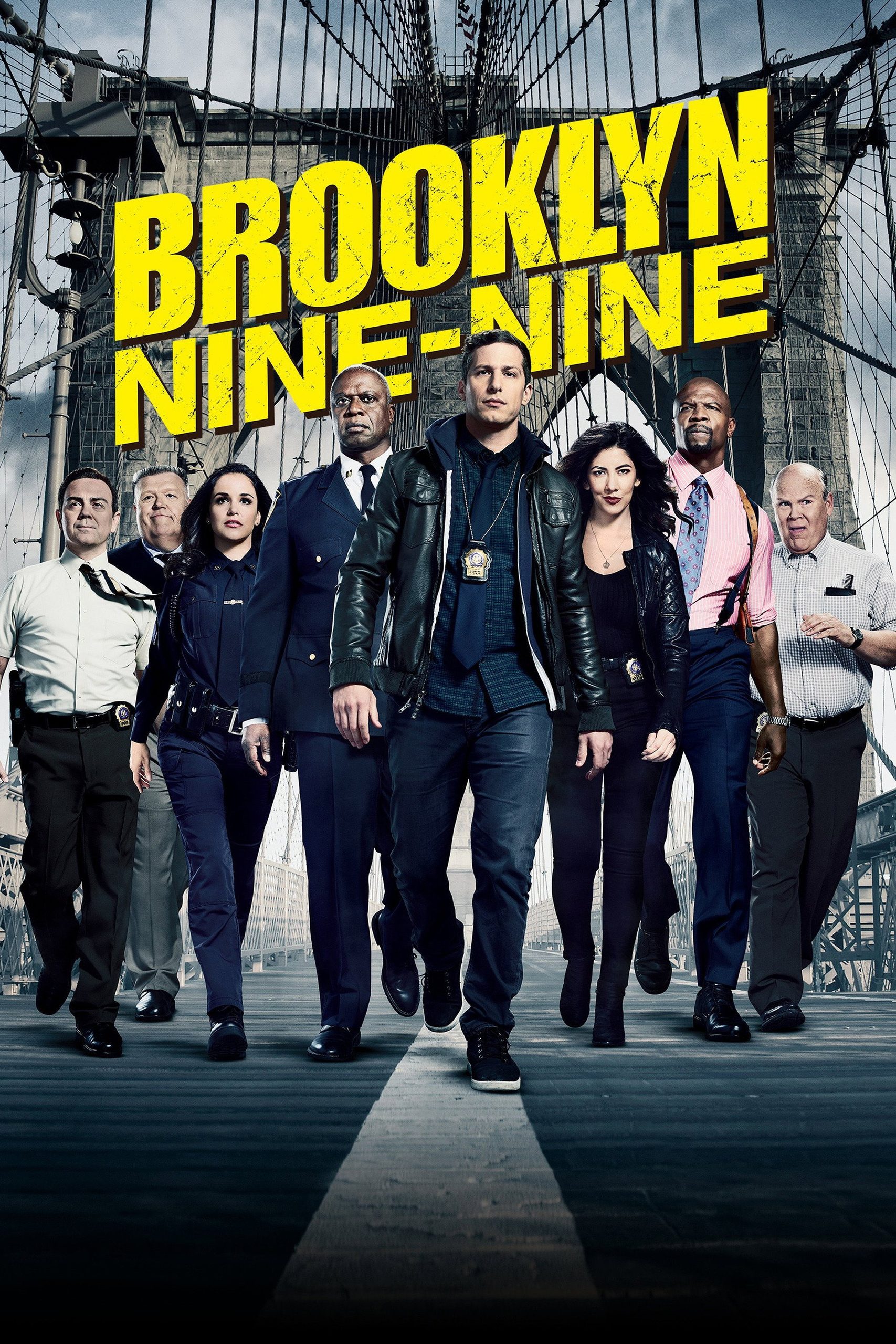
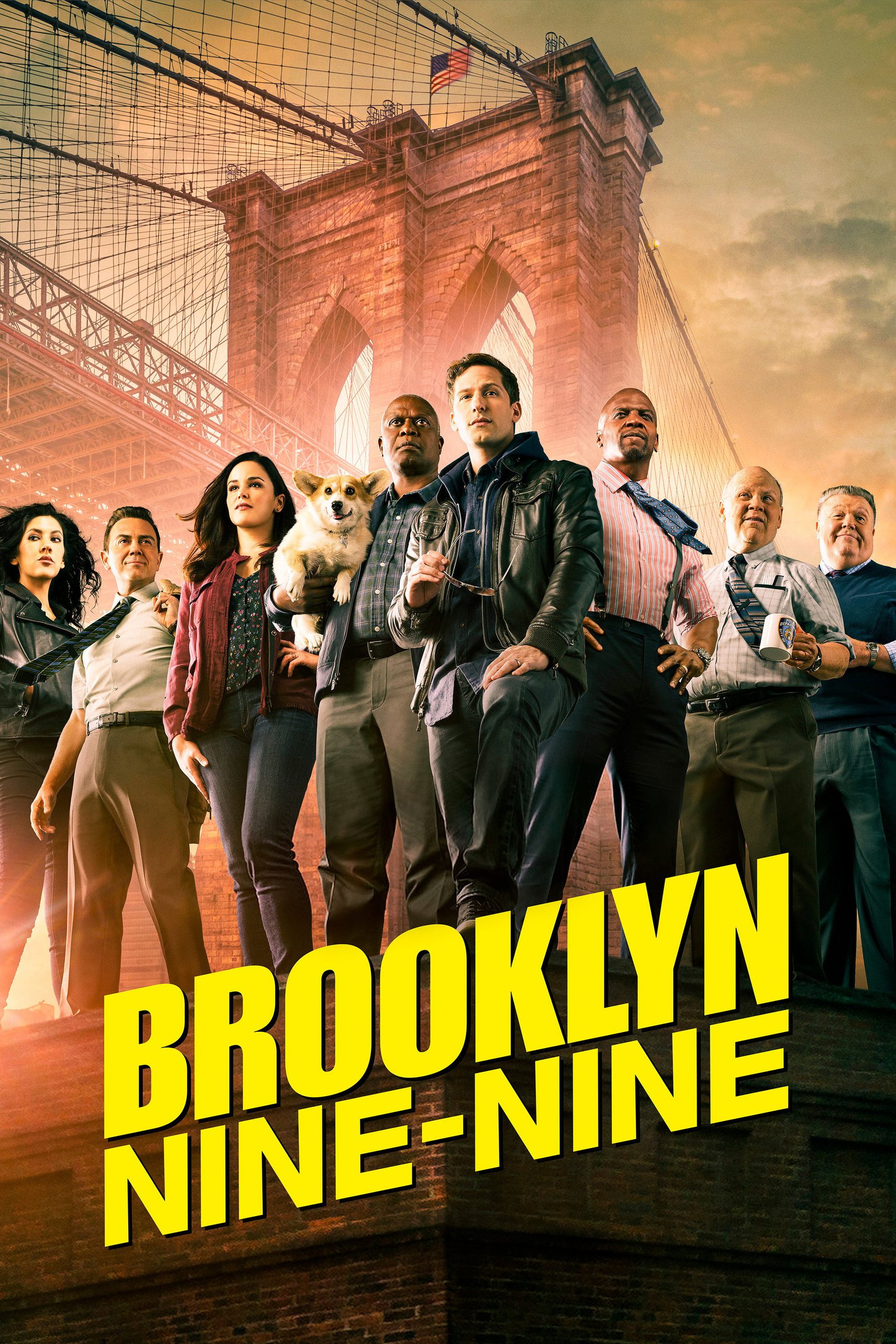
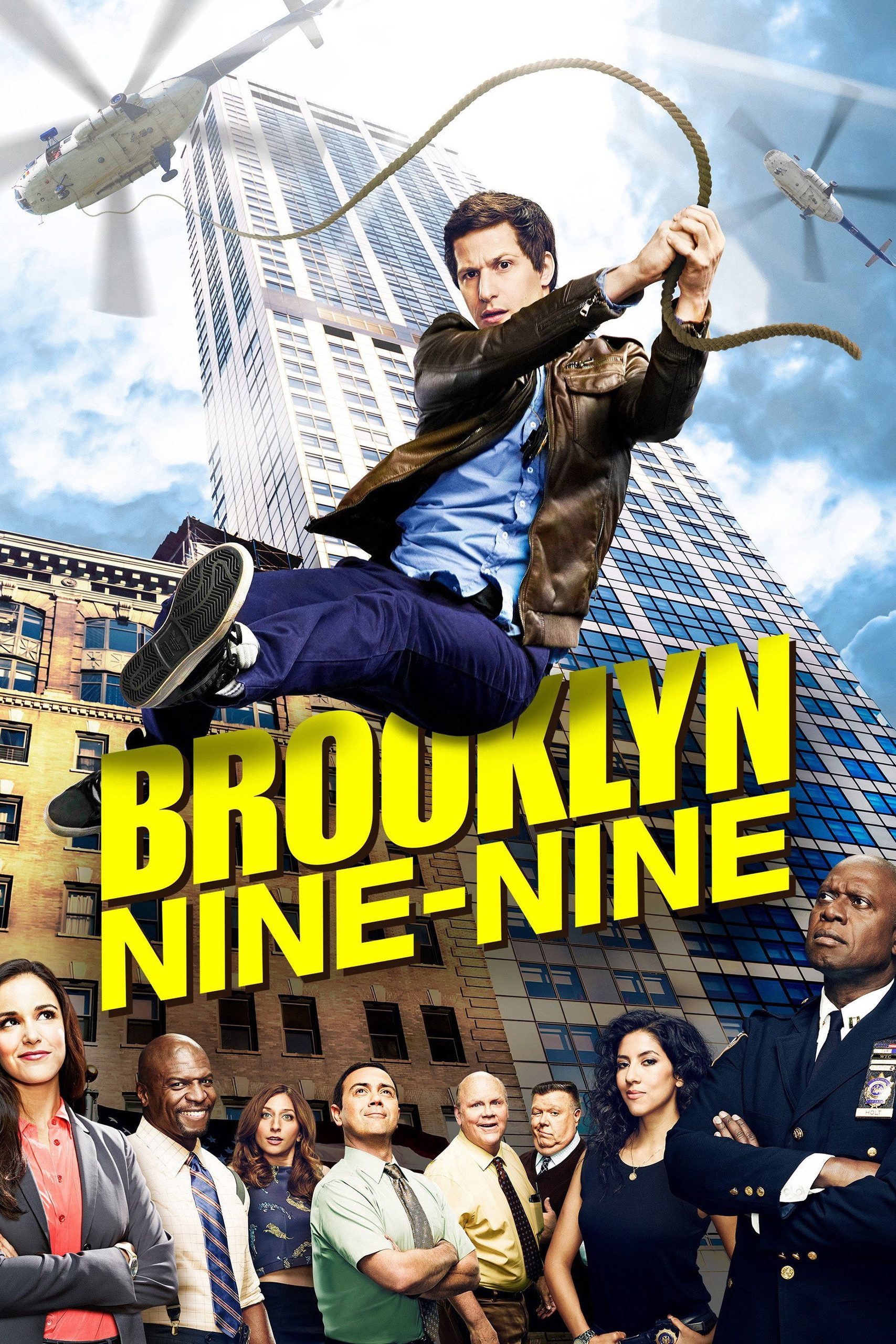
Michael Schur and Daniel J. Goor’s precinct comedy runs on formula and knows it. What makes it more than that is Andre Braugher’s Captain Holt, a straight man of unusual stillness; the laughs hold for six seasons, then thin, and the last run is uneasy.
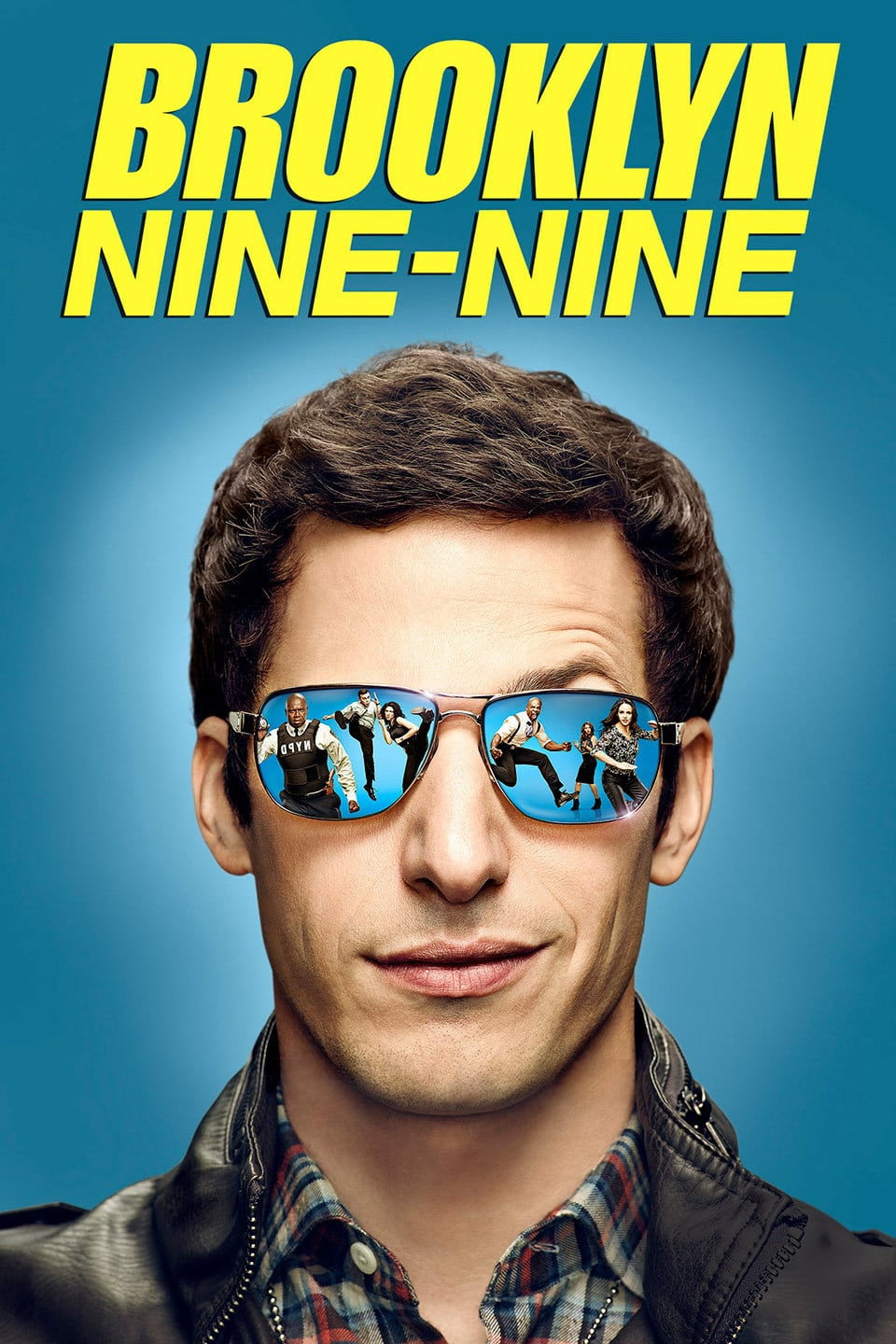
Michael Schur and Daniel J. Goor set a workplace comedy in a Brooklyn police station and gave the workplace a boss who does not blink. That is the whole idea, and Brooklyn Nine-Nine ran on it for eight seasons and 152 episodes, from 17 September 2013 to 2021. Andy Samberg’s Jake Peralta is the gifted, childish detective; Andre Braugher’s Captain Raymond Holt is the man sent to make him grow up. The series is warm, quick and formulaic, and for most of its run the formula holds. We recommend it, with the caveat that the later seasons are thinner and the last one is caught in something it cannot joke its way past.
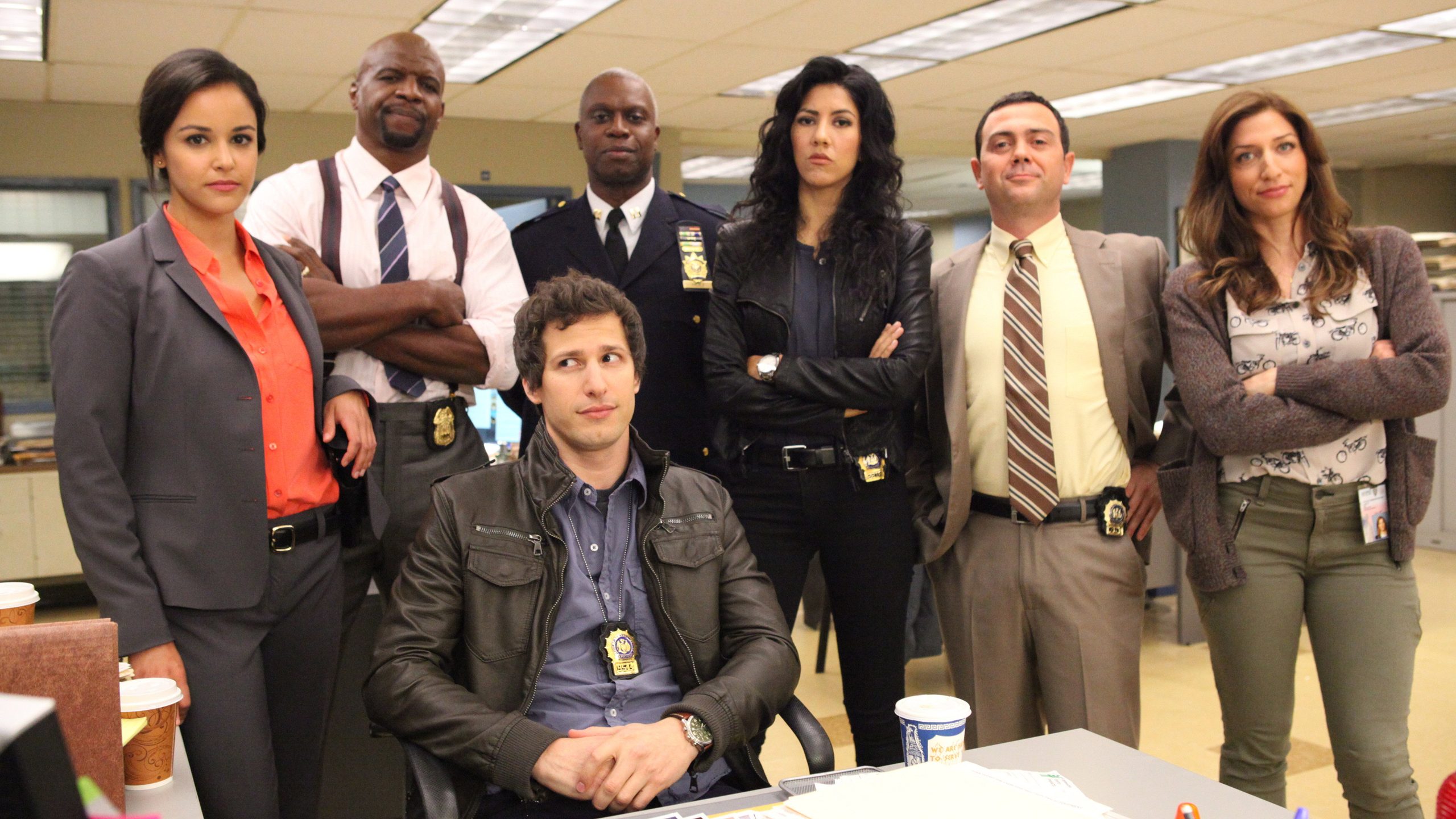
Elizabeth Thinnes and Val Wilt build the precinct as a bullpen of grey desks and filing cabinets with a glass-walled office for Holt at the end of it, so that almost any scene can close on the captain watching through the window. Rick Page, Barry Peterson and Giovani Lampassi light it flat and bright, like a real office at eleven in the morning, and they move the camera only when somebody is running. Dan Marocco’s theme is a few seconds of bass and brass and then it gets out of the way. The editors, Cortney Carrillo and Ryan Case among them, cut the cold opens so that the last line lands and the titles arrive before anyone can top it. Those cold opens, a minute of the squad arguing about nothing before the case turns up, are the best-made things in the programme.
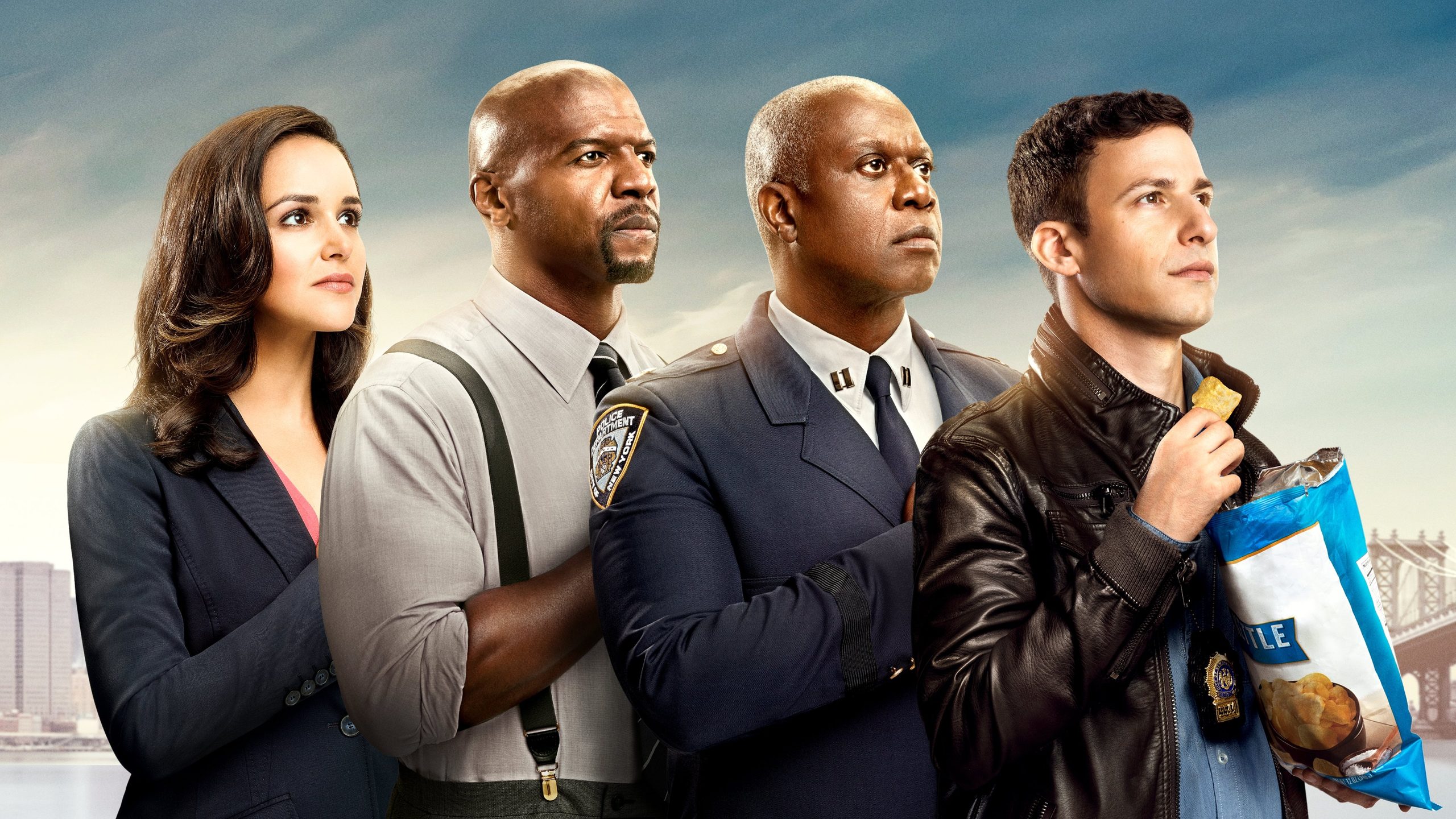
Braugher plays Holt as a man who has spent a career being underestimated and has decided the correct answer is never to raise his voice. He says “good” as if closing a file. He announces his own delight in the tone of a shipping forecast. Samberg’s Jake needs a wall to bounce off, and Braugher is the wall. In the pilot Holt asks Peralta why he is not wearing a tie and then waits, and Braugher does nothing with his face at all, and we laughed until it hurt. Years later the show did the same trick and it still worked, which is the difference between a performance and a gag.
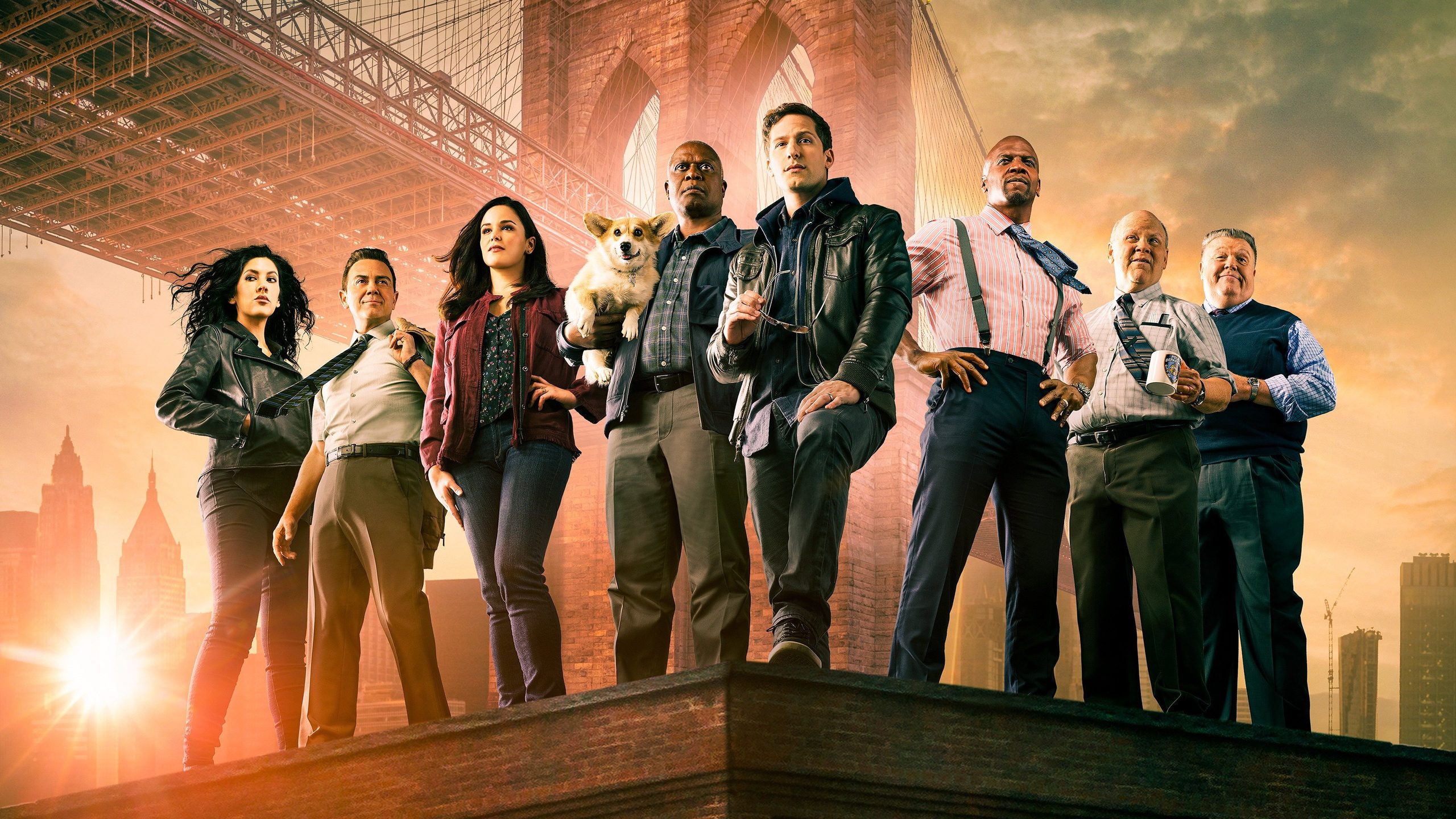
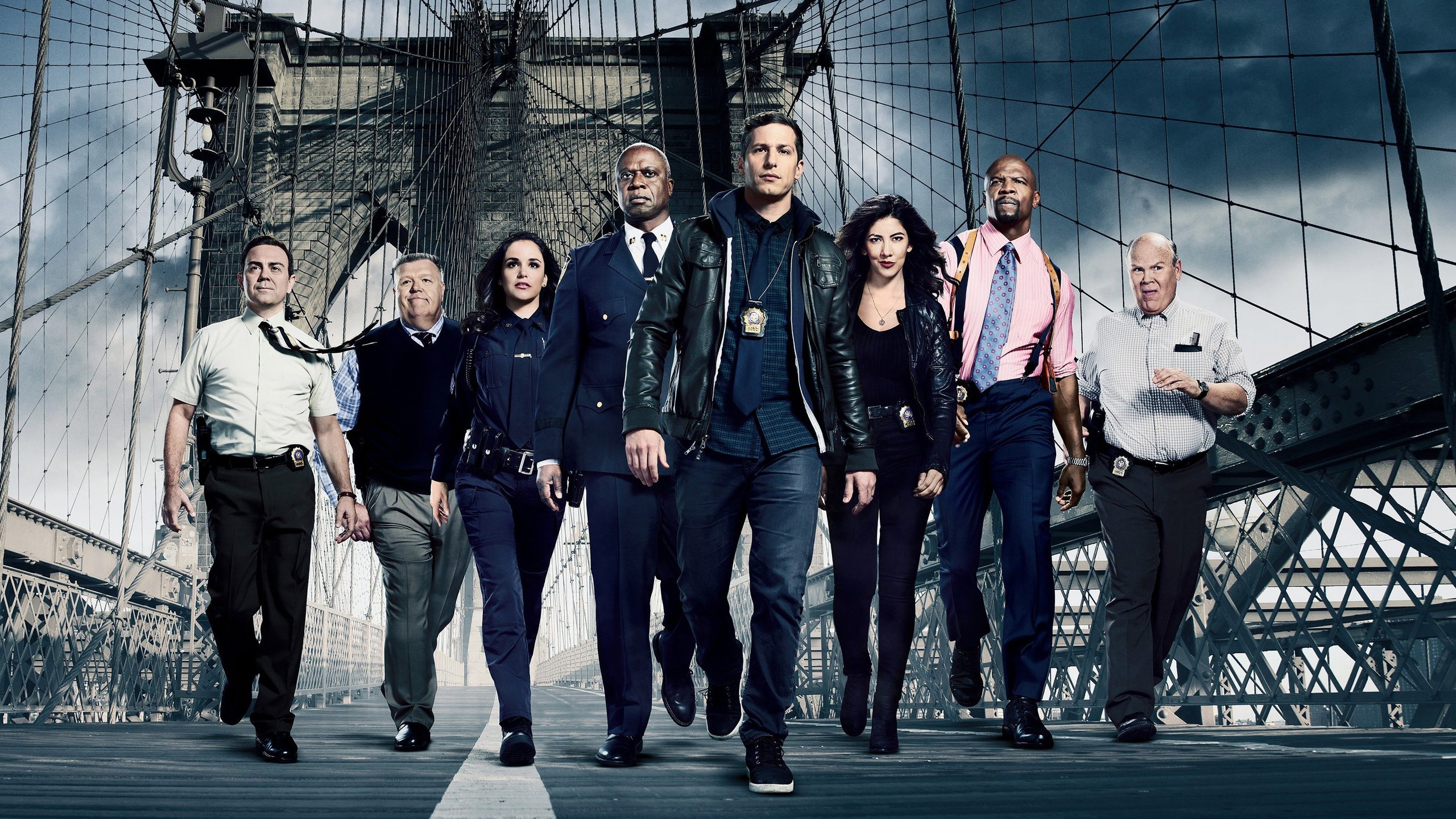
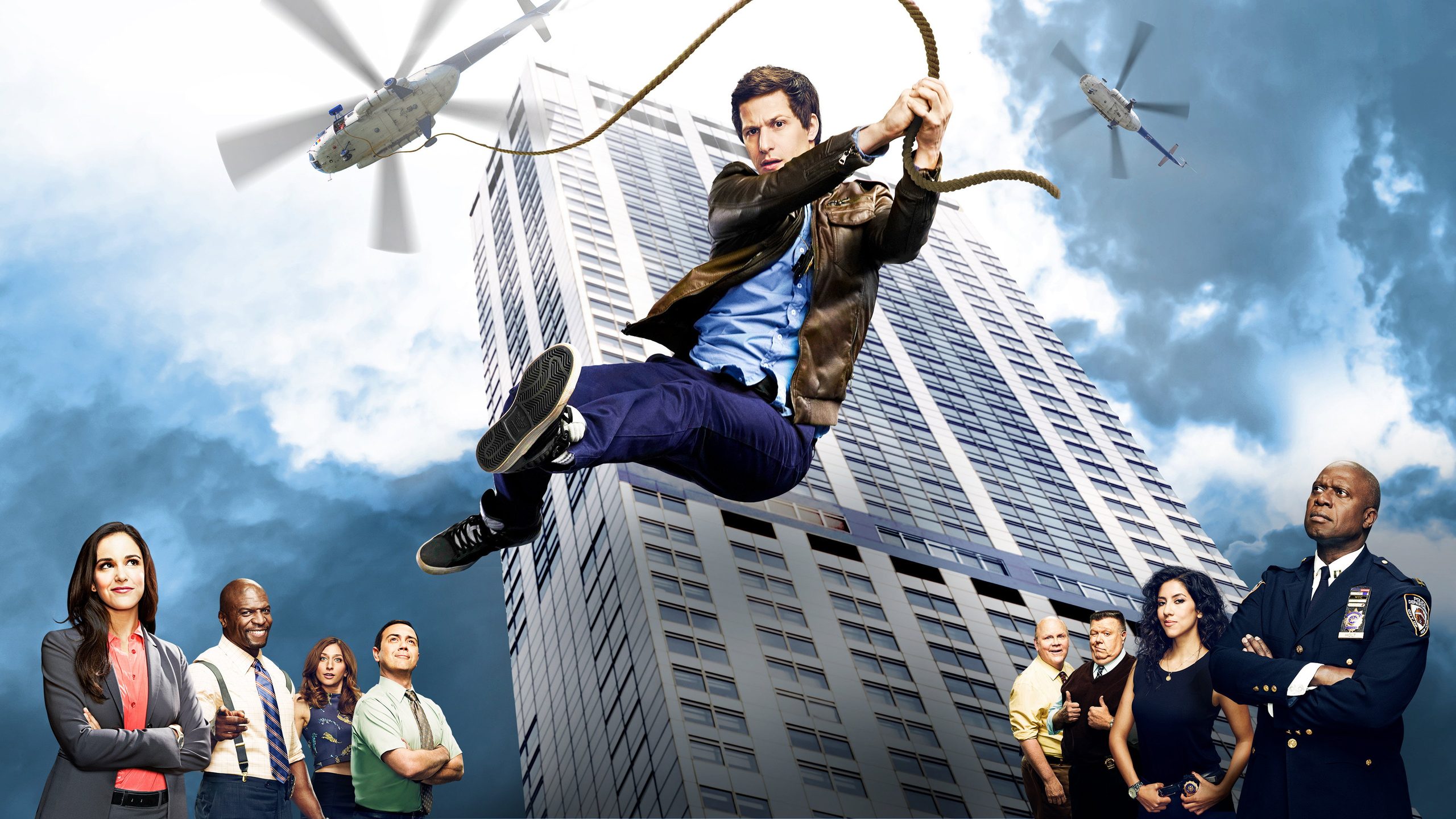
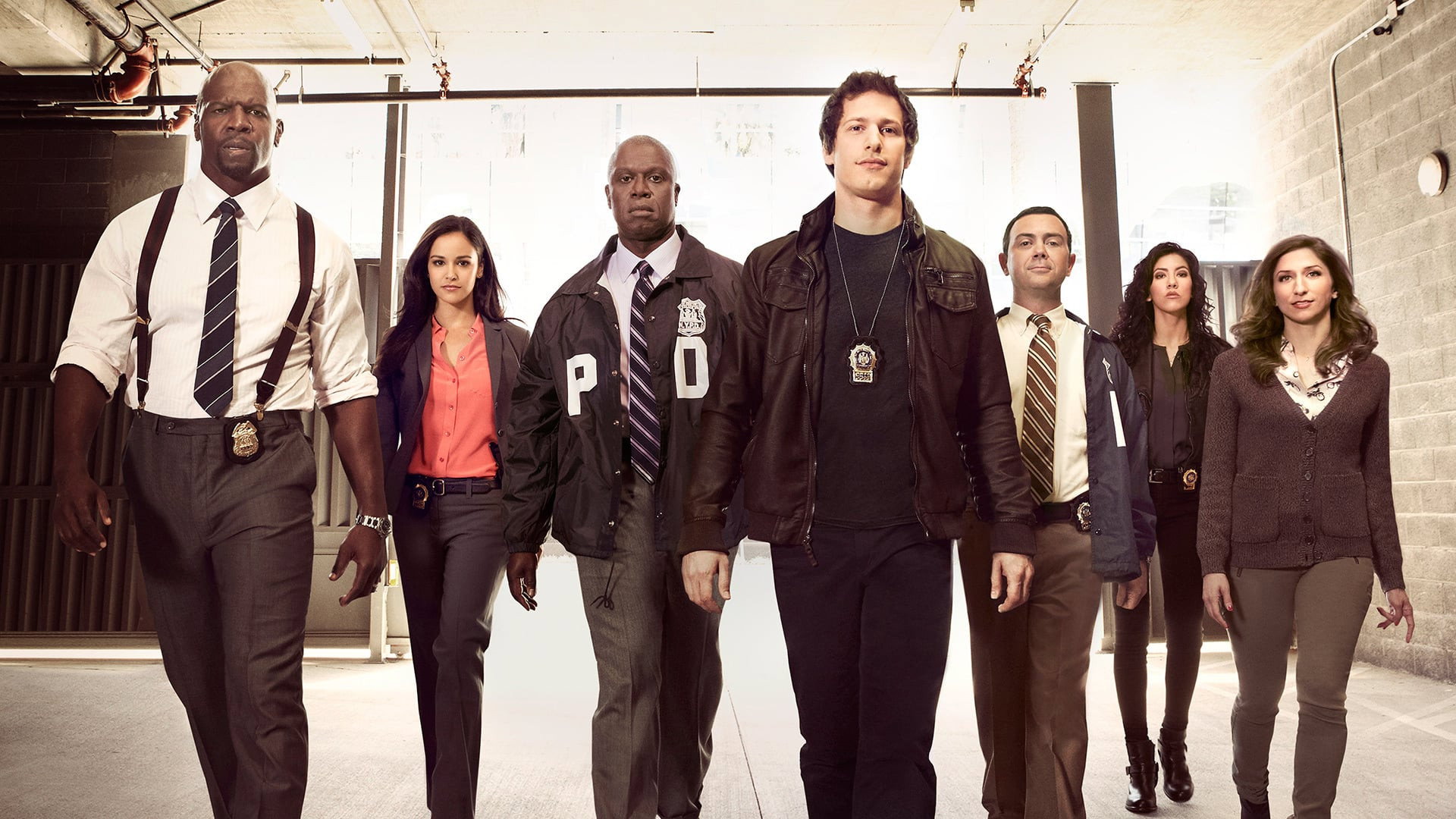
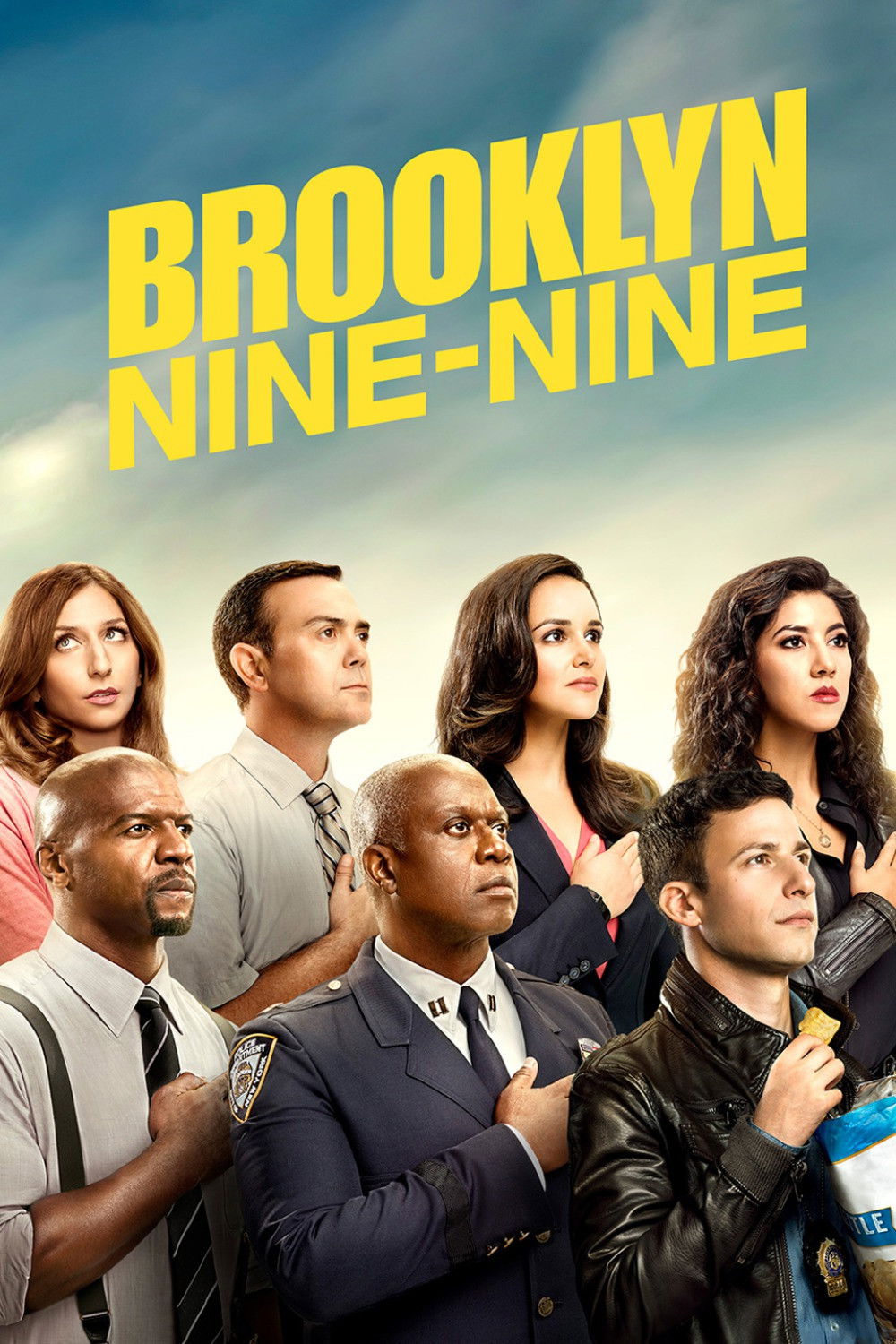
Melissa Fumero’s Amy Santiago is the swot with a laminated plan. Stephanie Beatriz’s Rosa Diaz frightens everyone and says as little as possible. Terry Crews’s Sergeant Terry Jeffords talks about himself in the third person and is afraid of getting hurt. Joe Lo Truglio’s Charles Boyle worships Jake and describes food at length. Chelsea Peretti’s Gina Linetti does no work and is the only one who knows it, and Dirk Blocker and Joel McKinnon Miller, as Hitchcock and Scully, eat at their desks. Alexis Jacks dresses them so you know who they are from the doorway: Amy in pantsuits, Rosa in a leather jacket, Holt in a suit that looks pressed while he is wearing it, Jake in a hoodie under a blazer. The show is at its best when it pairs two who have nothing in common, Holt and Gina, Rosa and Boyle, and shuts them in a car for twenty minutes.
The formula is the price. Every episode has the same shape: a case for Jake, a squabble in the precinct, a lesson, a hug. The cases are rarely interesting and the villains of the week are cardboard. Samberg plays Jake as a man-child who turns out to be right, and somewhere around the fourth season we grew tired of watching him be forgiven. The pilot is tentative, too. Most critics liked it from the start; one found it stranded between farce and something drier, and that was fair for the first half-dozen episodes, before Holt’s stillness became the thing everyone else was measured against.
The final season, nine episodes made in 2021, tries to be a comedy about police officers in a year when that had become hard, and it is visibly uncomfortable. It raises the question and then goes back to the heist. We do not blame it for trying, and we felt the strain in every scene; it is the only stretch of the show where the actors look as if they are waiting for permission to be funny. We will not say how it ends.
Set against Schur’s Parks and Recreation, which is the obvious model, this is the sharper, faster cousin, with less heart on its sleeve and a better straight man. Watch two a night rather than ten. It was built for that, and Braugher’s pauses are better with a little air around them.