Marc Cherry’s suburban soap is sharp, funny and carried by a cast that understands how much anger a polite smile can conceal. The plotting grows overexcited, and the women sometimes deserve more than another scandal.
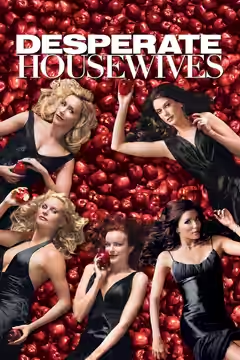
Desperate Housewives is a funny, shrewd soap whose appetite for trouble occasionally gets the better of it. Creator Marc Cherry takes the familiar business of neighbours keeping up appearances and gives their resentments enough room to become ridiculous. The appeal is straightforward: these women have things to be angry about, and the programme allows them to behave badly. We recommend it to anyone with a taste for domestic scandal, though restraint is not among its interests.
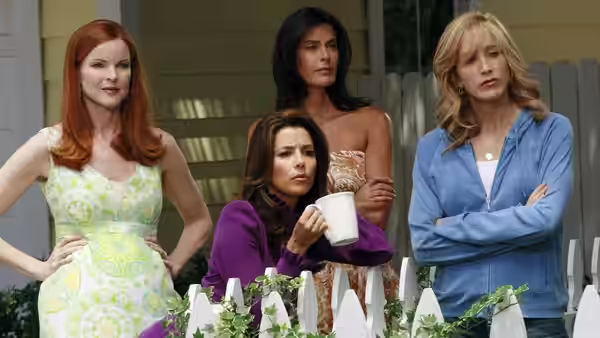
The comedy needs performers who can make an unreasonable reaction seem reasonable to the person having it. Marcia Cross, as Bree Van de Kamp, supplies a formality that makes the camp feel precise; Felicity Huffman’s Lynette Scavo brings a more abrasive impatience. Teri Hatcher’s Susan Mayer and Eva Longoria’s Gabrielle Solis keep the ensemble from settling into one comic rhythm. Eva Longoria is especially good at making selfishness entertaining without asking us to mistake it for a virtue.
We laughed at the catfights; the cast’s conviction made the petty grievances uncomfortably recognisable. The women are competing over respectability as much as romance, and an insult can expose how little protection either gives them. Marc Cherry’s comedy is often harsh, but the performers make the anger understandable even when the behaviour is ridiculous. That matters in a programme which makes such regular entertainment out of its characters’ embarrassment.
The polished street does useful work, too. Cinematographers including Lowell Peterson and Walt Fraser give the suburban surfaces the brightness this material needs: we have to understand why anyone would want to live here. The lawns and respectable houses make the affairs and betrayals more embarrassing, because so much effort has gone into looking settled. The look can feel insistently pretty, but a gloomier treatment would make the threat obvious before the neighbours have had a chance to conceal it.
The cutting has a similarly practical job. With editors including Kaja Fehr and William Marrinson, the series keeps comedy and mystery close enough that neither is left waiting for the other to finish. The playful movement through time helps a story built around what people know, what they conceal and what their neighbours assume. The weaker passages hurry us towards fresh gossip when a difficult conversation would be more interesting.
The larger limitation is how readily its women can become suburban types again. Marc Cherry gives them rage and appetite, then sometimes settles for another bout of sexual intrigue or competitive nastiness when their unhappiness deserves closer attention. The comic exaggeration is deliberate, but that does not make every repetition welcome. We learn plenty about how hard respectability is to maintain, and less about why these people keep making themselves miserable for it.
As a soap, however, it understands the value of people whose company remains enjoyable even when their conduct is appalling. The mysteries encourage another episode, but the cast gives us a reason to care whose version of events we are hearing. Anyone hoping for a tightly reasoned mystery may find the antics distracting. Come for the quarrelling neighbours, and allow them to make rather more fuss than necessary.