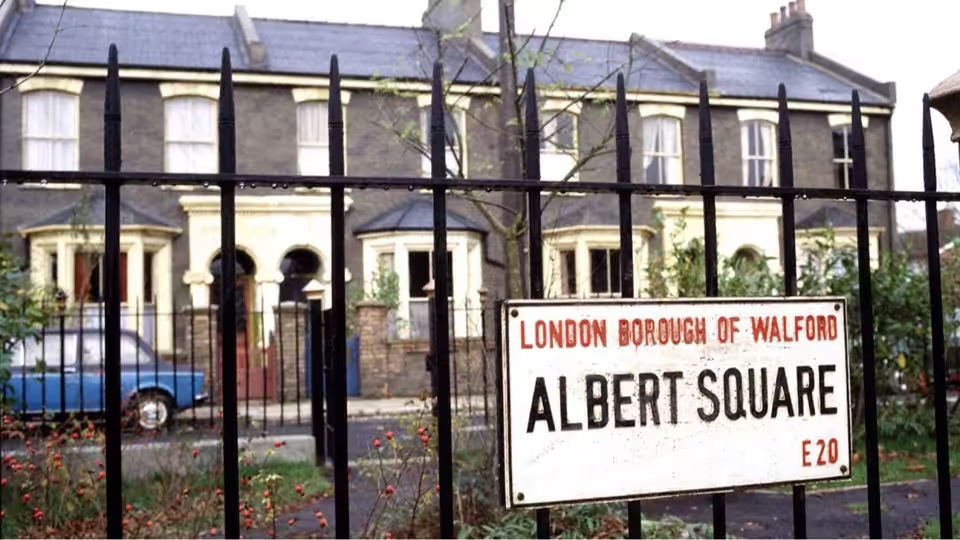
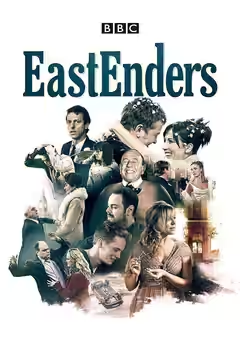
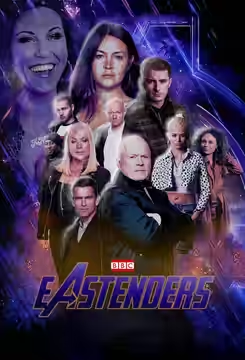
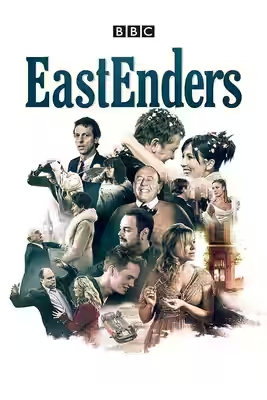
Four decades on, the Square is still the bleakest street in British television and still, in a good week, the best written. Between the good weeks there is a great deal of shouting in the café, and we would not pretend otherwise.
Julia Smith and Tony Holland built Albert Square in 1985 and it has been running ever since: 91 episodes in the first year, more than 200 a year since 2002, forty-two series so far. A soap cannot be reviewed the way a film is, because nobody has seen all of it, including the people who make it. What we can do is say what it is for and what it is like on an ordinary Tuesday. On an ordinary Tuesday it is still better than it needs to be, and worse than its best weeks suggest.
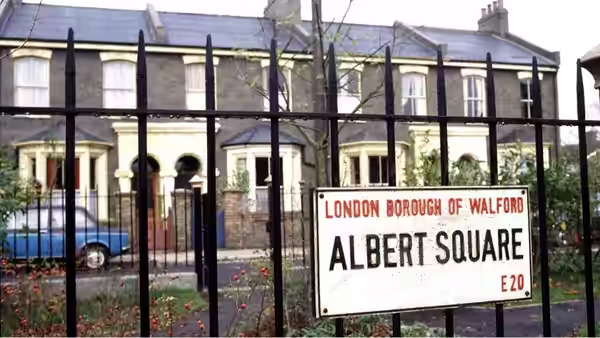
The idea was a London square where everybody knows the price of everybody else’s secrets, and where the pub, the café, the launderette and the market are the only places anyone goes. The first reviews in 1985 thought it a competent copy of soaps that already existed and doubted it would ever be distinctive. It became distinctive by being bleaker than any of them. Nobody on the Square is allowed a happy marriage for more than a series, and nobody gets to leave quietly.
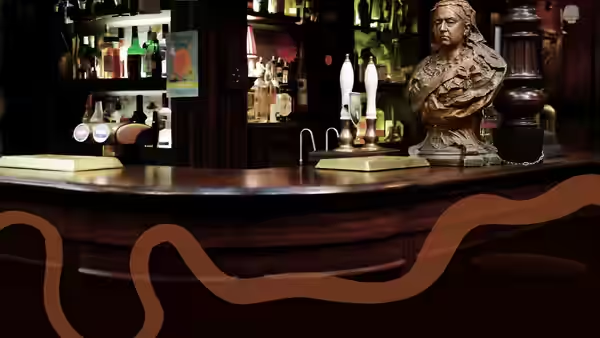
Keith Harris’s set is the show’s real lead. The Vic sits on the corner, the terraces face it, and the market runs along the side, and the whole arrangement is small enough that any two characters can collide in under a minute of screen time, which is the engine of the thing. Tom Kingdon’s cameras give it flat, overcast light; nobody in Walford has ever enjoyed a sunset. Simon May wrote the theme, and the drum roll that ends each episode is the most efficient cliffhanger device on British television. Editors like Nick Pitt cut every half hour to the same shape: a row, a reveal, a face, the drums.
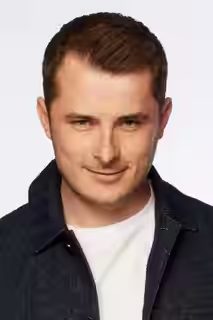
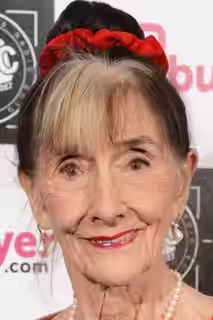
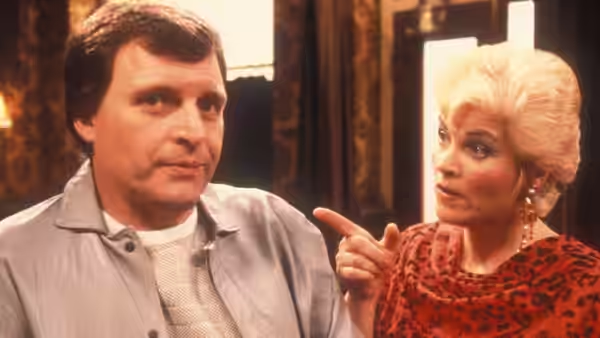
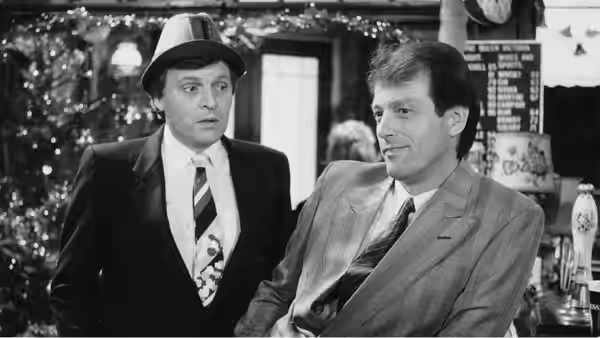
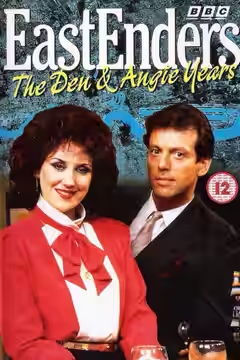
The actors have to carry writing that is, by volume, mostly plumbing, and the good ones do it by playing the pauses. Anita Dobson’s Angie Watts set the pattern early, brittle behind the bar and wrecked behind the door. June Brown’s Dot Cotton was the show’s conscience for decades, a woman who disapproves of everyone and forgives all of them, and Brown could make a line about the washing sound like scripture. Adam Woodyatt’s Ian Beale is the Square’s great survivor, a man whose every bad decision and every bad haircut has happened on this set, and that is a kind of acting nobody else in the country is asked to do. More recently Max Bowden’s Ben Mitchell and Tony Clay’s Callum Highway have been given a relationship written with more patience than the Square usually allows, and Emma Barton’s Honey Mitchell is the rare resident who seems to like living there.
Here is what has got at us. In 2018 the programme stopped its own drama to let real families speak about children they had lost to knives, and we sat in silence for a while after the drums. In 2020 it came back under social-distancing rules with scenes shot through doorways and across the width of the Square, and it was quicker and sharper than it had been for years, as if the restriction had done the writers a favour. And there are months, whole months, when every scene is two people in the café telling each other things they both already know, and we have switched off and felt no guilt about it.
The faults are the faults of the form. Everyone on the Square has been bereaved, imprisoned or both, so the misery stops registering as misery and becomes weather. The 12 certificate is honest; this is not a programme for children, and it has not been for a long time. The directors’ list runs from Antonia Bird to Tom Hooper, which tells you the show has been a school for forty years as well as a serial.
Do not start on a random Tuesday. Find a big week, the kind the trailers announce, and give it the full thirty minutes and the drums. If the Square does not hold you by the second episode it never will, and if it does, we are sorry, because there are forty-two series of it.