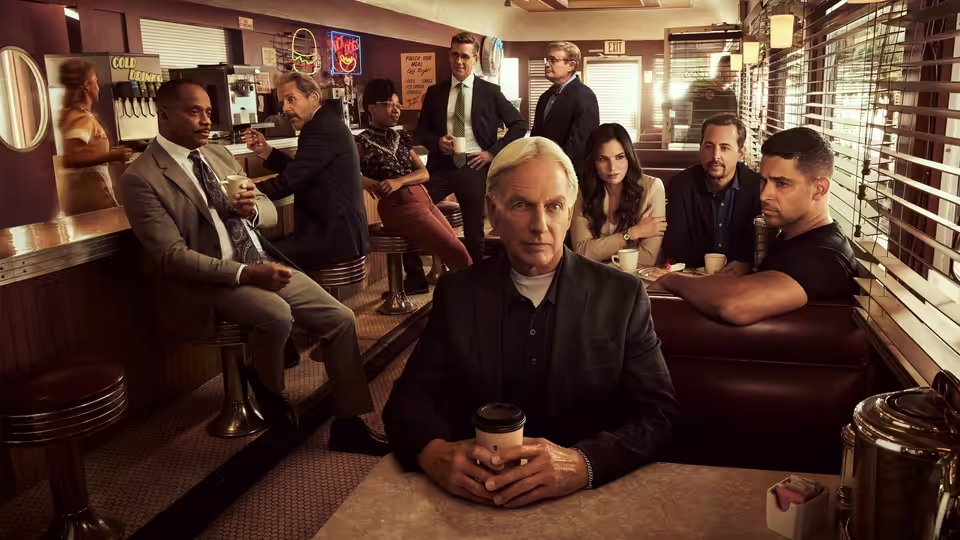
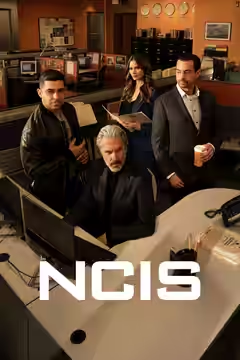
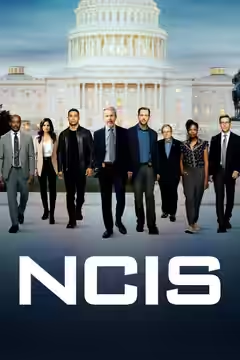
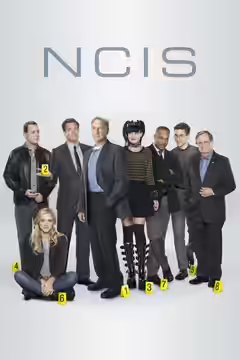
Bellisario and McGill’s naval procedural has run for more than two decades on a formula that has not changed and a cast that has changed almost entirely. The plots are frequently absurd. The people are not, and that is why it lasts.
Donald P. Bellisario and Don McGill’s NCIS first aired on 23 September 2003 and it has not stopped since. Twenty-four seasons and more than 500 episodes later the hour still has the same shape. A sailor or a Marine is found dead somewhere in or around Washington. Leroy Jethro Gibbs (Mark Harmon) and his team are called, the body goes to autopsy, the evidence goes to the lab, and by the end the right person is sitting across a table from Gibbs and saying more than they meant to. It is a dependable, warmly played, frequently silly programme, and it is about as good as this kind of thing gets without becoming something else.
Harmon holds it together by doing less than anyone else on screen. Gibbs drinks his coffee, declines to answer questions, and when an agent says something foolish he slaps the back of their head without looking round. The performance is built of pauses and small refusals, and it works because everyone around him is written to fill the silence.
The filling is the point. Michael Weatherly’s Tony DiNozzo needles, flirts and quotes films at people who have not seen them; Sasha Alexander’s Caitlin Todd is not impressed by any of it. Sean Murray’s Timothy McGee is the one who understands the computers and is punished for it daily. Pauley Perrette’s Abby Sciuto runs the forensics lab in black lipstick and pigtails and gets results at a speed that would astonish any real laboratory. Brian Dietzen’s Jimmy Palmer stands at the autopsy table trying to say something useful and mostly failing. The cases are the excuse for these people to be in a room together, and the writers, dozens of them over the years, know it.
And here is what got us. David McCallum’s Ducky is the only person in the building who is never in a hurry. He explains a wound as if giving a lecture nobody asked for, wanders off into a story about somewhere he once was, and gives the body in front of him a courtesy the living upstairs rarely get. We expected to find it a tic and instead found it moving, again and again, because McCallum plays it without a flicker of whimsy. Several of our favourite hours are the ones where the case is dull and Ducky has been given something to say.
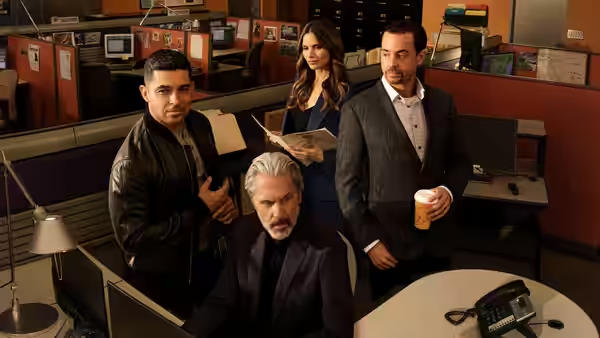
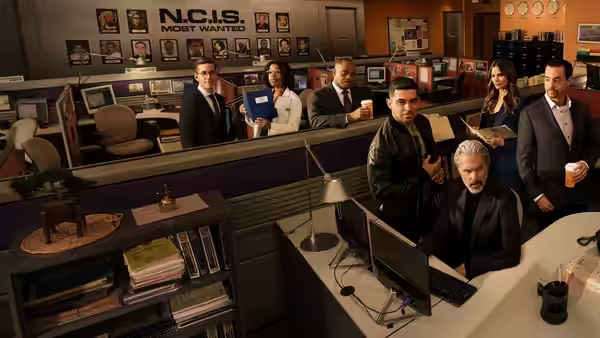
The craft is television craft and honest about it. Bill Webb and Gregory Paul Collier light everything evenly and brightly, so a corpse in a car park looks much like a conversation in the office. Robert J. Bacon and Robert Steuer’s squad room, open desks facing one another, is where most of the acting happens, and it is built so that four people can talk across it without anyone moving. The music, credited variously to Steven Bramson, Joseph Conlan and Brian Kirk, tells you when to be tense and gets out of the way. Lance Anderson and the other editors cut the interrogations slow and the chases fast, which is correct.
What does not work is anything the show takes seriously. The terrorists, the moles, the season-long conspiracies about who is really running what: these are the stretches where we were bored, and then annoyed at being bored by a programme that had just made us laugh. The forensics are nonsense. A partial print is matched, a hard drive is cracked and a satellite is repositioned in the time it takes Gibbs to fetch a coffee. Later arrivals, Cote De Pablo’s Ziva David, Emily Wickersham’s Ellie Bishop, Wilmer Valderrama’s Nick Torres and Katrina Law’s Jessica Knight among them, are slotted into the shapes left by whoever went before, and the show marks each departure with a tearful hour and then carries on as if nothing had happened. We will not say who leaves or how.
The lesson of this kind of television is that the audience comes back for the people, and NCIS is the plainest statement of that lesson on air. It carries a 15 in the UK, the bodies are handled without much squeamishness, and more than 500 hours is a warning about supply rather than a promise about quality. Start at the beginning, watch it in the evening with someone who will not mind you talking over the plot, and stop the day Gibbs’s silences stop working on you.