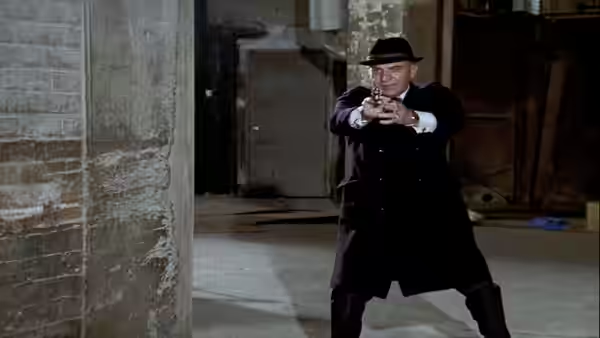
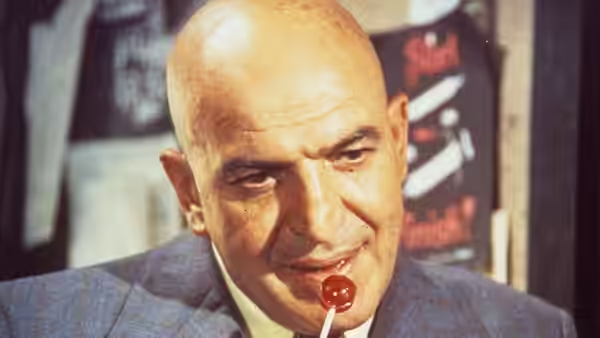
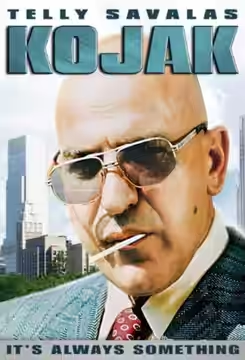
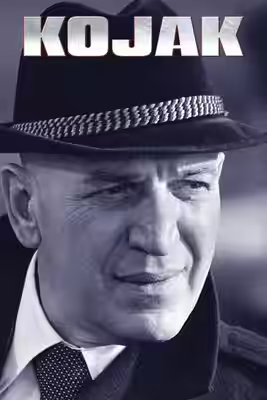
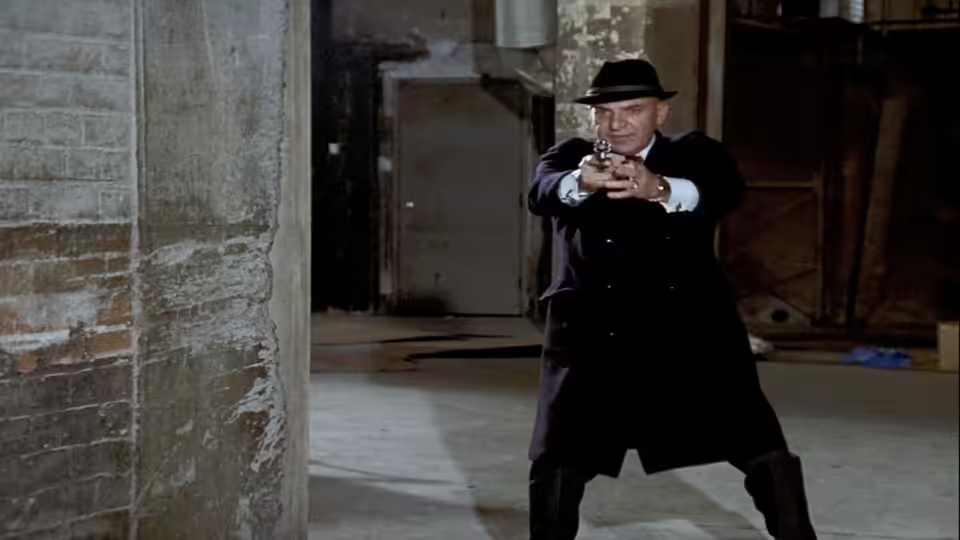
Kojak (Telly Savalas) stands in a warehouse aiming a handgun with both hands
Series review

Kojak

1973 · Created by Abby Mann · Series · 1h 00m

In a sentenceTelly Savalas makes a lollipop look like standard police equipment

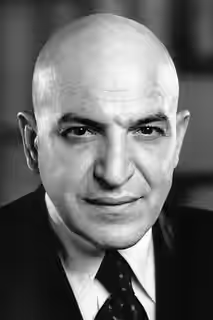
New York in the 1970s is the setting for the police work of Theo Kojak (Telly Savalas), a man with a supply of lollipops and a wardrobe of suits. His working world includes Frank McNeill (Dan Frazer), Bobby Crocker (Kevin Dobson) and Sgt. Stavros (George Savalas). Criminal investigations take the series into the city’s streets, where the pursuit of offenders brings questions about right and wrong. Kojak wants to solve the cases in front of him; what counts as justice is not always as straightforward as identifying a culprit.

Fi1m review

Telly Savalas makes Kojak worth returning to, and the street-level New York atmosphere gives him somewhere convincing to work. Some of the police drama has dated; the quiet charisma and moral complications have worn better.

Kojak is worth watching for Telly Savalas, but there is enough going on around him to reward more than an interest in its leading man. Abby Mann’s crime series puts a quietly commanding policeman into a grubby New York and gives him cases with some moral difficulty. We recommend it, with a caveat: its central policeman can be so reassuring that those difficulties lose some of their force. The street-level roughness is persuasive, though it does not make every police story feel less familiar.

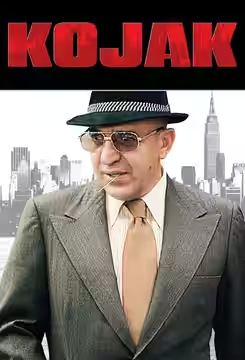
Telly Savalas plays Theo Kojak with a quietness that makes the suits and lollipops seem incidental, however readily they catch the eye. We were more absorbed than we expected, because that unforced authority makes the policeman worth watching even before a case has become interesting. There is humour in the contrast between the sweet and the job, but the performance does not depend on it. A more insistent actor would make the character’s recognisable habits exhausting; here we are happy to spend time with him.

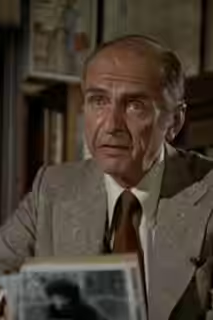
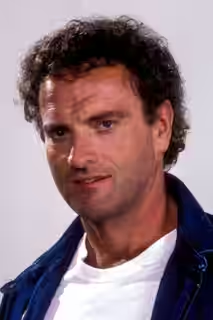
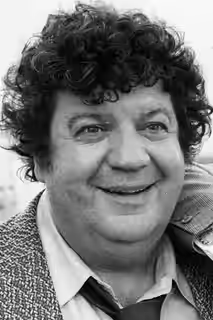
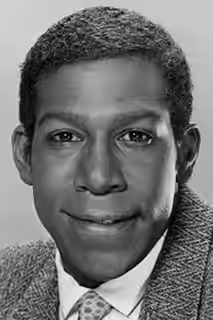
The supporting cast gives that pleasure some substance. Dan Frazer as Frank McNeill, Kevin Dobson as Bobby Crocker and George Savalas as Sgt. Stavros help the programme feel inhabited beyond its title character. We would not pretend that the balance is equal: Telly Savalas remains the main attraction. Still, their presence matters, because police work becomes less convincing when everyone around the lead seems to have been employed solely to receive instructions.

The New York atmosphere does considerable work, too, with cinematographers including Sol Negrin and Gerald Perry Finnerman contributing to the series. Its street-level photography gives the police stories a useful roughness, while the grubby production design prevents the smart suits from making everything look comfortable. We believe in the place before we have decided what we think of the case. That matters in a procedural, where the surroundings have to remain interesting even when the route through an investigation is familiar.

The lean episodes are another advantage, and editors including Louis San Andres and Richard Marks keep the storytelling direct. There is satisfaction in a programme willing to get on with an investigation instead of treating every piece of information as a grand revelation. John Cacavas supplies the music; we would put the acting and photography ahead of it among the reasons to return. The series is most persuasive when it allows the case and the people involved to occupy our attention without much ceremony.

The qualification is that a strong central performance can also make a difficult story too comfortable. Kojak has moral complications, but we sometimes find ourselves accepting its policeman’s authority more readily than considering the trouble in front of him. That is where the datedness shows most clearly for us, rather than in the clothes or the pace. Abby Mann’s creation offers enough uncertainty to be interesting, although we would welcome more occasions when the star’s confidence failed to settle ours.

There is no need to treat this as a historical assignment, or excuse its shortcomings simply because it comes from 1973. The attraction remains straightforward enough for anyone who enjoys a police procedural. We would start with an episode and let Telly Savalas make the case for another. Leave a little time between them if the reassuring familiarity begins to outweigh the interest in the crime.
Critical consensus AI synthesised

2 of 6
Positive
2
Mixed
0
Negative
0
The AV Club
5 April 2005 · Noel Murray
90*

The review praises Telly Savalas's quiet charisma and the series' lean, well-written episodes with gritty '70s New York atmosphere and scuzzy production design. It singles out the strong street-level feel and standout guest performances like James Woods in one episode.

Read the full review →
The Guardian
26 March 2010
75*

Kojak remains a gripping police procedural despite some dated elements, and is surprisingly morally complex. It features lollipops, great suits, and early appearances by future stars like Sylvester Stallone.

Read the full review →

Straight answers AI written, from our review

Is Kojak worth watching?
Kojak is worth watching for anyone who enjoys a police procedural, and we scored it 80. Telly Savalas plays Theo Kojak with an unforced authority that makes the suits and lollipops seem incidental, and the grubby 1970s New York gives him somewhere convincing to work. Our caveat is that his reassurance can soften the moral difficulty the cases raise.
How long is Kojak, and what is it rated?
Kojak has episodes of about 1h 00m. It is a crime and drama series.
Where can I watch Kojak in Denmark?
Kojak is not on any streaming or rental service in Denmark at the moment. It is available in 1 other country; change your country at the top of the page to see where. Availability is checked daily.
How violent or frightening is Kojak, and is it suitable for children?
Kojak carries a PG certificate in the UK and TV-PG in the US, so it is a mild police drama rather than a frightening one. The stories deal with crime on New York's streets and with questions about right and wrong, but the review notes no violence or content beyond what those certificates imply. Older children and teenagers should manage it comfortably.
How does Kojak compare to The French Connection?
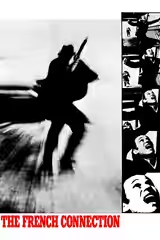
Kojak is the gentler of the two, and The French Connection is the more gripping. William Friedkin's film turns street surveillance into a tense thriller and gives Gene Hackman a policeman whose obsession is frighteningly plausible, while Telly Savalas offers quiet reassurance instead. Choose the film for a rougher, more unsettling New York; choose the series for company you are happy to keep.
What should I watch after Kojak?
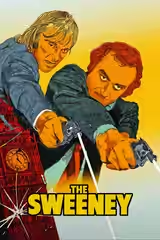
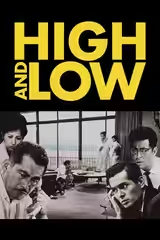
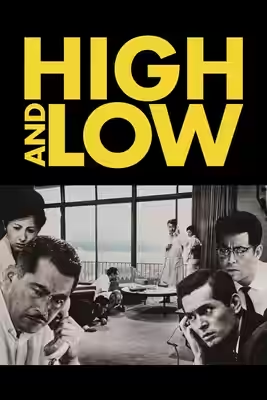
After Kojak, try The French Connection (1971, Fi1m 85): A rougher New York police story, with less reassurance in its leading man. Then The Sweeney (1975, Fi1m 84): London police work with abrasive personalities and a similarly grubby sense of place; and High and Low (1963, Fi1m 90): A criminal investigation whose difficult moral choices matter as much as its clues.

Cast

If you liked this, try…

  1. The French Connection (1971, Fi1m 85)A rougher New York police story, with less reassurance in its leading man.

  2. The Sweeney (1975, Fi1m 84)London police work with abrasive personalities and a similarly grubby sense of place.

  3. High and Low (1963, Fi1m 90)A criminal investigation whose difficult moral choices matter as much as its clues.

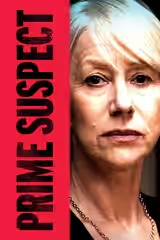
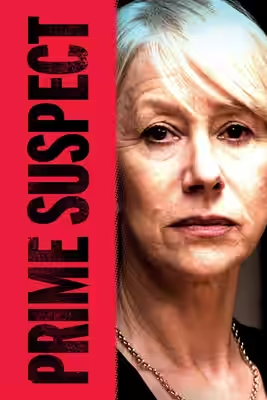
  4. Prime Suspect (1991, Fi1m 88)For another commanding lead in a police workplace that resists easy comfort.

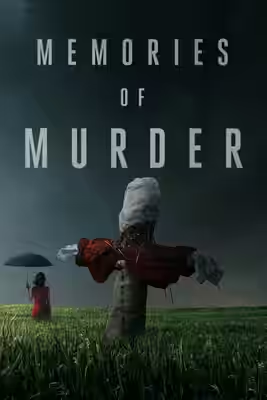
  5. Memories of Murder (2003, Fi1m 91)A darker procedural that keeps questioning the competence behind the badge.

Free account

Know what to watch tonight

Two lists that know where things are streaming, collections you can share, your own score beside ours, and Discover that remembers what you have seen.

  • Want to see, sorted by what is streaming now
  • Seen, with your score out of ten
  • No adverts, ever