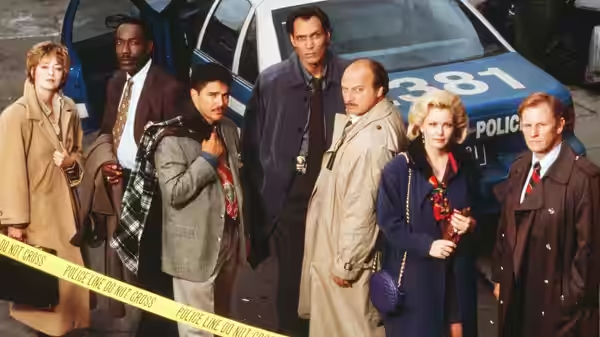
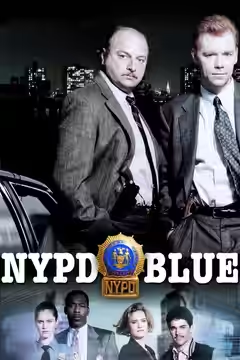
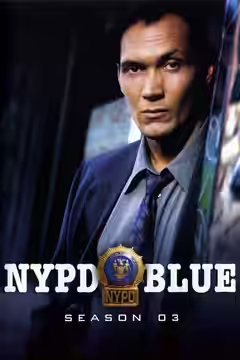
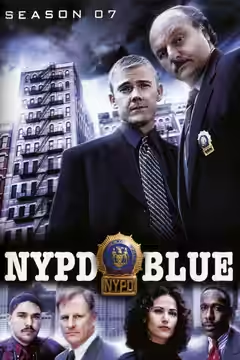
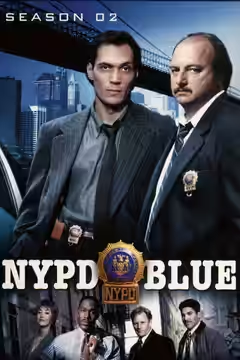
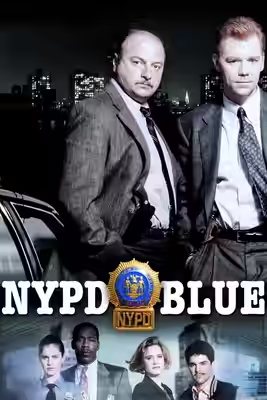
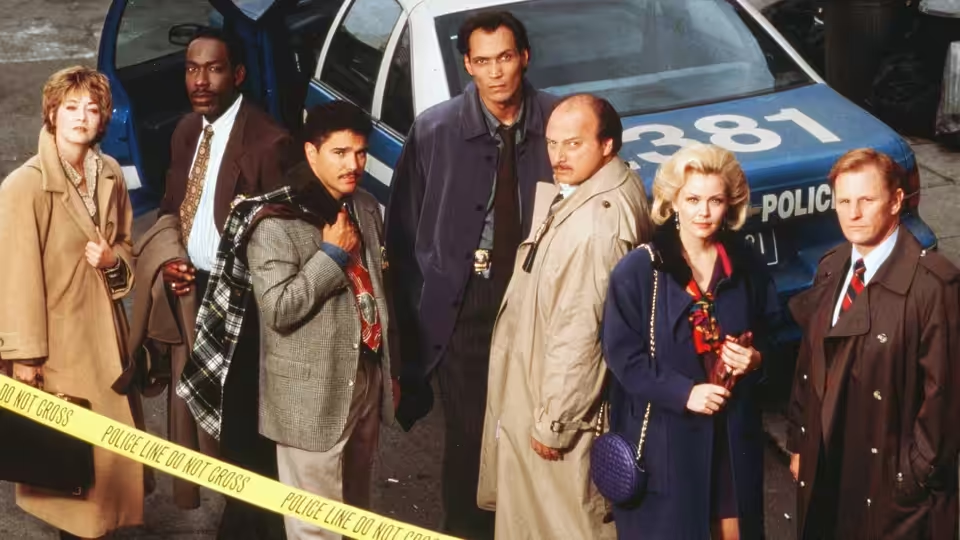
Group of detectives and officers gathered behind police tape near a squad car
Series review

NYPD Blue

1993 · Created by David Milch, Steven Bochco · Series · 1h 00m

In a sentenceA police station full of people we would rather watch than work with

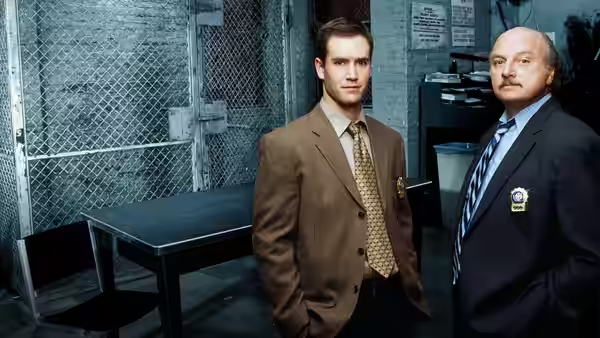
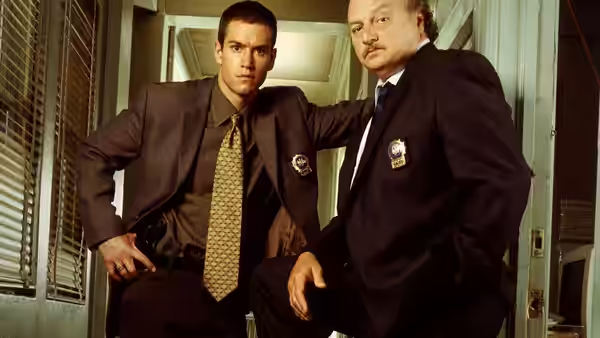
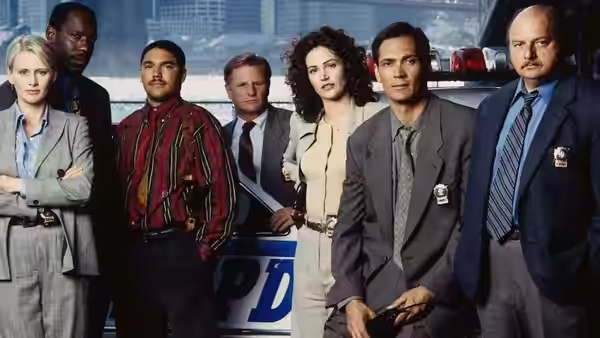
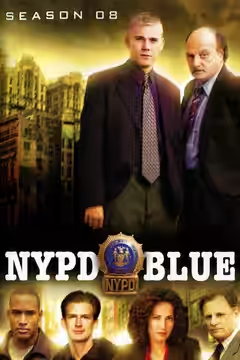
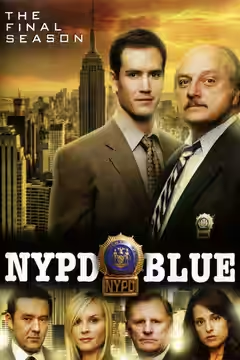
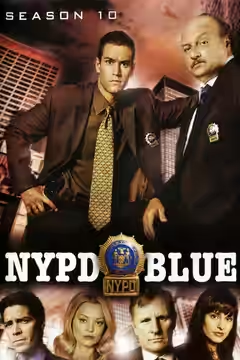
Andy Sipowicz (Dennis Franz), John Kelly (David Caruso) and Arthur Fancy (James McDaniel) are among the cops at the centre of NYPD Blue. Police work shares space with the officers’ private lives, with sex and violence alongside the dealings between colleagues. The opening introduces a procedural in which character clashes and black humour accompany the business of an investigation. Created by Steven Bochco and David Milch, the drama keeps its attention on the people doing the job, following their interactions as well as the cases that bring them together.

Fi1m review

NYPD Blue earns its grip through the cast and the writing, especially Dennis Franz as Andy Sipowicz. The plotting is more conventional than its rough style suggests, but we warmly recommend the company.

NYPD Blue is worth watching for the people, with a caveat about the effort spent making everything feel tough. Creators Steven Bochco and David Milch build a police drama whose strongest attraction is the attention paid to character. Its cops are interesting company even when the plotting is familiar. We recommend it because the writing and performances give those working relationships enough detail to survive the programme’s more conspicuous attempts to look adult.

Dennis Franz, as Andy Sipowicz, makes that recommendation easy. The performance has enough feeling behind its abrasive humour to keep the character from becoming merely a reliable source of difficult behaviour. We laughed at the cops’ black humour, then found ourselves caring more than we had expected about the people delivering it. The acting makes those exchanges feel personal, so the emotional passages do not seem to belong to a different programme or require everyone to become suddenly more agreeable.

David Caruso’s John Kelly and James McDaniel’s Arthur Fancy help make the interactions feel like the business of colleagues, rather than scenes arranged to introduce a set of personalities. We get pleasure from watching actors attend to one another. The cast gives the dialogue an easy familiarity, so that a disagreement can hold our attention without the plot having to become more complicated. Even where the police work offers little surprise, the conversation remains worth following.

The rough-looking images suit the dialogue, although the technique sometimes becomes too insistent. Bing Sokolsky and Brian J. Reynolds are among the cinematographers, and the visual approach works best when its untidiness feels incidental to the conversation. Richard C. Hankins’s production design is persuasive as a workplace for this company, without needing to compete with the actors. The editing team, including Craig Bench and Farrel Levy, is most effective when it lets those exchanges set the pace. We have little appetite for being reminded of the programme’s toughness once the cast has made us believe in the people.

That is the main reservation. The sex and violence are not in themselves the problem; the trouble comes when their inclusion feels like another demonstration of seriousness. The plotting remains fairly conventional, and no amount of roughness can disguise a development that arrives just where we expect it. Sometimes the programme seems reluctant to accept how effectively a familiar situation can work when the actors have enough to play. We would happily lose some of the display and keep the conversations.

The first series runs to 22 episodes, so liking the company matters more than being impressed by the opening’s toughness. As a police procedural, this offers familiar pleasures, but the attention to personality makes them substantial. We would choose it for an evening when conversation and character matter more than an ingenious investigation. If the rough finish begins to irritate, give the cast a little longer: they are doing the work that makes another episode appealing.
Critical consensus AI synthesised

79
Positive
7
Mixed
1
Negative
0

Most critics rate NYPD Blue highly, and almost all make the same point: the language, the nudity and the handheld camera drew the attention, but the writing and the acting hold it together. The praise clusters on the scripts, the character work and above all on Dennis Franz’s Andy Sipowicz, whom several reviews single out as the show’s lasting achievement. The pilot draws particular admiration, and a number of critics credit the series with opening the door for the dramas that followed.

The reservations are about how far the grit goes. The Hollywood Reporter finds the rawness synthetic, more technique than real inquiry into police work. The Independent thinks it a diluted version of what Homicide was doing, more conventional in its plotting. Vulture notes the show grows ordinary in later seasons and prefers The Shield. Seven of eight reviews are positive and none negative; the spread is narrow, and the doubters question the method rather than the quality.

The Times
17 May 2003 · ★★★★★ · Paul Connolly
100

The critic praises the series for its immediate grip through strong scripts, sharp characterisation and performances rather than its controversial elements. The review highlights the pilot episode's emotional depth and notes its lasting quality as a network drama.

Read the full review →
The Telegraph
19 September 2013
90*

The critic calls NYPD Blue a defining Nineties police series that has stood the test of time and explains its many awards. Dennis Franz's Andy Sipowicz is singled out as one of television's best detectives.

Read the full review →
The AV Club
10 January 2013 · Noel Murray
80*

The critic praises the pilots of NYPD Blue and Hill Street Blues for their immersive, surprising storytelling and willingness to push broadcast boundaries with violence, sex, and moral complexity. The piece highlights how both shows revolutionized TV by blending gritty police work with personal drama and authentic character development.

Read the full review →
Variety
20 September 1993 · Tony Scott
80*

The critic finds the series engrossing due to its strong character studies and interactions among the cops, rather than its hyped frankness and sex scenes. Praises the cast and direction for the gritty approach.

Read the full review →
Vulture
7 March 2012 · Josh Wolk
75*

The critic acknowledges NYPD Blue as groundbreaking for its raw language, handheld style, deglamorized cops, and complex antihero Andy Sipowicz, crediting it with paving the way for later dramas. It notes the show's later decline into conventionality but respects its pioneering impact while ultimately favoring The Shield in the comparison.

Read the full review →
The Independent
17 January 1994
70*

The review finds NYPD Blue a solid but diluted version of the new-style police procedural compared with Homicide, praising its scuffed style, gamey script and black humour while noting it is more conventional in plotting.

Read the full review →

Straight answers AI written, from our review

Is NYPD Blue worth watching?
NYPD Blue is worth watching for anyone who values the company of well-written, well-acted police officers over an ingenious investigation, and we scored it 82. Dennis Franz as Andy Sipowicz is the chief reason to stay. The plotting is more conventional than the rough style suggests, and the effort to look tough sometimes grates.
How long is NYPD Blue, and what is it rated?
NYPD Blue has episodes of about 1h 00m. It is a drama series.
Where can I watch NYPD Blue in Vietnam?
NYPD Blue is not on any streaming or rental service in Vietnam at the moment. It is available in 25 other countries; change your country at the top of the page to see where. Availability is checked daily.
How violent or frightening is NYPD Blue, and is it suitable for children?
NYPD Blue is an adult police drama, rated TV-14 in the US with no UK certificate, and it is not suitable for children. Sex and violence sit alongside the police work, and the humour is black. Teenagers used to grown-up drama will cope; the squeamish should expect some roughness, though the conversations matter more than the bloodshed.
How does NYPD Blue compare to Homicide: Life on the Street?
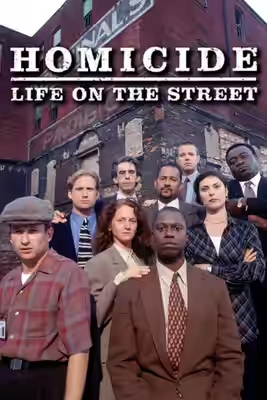
NYPD Blue is the warmer and more approachable of the two, while Homicide: Life on the Street is the more demanding and, we think, the more richly acted. Both make their squads more gripping than their cases. Choose NYPD Blue for Dennis Franz and easy familiarity; choose Homicide for Andre Braugher, if you can bear its restless editing.
What should I watch after NYPD Blue?
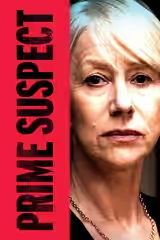
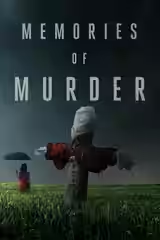
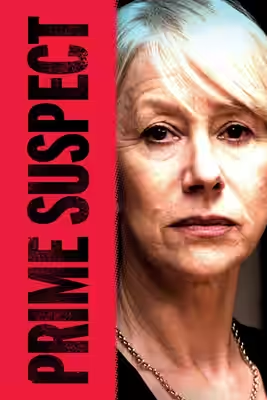
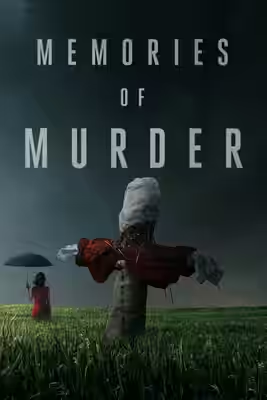
After NYPD Blue, try Homicide: Life on the Street (1993, Fi1m 89): For another squad whose conversations are often more gripping than the cases. Then Prime Suspect (1991, Fi1m 88): For police work complicated by the people sharing the office; and Memories of Murder (2003, Fi1m 91): For black humour that makes bungled police work increasingly difficult to laugh at.

Cast

If you liked this, try…

  1. Homicide: Life on the Street (1993, Fi1m 89)For another squad whose conversations are often more gripping than the cases.

  2. Prime Suspect (1991, Fi1m 88)For police work complicated by the people sharing the office.

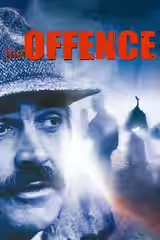
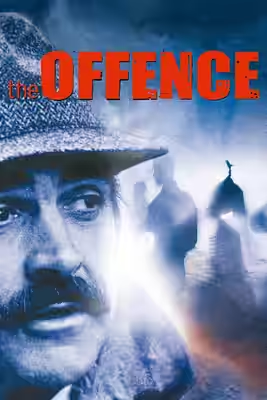
  3. The Offence (1973) · not reviewed yetA harsher examination of police anger, with little comfort on offer.

  4. Memories of Murder (2003, Fi1m 91)For black humour that makes bungled police work increasingly difficult to laugh at.

  5. Spiral (2005) · not reviewed yetA wider view of the friction between detectives, lawyers and judges.

Free account

Know what to watch tonight

Two lists that know where things are streaming, collections you can share, your own score beside ours, and Discover that remembers what you have seen.

  • Want to see, sorted by what is streaming now
  • Seen, with your score out of ten
  • No adverts, ever