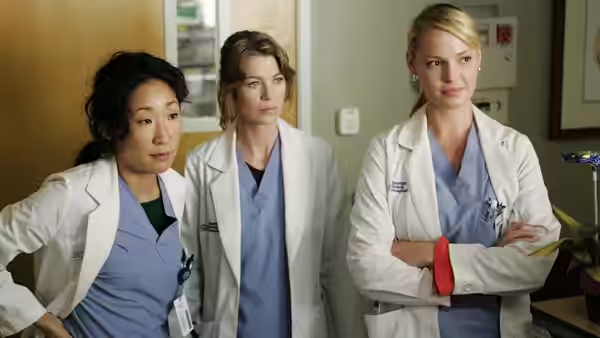
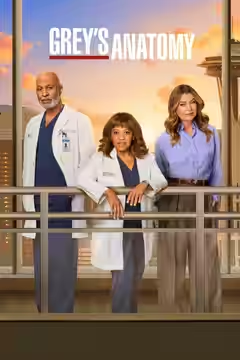
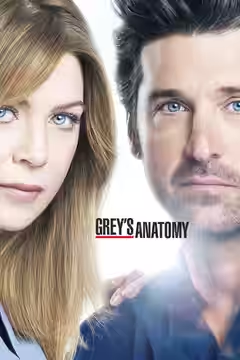
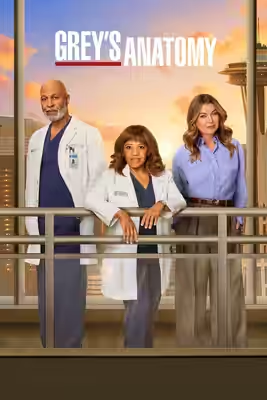
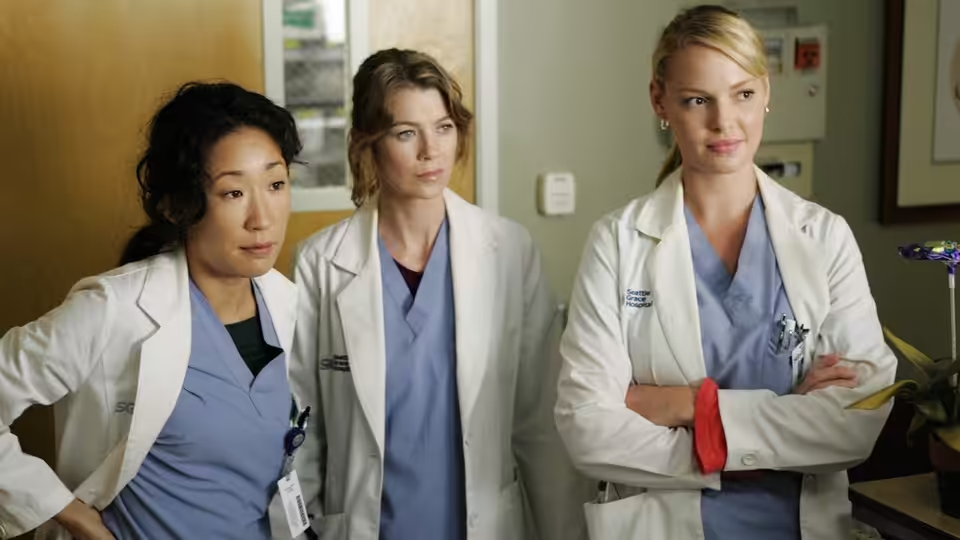
Cristina Yang (Sandra Oh), Meredith Grey (Ellen Pompeo) and Izzie Stevens (Katherine Heigl) standing in a hospital corridor
Series review

Grey's Anatomy

2005 · Created by Shonda Rhimes · Series

In a sentenceEveryone in Seattle is a surgeon, and every surgeon is in the lift with someone they have slept with

Meredith Grey (Ellen Pompeo) wakes up on the floor of her mother’s house beside a stranger, then reports for her first day as a surgical intern at Seattle Grace Hospital. The man turns out to be Dr Derek Shepherd (Patrick Dempsey), an attending neurosurgeon who now outranks her. Meredith is assigned, alongside the competitive Cristina Yang (Sandra Oh), former model Izzie Stevens (Katherine Heigl) and the abrasive Alex Karev (Justin Chambers), to resident Dr Miranda Bailey (Chandra Wilson), who lists her rules before the first forty-eight-hour shift begins. Chief of surgery Richard Webber (James Pickens Jr.) watches from above. Meredith wants to be a surgeon in the shadow of a famous mother, and Shepherd will not stay out of her way.

Fi1m review

Shonda Rhimes’s hospital drama is, for its first few years, as quick and sharp as American network television gets, with Sandra Oh doing most of the cutting. It has run long enough to wear that out; start at the beginning and know when to stop.

Shonda Rhimes’s drama about surgical interns arrived on 27 March 2005 with a first season of nine episodes, and the way it starts is still a lesson in how to start a programme. Meredith Grey (Ellen Pompeo) wakes up on the floor of her mother’s house next to a man whose name she has not bothered to learn, and by lunchtime he is Dr Derek Shepherd (Patrick Dempsey), an attending surgeon telling her what to do. That is the whole show in one morning: work and sex in the same building, and a woman not sure which she is worse at. The first few seasons manage this with speed and wit. The seasons after that manage it with less of both, and there are a great many of them.

Rhimes writes talk. Her interns speak fast, over each other and mostly about themselves, and the pleasure of the early episodes is hearing a hospital run on gossip. Sandra Oh’s Cristina Yang is the best thing in it: a competitor who treats compassion as a waste of theatre time and delivers every line flat, so the funny ones and the cruel ones sound the same. Chandra Wilson’s Miranda Bailey collects her interns on day one and lists her rules like a sergeant who has seen this batch before. We laughed out loud at Oh more than once, and it was the flatness that did it; she never asks for the laugh.

The construction is the other reason it worked. Each episode runs two or three patients against whatever the interns are doing to each other, and Kyle Bond’s cutting keeps the cases and the corridors moving at the same pace, so a diagnosis and a break-up land in the same minute. Every episode closes on a montage under a song, with Pompeo’s voice over it drawing the moral. We cried at one of those in the second season and felt a little foolish about it, because we could see exactly how the pieces had been fitted together, and it worked anyway. Roemehl Hawkins’s costumes do quiet work too: the scrubs sort people by rank at a glance, so you always know who is allowed to shout at whom.

James Pickens Jr. gives Richard Webber, the chief, a tired decency the programme leans on for years, and Justin Chambers plays Alex Karev as the intern nobody likes, with enough hurt underneath that you keep watching him. Katherine Heigl’s Izzie Stevens is written softer than the others and is at her best when she stops being nice. The cast changes over the years, in ways we will not describe, and Sara Ramirez, Kevin McKidd, Kim Raver, Caterina Scorsone and Camilla Luddington are among those who arrive later and stay. Several of the actors end up behind the camera: Wilson, McKidd and Pompeo all direct, and Denzel Washington turns up in the directors’ list, which tells you where the programme sits in Hollywood’s affections.

The trouble is length. The second season alone ran to twenty-seven episodes, and there have been more than twenty seasons in all, with writers including Krista Vernoff, Stacy McKee, Zoanne Clack, Debora Cahn and Meg Marinis keeping the wards full. A show built on people doing foolish things has to keep finding new foolish things, and by the tenth year the disasters have become an annual fixture and the romances rotate through the same few pairings. We watched a stretch of the later seasons and were bored, and then we were irritated, because the people on screen had stopped being characters and become positions: the one who is grieving, the one who is angry at the one who is grieving. Sometimes the old speed comes back for an episode. It does not stay.

Against the hospital drama as a form, it is not trying to be ER, which wanted you to believe in the medicine. Rhimes wants you to believe in the staff room, and on those terms the early years are as good as American network television of their kind gets. The later years are a habit, and a habit is not the same as a good programme.

Start at the beginning and watch the first four seasons, which are the ones with the edge. After that, carry on if you love these people, and stop the moment you notice you are watching out of loyalty rather than interest. The 15 certificate is for the operating theatre rather than the bedroom; the surgery is shown in close-up and the sex mostly is not.

Critical consensus AI synthesised

61
Positive
4
Mixed
1
Negative
2

Most critics lean warm, and the praise gathers around the cast. The ensemble is picked out again and again, with Sandra Oh’s deadpan intern Cristina Yang the name that recurs most, admired for caring more about the surgery than the patient. Shonda Rhimes’ dialogue draws credit too, along with the show’s interest in women’s lives and its multi-ethnic casting, which several reviews treat as its real subject rather than the medicine.

The reservations split by era. The 2005 notices find the set-up familiar, a hospital variant of The Paper Chase, and The Hollywood Reporter goes furthest, calling the characters too soft and the plotting too neat. The later pieces argue over longevity instead: The Telegraph finds the show in good health after twenty seasons, while The i Paper, fond of the early years, is worn out by its decline. The spread is wide, and the two 2024 reviews sit at opposite ends of it.

The Telegraph
28 March 2024
90*

The critic finds the long-running medical soap in robust health after 20 seasons, praising its ability to refresh the cast while retaining core elements of high-octane drama, racy romance, and progressive themes. Nostalgic callbacks to the 2005 pilot and strong ensemble performances stand out as highlights.

Read the full review →
The AV Club
24 June 2013 · Emily St. James
70*

The critic notes the show's massive cultural impact and ability to recover from quality dips, praising its peak seasons for addictive storytelling and emotional resonance while acknowledging inconsistencies. They single out season two's rapid pacing, iconic episodes, and Rhimes' dialogue for particular praise amid the soapy elements.

Read the full review →
The Times
11 September 2005 · Sally Kinnes
70*

The preview/review welcomes the sassy US import as a relationship-driven show with surgery, highlighting its appeal to female viewers through strong, relatable women characters and multi-ethnic casting. Cristina Yang is singled out as particularly interesting for her focus on medicine over patients.

Read the full review →
Variety
15 March 2005 · Brian Lowry
70*

The critic finds the well-cast drama an updated Paper Chase set among medical interns, with crisp dialogue, romance, and Darwinian workplace tension that makes it appealing despite familiarity. Strong ensemble and guest performances help offset formulaic elements.

Read the full review →
The Guardian
9 April 2005 · Jonathan Bernstein
60*

The show follows familiar hospital drama tropes with young interns facing exhaustion, mistakes and superior doctors, but benefits from clever scheduling after Desperate Housewives. Its standout element is the casting of Sandra Oh as a deadpan, acerbic intern.

Read the full review →
The i Paper
3 April 2024 · Alim Kheraj
40*

The critic loves the show's early seasons for their rich characters and emotional depth but feels exhausted by its longevity and declining quality after nearly two decades. They single out the strong writing, casting, and focus on women's lives in the initial run for praise while complaining about later ill-conceived plotlines and lack of momentum.

Read the full review →

Straight answers AI written, from our review

Is Grey's Anatomy worth watching?
Grey's Anatomy is worth watching for its first four seasons, and we scored it 68. Shonda Rhimes's hospital drama is quick and sharp early on, with Sandra Oh doing most of the cutting, but it has run for more than twenty seasons and the later years turn into a habit. Start at the beginning and stop when loyalty replaces interest.
Where can I watch Grey's Anatomy in Chile?
Grey's Anatomy is streaming on Disney+ in Chile. Availability is checked daily; the links above go straight to each service.
How violent or frightening is Grey's Anatomy, and is it suitable for children?
Grey's Anatomy carries a 15 certificate in the UK, and the reason is the operating theatre rather than the bedroom. Surgery is shown in close-up and the sex mostly is not, so squeamish viewers will find the wards harder going than the romances. It suits older teenagers; we would not put it in front of younger children.
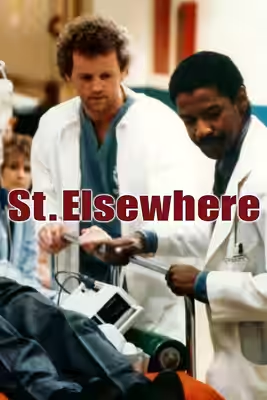
How does Grey's Anatomy compare to St. Elsewhere?
Grey's Anatomy is the faster and funnier of the two, and St. Elsewhere is the more serious about its hospital. Rhimes wants you to believe in the staff room and runs the wards on gossip; the earlier programme built the large-ensemble hospital drama but can drag and sometimes insists on a lesson. Choose Grey's for wit and speed, St. Elsewhere for weight.
What should I watch after Grey's Anatomy?
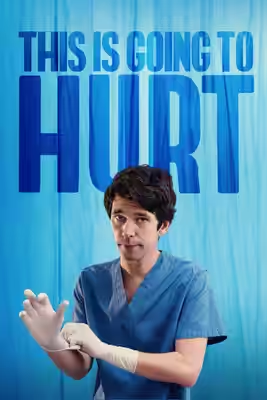
After Grey's Anatomy, try St. Elsewhere (1982, Fi1m 78): The hospital ensemble that taught American television how to keep two dozen doctors in the air. Then This Is Going to Hurt (2022, Fi1m 84): Ben Whishaw on a London labour ward; the exhaustion Grey’s jokes about, played straight.

Cast

Awards

Primetime Emmy Awards, 2011

Won
Outstanding Guest Actress in a Drama Series

Primetime Emmy Awards, 2007

Won
Outstanding Supporting Actress in a Drama Series

Golden Globes, 2006

Won
Best Television Series – Drama

Primetime Emmy Awards, 2006

Won
Outstanding Casting for a Drama Series

SAG Awards, 2006

Won
Outstanding Performance by an Ensemble in a Drama Series

Golden Globes, 2005

Won
Best Supporting Actress – Series, Miniseries or Television Film

SAG Awards, 2005

Won
Outstanding Performance by a Female Actor in a Drama Series

If you liked this, try…

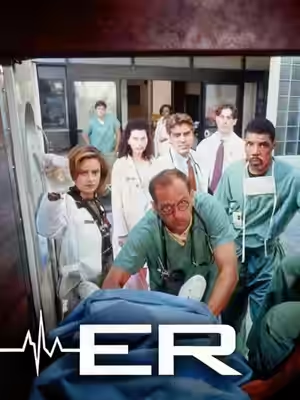
  1. ER (1994) · not reviewed yetThe medicine you are meant to believe in, at a pace Grey’s borrowed and softened.

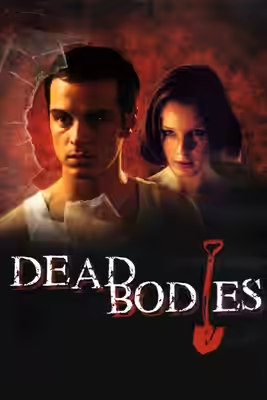
  2. Bodies (2004) · not reviewed yetJed Mercurio’s British ward drama, where the mistakes have consequences and nobody gets a montage.

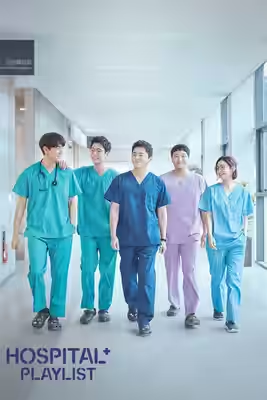
  3. Hospital Playlist (2020) · not reviewed yetKorean surgeons in a band; gentler and funnier, and as fond of its staff room.

  4. St. Elsewhere (1982, Fi1m 78)The hospital ensemble that taught American television how to keep two dozen doctors in the air.

  5. This Is Going to Hurt (2022, Fi1m 84)Ben Whishaw on a London labour ward; the exhaustion Grey’s jokes about, played straight.

Free account

Know what to watch tonight

Two lists that know where things are streaming, collections you can share, your own score beside ours, and Discover that remembers what you have seen.

  • Want to see, sorted by what is streaming now
  • Seen, with your score out of ten
  • No adverts, ever