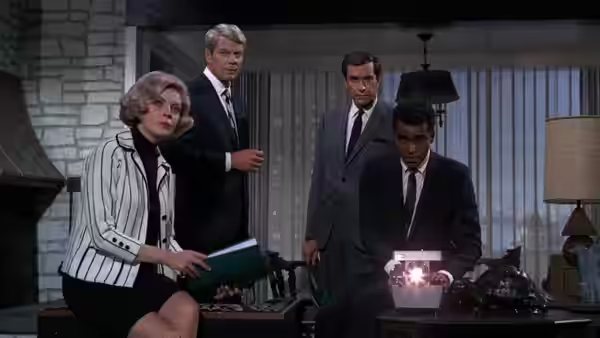
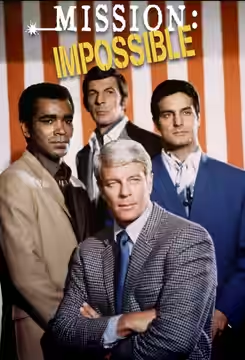
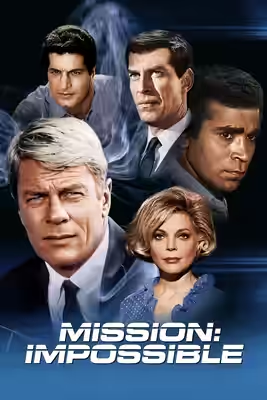
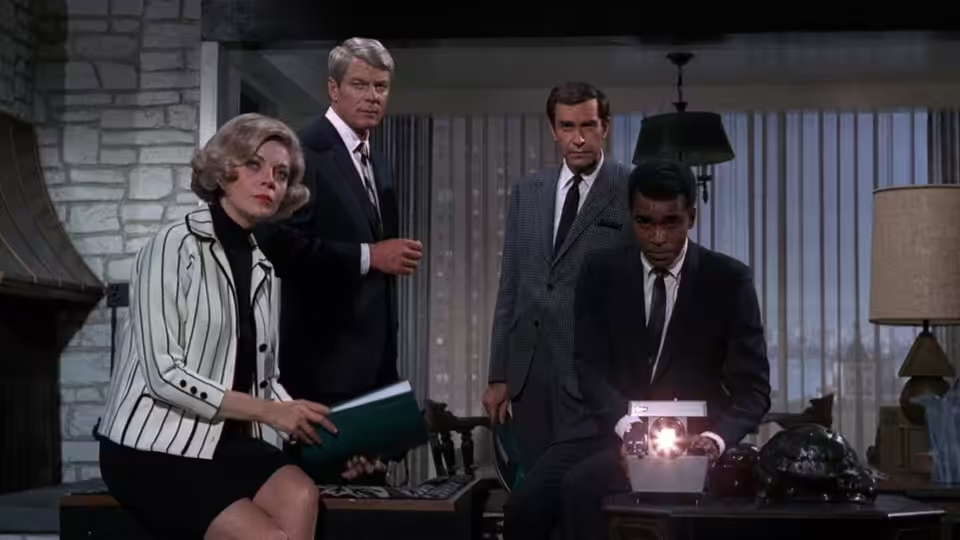
Cinnamon Carter (Barbara Bain) holds a folder while Barney Collier (Greg Morris) examines a device
Series review

Mission: Impossible

1966 · Created by Bruce Geller · Series · CNC 12

In a sentenceAn entire team treating elaborate deception as though it were sensible office work

Daniel Briggs (Steven Hill) works with a team that includes Barney Collier (Greg Morris), Cinnamon Carter (Barbara Bain), Rollin Hand (Martin Landau) and Willy Armitage (Peter Lupus). Their operations depend on disguises and deception, with the team setting out to make its targets believe a carefully prepared pretence. Each member has a part to play in the caper, and the work depends on coordinating those parts without exposing the people behind them. Getting close enough to deceive someone is only the beginning; the assumed identities must survive contact with their targets.

Fi1m review

Bruce Geller’s caper series makes disguises, teamwork and carefully arranged deception absorbing television. We recommend it for the ingenuity and the cast’s composure, though the formula becomes easier to see with repeated viewing.

Mission: Impossible is good television for people who enjoy watching a complicated job being done properly. Created by Bruce Geller, it builds its appeal around teamwork, disguises and the steady management of a deception. The cleverness is pleasurable because it gives us something to follow, without simply asking us to accept that the characters are clever. We recommend it, with one reservation: the operations are often more interesting than the people carrying them out.

Peter Graves gives Jim Phelps the calm authority this sort of enterprise needs. Steven Hill, as Daniel Briggs, offers a more guarded presence, while Greg Morris makes Barney Collier’s competence reassuring without making it dull. Barbara Bain’s Cinnamon Carter belongs comfortably among these self-possessed people. The performances persuade us to accept a considerable amount of contrivance, although that same composure can leave the characters difficult to know beyond the work.

Martin Landau brings a useful playfulness to Rollin Hand, and that matters in a programme so attached to control. We found ourselves grinning at the disguises, because the cast treats the business of pretending to be somebody else with such unembarrassed seriousness. Nobody needs to signal that we are meant to enjoy the trick. There is pleasure in being allowed to watch deception without a character continually explaining how ingenious it is.

The subjective camerawork helps keep that pleasure from becoming a dry exercise. With cinematographers including Fred Koenekamp and John Alton, the series makes room for images that limit us to a character’s view. That can make a deception engaging before we have understood all of it. Editors including Donald R. Rode and Paul Krasny keep the operations legible, giving the next step enough importance to make us attend to it.

The music credits include Gerald Fried and Walter Scharf, and the score supplies a persistent forward push. That energy is useful in a programme which asks us to take preparation seriously. The disguises do their share of the practical work, too: appearances have to be convincing enough for us to accept that someone else would be fooled. Occasionally the polish makes us too comfortable, but much of the fun comes from seeing a complicated pretence presented with confidence.

The weakness is repetition, even when individual plots have been carefully varied. Across seven series, the dependable format can make an episode feel more settled than a story about deception ought to feel. Bruce Geller’s creation does not always find enough in its people to compensate when a scheme is less absorbing. We admire the discipline, but there are stretches when another display of competence is not quite enough to hold our attention.

As a caper series, it earns its place through the care taken over each operation and the actors’ willingness to serve it. It is less rewarding when asked to provide much sense of life outside the assignment. That is a limitation worth knowing about before settling in, rather than a reason to dismiss such enjoyable work. Try an episode when there is time to pay attention, and leave the next assignment for another evening.

Critical consensus AI synthesised

2 of 6
Positive
2
Mixed
0
Negative
0
The AV Club
10 January 2007 · B+ · Noel Murray
83

The critic highlights the series' mid-to-late '60s pizzazz, subjective camerawork, propulsive Lalo Schifrin score, and pre-counterculture cool, along with its finely tuned, well-sprung plots. Some episodes have low points, but the overall package of disguises, deception, and team capers remains engaging.

Read the full review →
The Hollywood Reporter
19 September 1966 · Ed Olmstead
80*

The critic believes audiences will enjoy the new spy series once they get to know the lead character. They single out the strong production values, continuous action, clever plot devices, and standout performances from the ensemble cast including Martin Landau's dual role.

Read the full review →

Straight answers AI written, from our review

Is Mission: Impossible worth watching?
Mission: Impossible is worth watching for anyone who enjoys seeing a complicated deception planned and carried out properly, and we scored it 82. The disguises, the teamwork and the cast's composure make the operations absorbing television. Our reservation is that the format repeats across seven series, and the people are less interesting than the jobs they do.
How long is Mission: Impossible, and what is it rated?
Mission: Impossible is rated 12 by the CNC in France. It is an action & adventure and crime series.
Where can I watch Mission: Impossible in France?
Mission: Impossible is not on any streaming or rental service in France at the moment. It is available in 6 other countries; change your country at the top of the page to see where. Availability is checked daily.
How violent or frightening is Mission: Impossible, and is it suitable for children?
Mission: Impossible is a caper series rather than a violent one, and it carries no UK certificate; its US rating is TV-14. Its tension comes from whether an assumed identity will survive contact with its target, not from bloodshed or scares. Younger children may find it slow and hard to follow, but there is nothing here to trouble the squeamish.
How does Mission: Impossible compare to The Sting?
Mission: Impossible and The Sting are both built around carefully prepared deceptions, but the series keeps its team at a controlled, professional distance, while the film gives Paul Newman and Robert Redford room to be funny between the complications. The Sting is the warmer of the two and the better company for a single evening; the series rewards viewers who prefer watching the mechanics of a scheme over the people running it.
What should I watch after Mission: Impossible?
After Mission: Impossible, try The Sting (1973, Fi1m 85): Another carefully prepared deception, with more room for charm between the complications. Then The Avengers (1961, Fi1m 83): British espionage with stranger assignments and considerably less respect for sensible behaviour; and Hustle (2004, Fi1m 83): A warmer con-team series that shares the appetite for elaborate misdirection.

Cast

If you liked this, try…

  1. The Sting (1973, Fi1m 85)Another carefully prepared deception, with more room for charm between the complications.

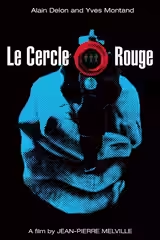
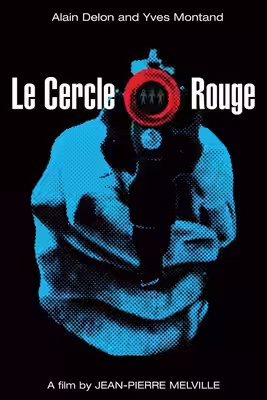
  2. Le Cercle Rouge (1970) · not reviewed yetFor the patience, practical detail and pleasure of watching professionals work.

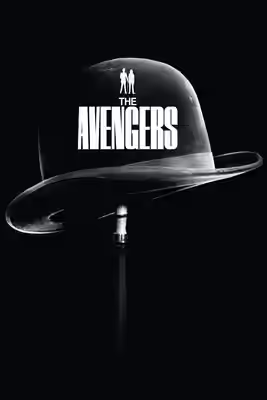
  3. The Avengers (1961, Fi1m 83)British espionage with stranger assignments and considerably less respect for sensible behaviour.

  4. The Bureau (2015) · not reviewed yetUndercover work with the private costs this team largely keeps off screen.

  5. Hustle (2004, Fi1m 83)A warmer con-team series that shares the appetite for elaborate misdirection.

Free account

Know what to watch tonight

Two lists that know where things are streaming, collections you can share, your own score beside ours, and Discover that remembers what you have seen.

  • Want to see, sorted by what is streaming now
  • Seen, with your score out of ten
  • No adverts, ever