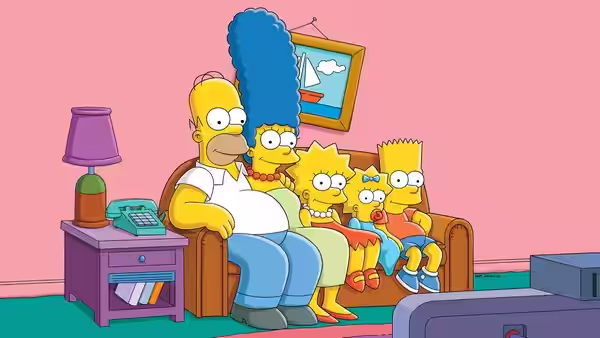
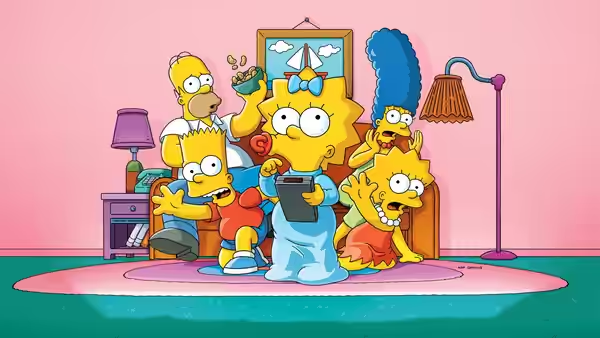
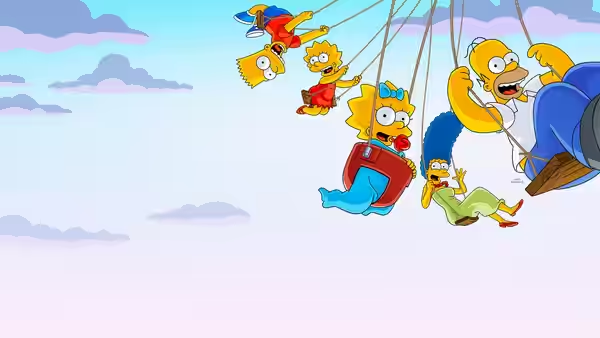
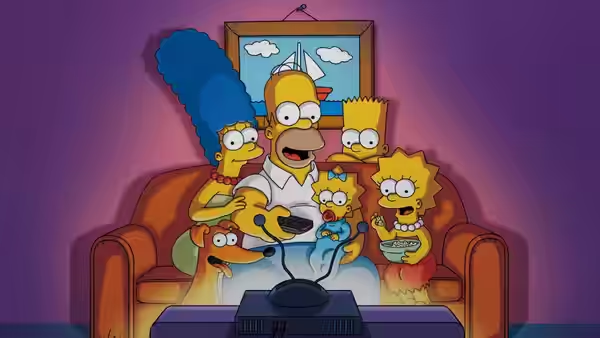
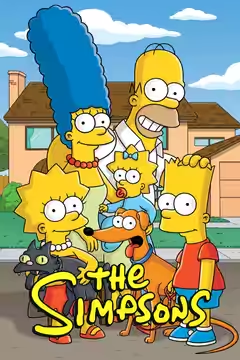
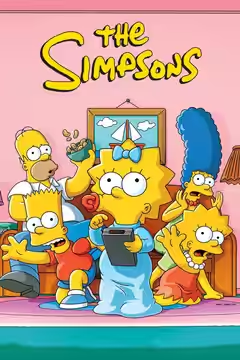
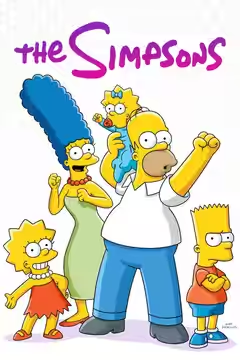
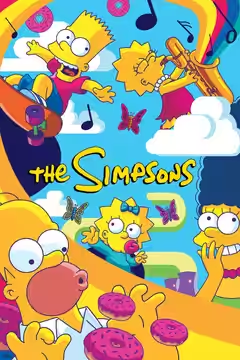
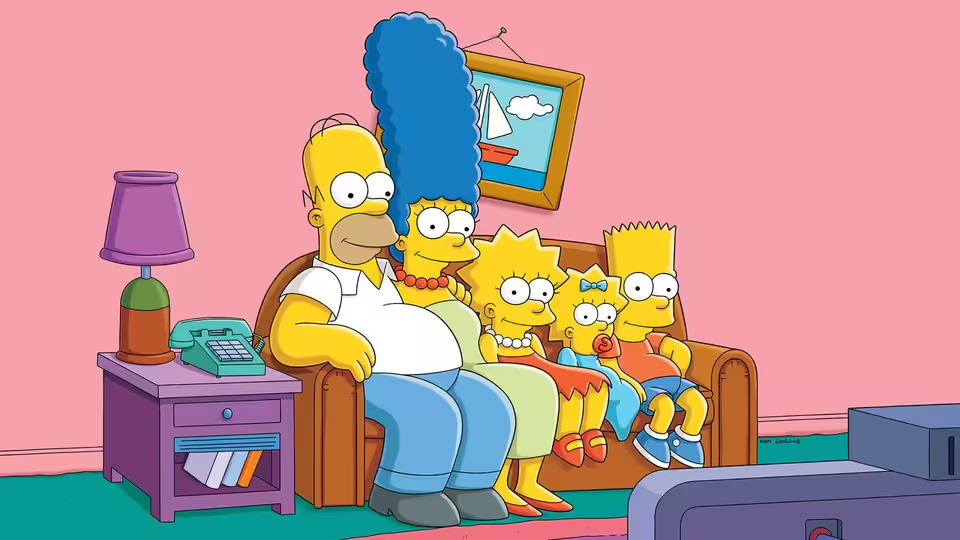
Homer Simpson and Marge Simpson with children seated on the living room couch
Series review

The Simpsons

1989 · Created by Matt Groening · Series

In a sentenceHomer Simpson has had an idea, and we already feel sorry for Marge

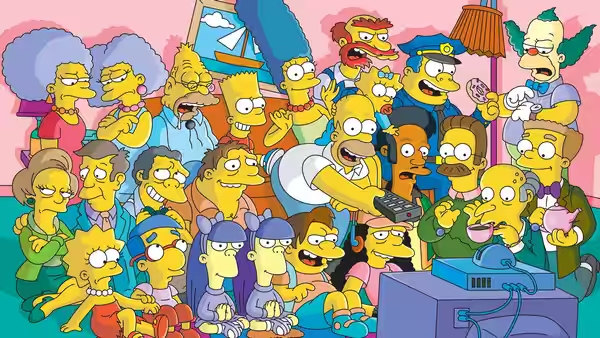
The Simpsons centres on the Simpson family and the people around them, using domestic life as the starting point for an animated comedy. Dan Castellaneta voices Homer, Julie Kavner voices Marge, Nancy Cartwright plays Bart and Yeardley Smith plays Lisa. Beyond the family, the cast includes Krusty the Clown, Moe Szyslak, Chief Wiggum, Ned Flanders, Mr. Burns and Principal Skinner. Castellaneta, Hank Azaria and Harry Shearer supply those voices, taking on several characters apiece. Family dynamics and the competing personalities of the wider ensemble provide the material for the programme’s satire.

Plays from YouTube when you press play; nothing loads from them until then.

Fi1m review

The sharpest stretches of The Simpsons combine merciless jokes with real tenderness for the people making fools of themselves. We recommend it warmly, but not as an obligation to watch every episode.

We recommend The Simpsons warmly, with one practical reservation: choose a stretch rather than making a vow to watch everything. Its family comedy works because the people who behave badly remain worth caring about, even when they have exhausted everyone else’s patience. The satire would be thinner if it merely invited us to feel cleverer than these people. At its best, the writing makes their mistakes understandable before making them ridiculous, and leaves enough room for embarrassment to hurt.

Dan Castellaneta gives Homer a confidence that is funny before a sentence is finished. He makes a foolish thought sound freshly discovered, and gives disappointment enough weight to keep the performance from becoming a succession of noises. Julie Kavner’s Marge is just as important: the fatigue in her voice suggests how much work it takes to stay patient. We were moved by that weariness, because Kavner makes affection sound like something Marge has to keep choosing.

Nancy Cartwright gives Bart’s defiance an infectious pleasure in his own cheek, without making every provocation sound calculated. Yeardley Smith makes Lisa’s earnestness equally recognisable; she lets us hear how much it matters to Lisa that somebody listens. The writing can become too pleased with Lisa’s usefulness as the sensible one, and Smith is more interesting when she has something awkward to play. That is a recurring weakness: a character can shrink into the job the joke needs done.

Hank Azaria and Harry Shearer make the supporting characters feel worth following in their own right. Azaria gives Moe Szyslak a pinched frustration that makes simple exchanges sound like personal setbacks. Shearer’s Mr. Burns and Ned Flanders are distinct in more than pitch: Burns sounds accustomed to obedience, while Flanders seems perpetually hopeful of agreement. The pleasure is in hearing the actors find different reasons for people to misunderstand each other, rather than merely recognising another voice.

Directors including David Silverman and Brad Bird make the animation do more than carry the dialogue. A held expression can supply the objection that nobody says aloud, and a change of pose can reveal how little confidence someone has. Editors Michael Bridge and Don Barrozo are among those shaping the timing; at its sharpest, the programme gives us time to notice a reaction without waiting for approval of the joke. These small decisions keep crowded exchanges legible and let the performances remain funny even when nobody is speaking.

Alf Clausen’s music is funny because it can take these people’s troubles as seriously as they take them themselves. Its sense of proportion is deliberately unreliable, giving a small upset the weight of a calamity. The weaker writing is less sure about proportion: a bigger incident is allowed to stand in for a better joke. Castellaneta can sustain a great deal of foolishness, but when Homer’s behaviour stops resembling anything human, the noise becomes tiring.

As a family sitcom, it is most satisfying when affection complicates the teasing, rather than arriving afterwards to tidy things up. There is no need to defend every stretch to value how often it gets that right. We would begin with seasons three to eight, where the balance of character and comic invention is particularly rewarding. Leave the completionism to someone who enjoys keeping records.

Critical consensus AI synthesised

76
Positive
4
Mixed
1
Negative
0
The AV Club
6 June 2010 · A- · Nathan Rabin
90

The critic praises the episode's class-conscious humor and emotional depth in Homer's struggles, noting it sets the stage for the show's greatness despite modest beginnings. The heart and subversion are evident from the start.

Read the full review →
The i Paper
17 December 2019 · Finlay Greig
80*

The critic highlights "Homer's Enemy" as the show's standout episode for its bold portrayal of Homer's flaws and social commentary. It praises the series' risk-taking in blending humor with deeper themes on its 30th anniversary.

Read the full review →
Variety
15 December 1989 · Tony Scott
70*

The critic finds the animated premiere colorful, wry and often funny, with sharp satire centering on the family dynamics. The engaging animation and characters make the series a good bet for the Fox lineup if the quality holds.

Read the full review →
The Hollywood Reporter
22 December 1989 · Bruce Bailey
45*

The critic describes the Simpson family as the most moronic middle-class family but notes that this is what makes them special. Groening's talent for understating stupidity is a redeeming quality that overrides other flaws like the basic animation.

Read the full review →
Den of Geek
24 December 2018 · ★★★★★ · Tony Sokol
100

The review calls it a darkly satirical Peanuts special that subverted TV norms, praising its heart, the introduction of Santa’s Little Helper, and how it sets a high standard for the series despite crude animation.

Read the full review →

Straight answers AI written, from our review

Is The Simpsons worth watching?
The Simpsons is worth watching for anyone who likes family comedy with sharp jokes and real affection underneath, and we scored it 88. Our one reservation is practical: pick a stretch rather than vowing to watch everything, since the weaker runs let a bigger incident stand in for a better joke. We would begin with seasons three to eight.
Where can I watch The Simpsons in Azerbaijan?
The Simpsons is not on any streaming or rental service in Azerbaijan at the moment. It is available in 44 other countries; change your country at the top of the page to see where. Availability is checked daily.
How violent or frightening is The Simpsons, and is it suitable for children?
The Simpsons is a UK 12 and a US TV-14, so it is animated comedy aimed at teenagers and adults rather than small children. There is nothing in it we would call frightening; the certificate reflects rude jokes and cartoon misbehaviour rather than violence. Older children who can take the satire will be fine, and adults will get more of the jokes.
How does The Simpsons compare to King of the Hill?
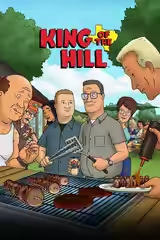
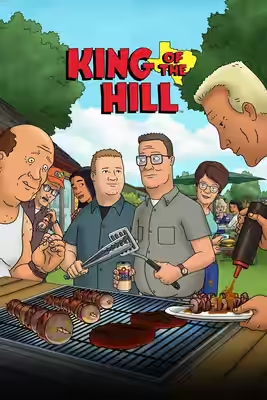
The Simpsons is the louder and more ambitious of the two, while King of the Hill is the kinder and more patient, funny because nothing in it is exaggerated. Both let foolish people keep their dignity, but The Simpsons at its sharpest has the greater comic invention, and at its weakest the greater noise. Choose King of the Hill for quieter, more even comedy, and The Simpsons for higher peaks.
What should I watch after The Simpsons?
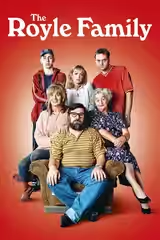
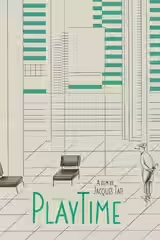
After The Simpsons, try King of the Hill (1997, Fi1m 82): Patient neighbourhood comedy that lets foolish people keep their dignity. Then The Royle Family (1998, Fi1m 85): A sofa-bound family comedy with sharper ears and more tenderness than expected; and Playtime (1967, Fi1m 88): For the pleasure of spotting another joke at the edge of the frame.

Cast

Awards

Primetime Emmy Awards, 2014

Won
Outstanding Character Voice-Over Performance

Teen Choice Award for Choice Animated Show, 2012

Won
Teen Choice Award for Choice Animated Show

Writers Guild of America Award for Television: Animation, 2010

Won
Writers Guild of America Award for Television: Animation

Writers Guild of America Award for Television: Comedy Series, 2009

Nominated
Writers Guild of America Award for Television: Comedy Series

Golden Globes, 2002

Nominated
Best Television Series – Musical or Comedy

Kids' Choice Award for Favorite Cartoon, 2002

Won
Kids' Choice Award for Favorite Cartoon

TCA Heritage Award, 2002

Won
TCA Heritage Award

Primetime Emmy Awards, 2001

Nominated
Outstanding Music Composition for a Series (Original Dramatic Score)

Satellite Award for Best Television Series – Musical or Comedy, 2001

Nominated
Satellite Award for Best Television Series – Musical or Comedy

TCA Award for Individual Achievement in Comedy, 1999

Nominated
TCA Award for Individual Achievement in Comedy

Primetime Emmy Awards, 1997

Won
Outstanding Original Music and Lyrics

Peabody Awards, 1996

Won
Peabody Awards

TCA Award for Program of the Year, 1993

Nominated
TCA Award for Program of the Year

Primetime Emmy Awards, 1992

Won
Outstanding Voice-Over Performance

Kids' Choice Award for Favorite TV Show, 1991

Won
Kids' Choice Award for Favorite TV Show

Primetime Emmy Awards, 1991

Won
Outstanding Animated Program

Primetime Emmy Awards, 1990

Nominated
Outstanding Original Main Title Theme Music

TCA Award for Outstanding Achievement in Comedy, 1990

Won
TCA Award for Outstanding Achievement in Comedy

If you liked this, try…

  1. King of the Hill (1997, Fi1m 82)Patient neighbourhood comedy that lets foolish people keep their dignity.

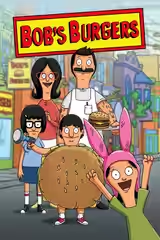
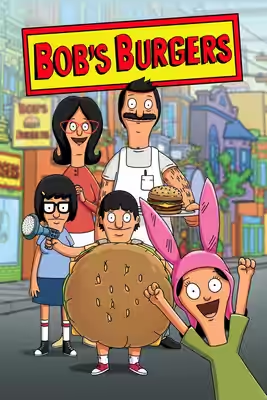
  2. Bob's Burgers (2011) · not reviewed yetAnother animated household where family affection survives some deeply impractical decisions.

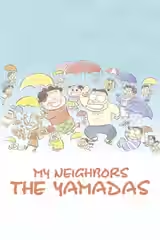
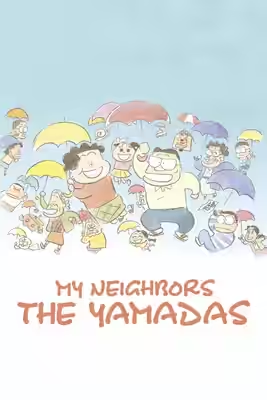
  3. My Neighbours the Yamadas (1999) · not reviewed yetA looser, gentler animated family portrait, attentive to small domestic frustrations.

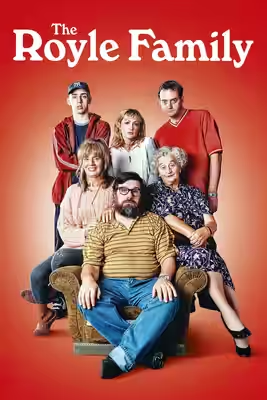
  4. The Royle Family (1998, Fi1m 85)A sofa-bound family comedy with sharper ears and more tenderness than expected.

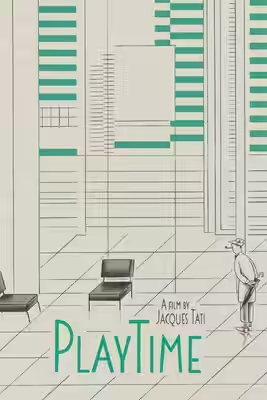
  5. Playtime (1967, Fi1m 88)For the pleasure of spotting another joke at the edge of the frame.

Free account

Know what to watch tonight

Two lists that know where things are streaming, collections you can share, your own score beside ours, and Discover that remembers what you have seen.

  • Want to see, sorted by what is streaming now
  • Seen, with your score out of ten
  • No adverts, ever